

Spinball is a competitive, physics-based arena sport in 3D, played 1v1 or
3v3 online.
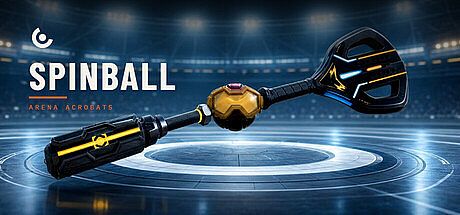
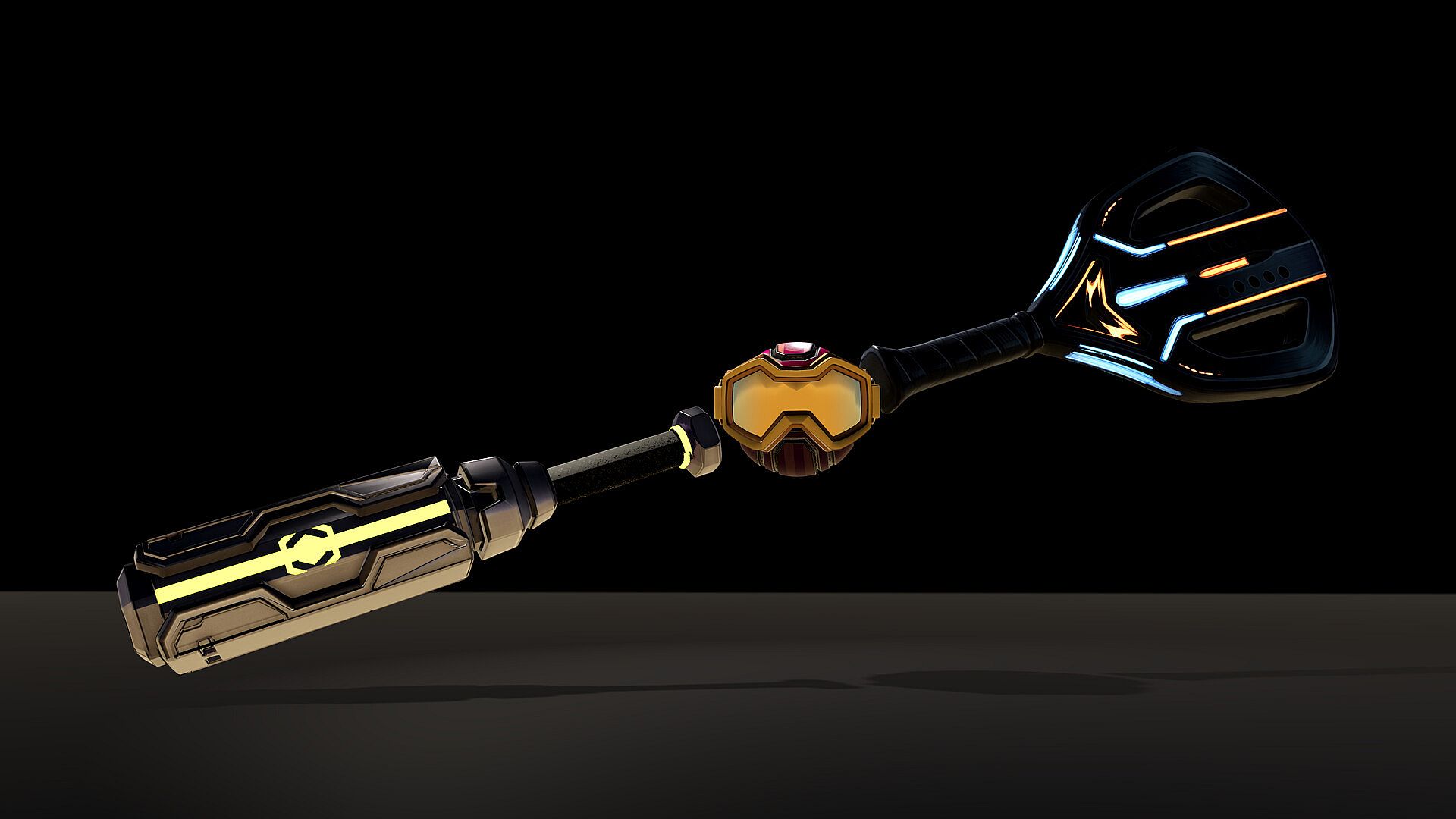
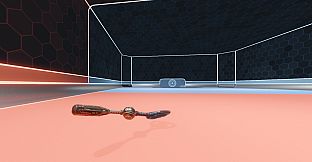
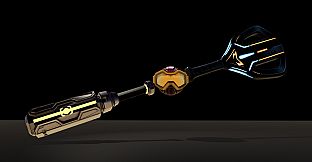
You are the ball. Your character is a sphere with two rigid arms on a
single axis running through it — a bat on one side, a wide flat paddle on
the other. Moving the mouse turns both of them: directly, without limit,
and without lag. They stop the instant your hand stops.
The objective is the same as any ball sport. Put the ball in the other
team's goal. Everything else comes out of those two arms.
HITTING
There is no shoot button. The ball leaves the bat along the flat of the
face, so the angle of the bat at the moment of contact is the direction
the ball takes. How hard depends on two things: how fast you were
swinging, and where along the bat you caught it. The outer third sends it
considerably further than the middle, but it is a narrow band, and you
have to be swinging properly to get anything out of it.
CATCHING
The paddle is the other half of the character. It has almost no bounce,
so it takes the speed out of a ball rather than returning it. You can
catch, carry and reposition with it, and there is a hard ceiling on how
fast it can send the ball away. It is for control, not for power.
Deciding which arm the situation calls for is something you do several
times a second. They are on the same axis, so turning one towards the
ball turns the other away.
THE OTHER TWO CONTROLS
The mouse wheel rolls the paddle around its own arm. It is how you lift a
ball that is sitting still, and how you scoop under one instead of
striking it.
Holding a mouse button tips the whole arm plane out of horizontal, up to
vertical. That is how you hit downward on a ball above you. It is also
how you pole-vault: plant a bat in the floor and it will lever you into
the air. Do it repeatedly and you can paddle yourself along in a series
of hops. Land on an arm while it is tipped and you will stand on it.
None of that was designed. It falls out of having two rigid arms and a
floor that pushes back, and we left it in.
CONTACT
Spinball is a contact sport, in roughly the way hockey is one. You can
lean on people, get in their way, and push them off the ball. Bodies make
contact, and so do the arms — you can put a bat into someone and move
them without having to get there yourself.
There is no attack button and no damage. You take up space, and so does
everyone else. With six players and arms that reach as far as these do,
the arena is a crowded place. Most of the time, someone is in your way.
THE ARENA
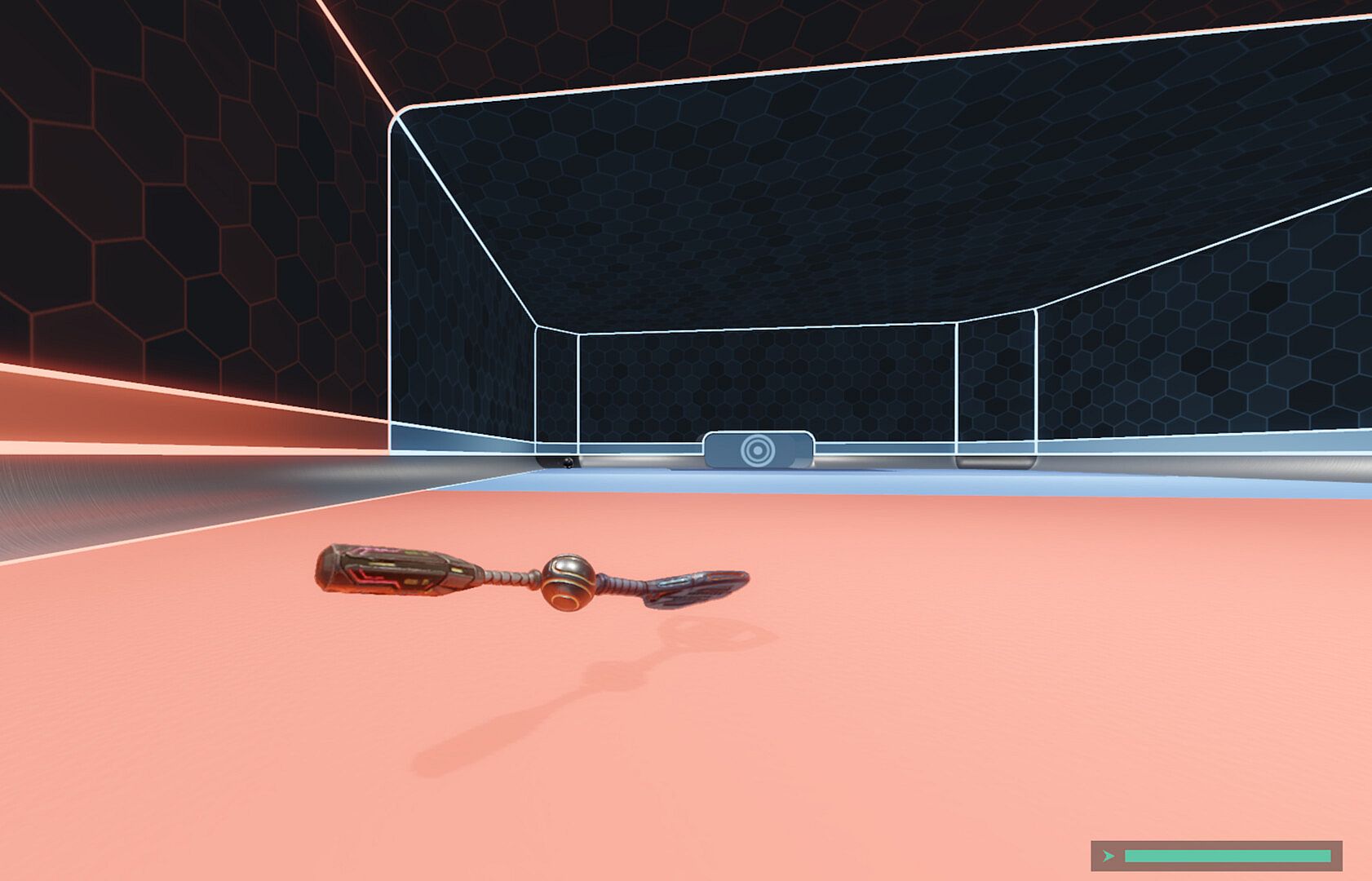
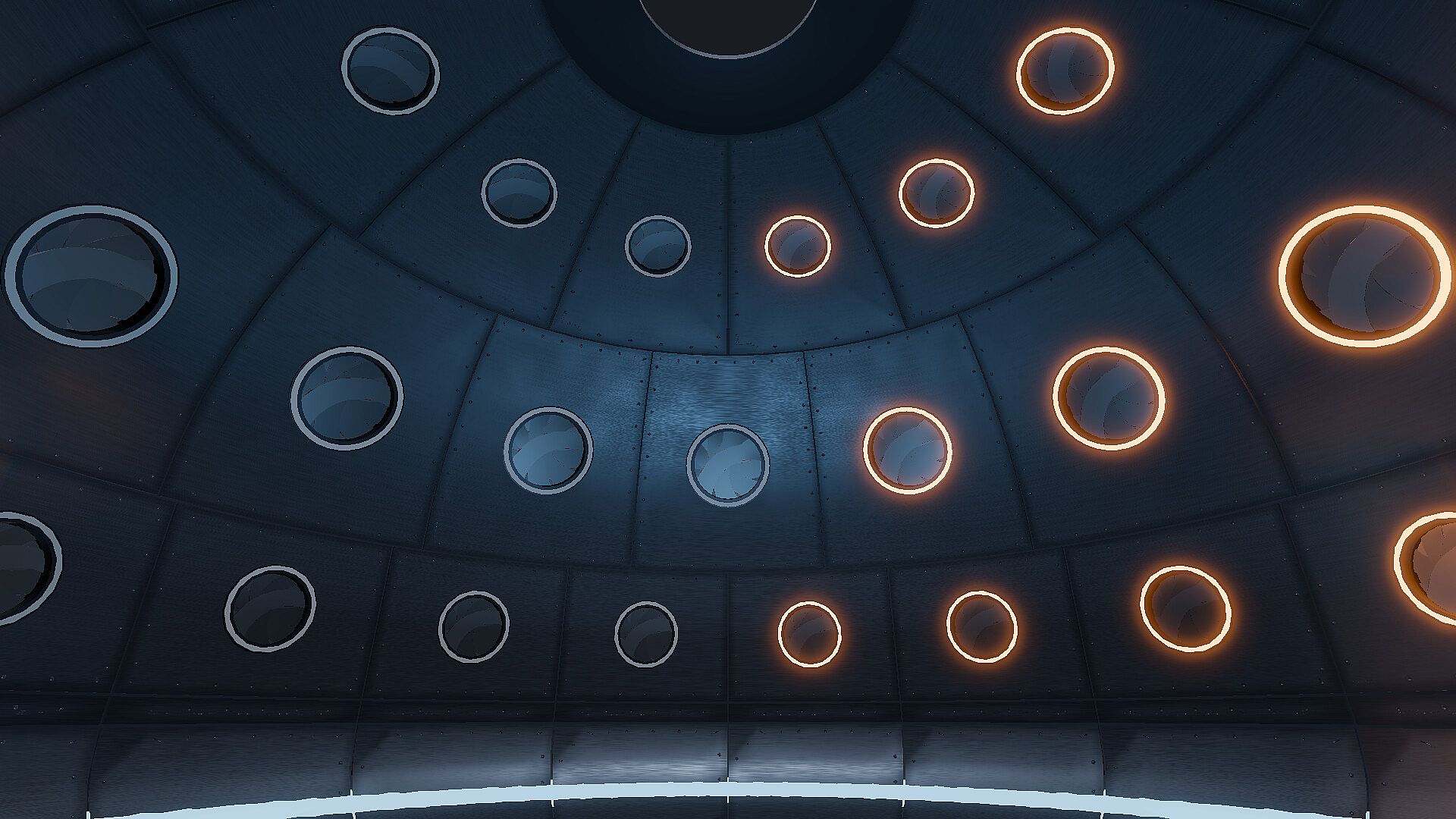
An enclosed hall with rounded corners, ramps that curve up into the
walls, and a domed ceiling. Goals at both ends. You can drive up the
ramps and play off the boards, and so can the ball. There is nowhere it
can get stuck, and nowhere you cannot follow it.
THE PHYSICS
Written from scratch rather than handed to an engine. The ball rolls,
grips, spins and bounces by rules we wrote and spent months tuning,
because a ball that feels right is not the same thing as a ball that is
physically correct.
There is no aim assist, no ball magnetism and no randomness. If the ball
went somewhere you did not expect, it is because of where and how you hit
it.
MODES
Online — 1v1 and 3v3.
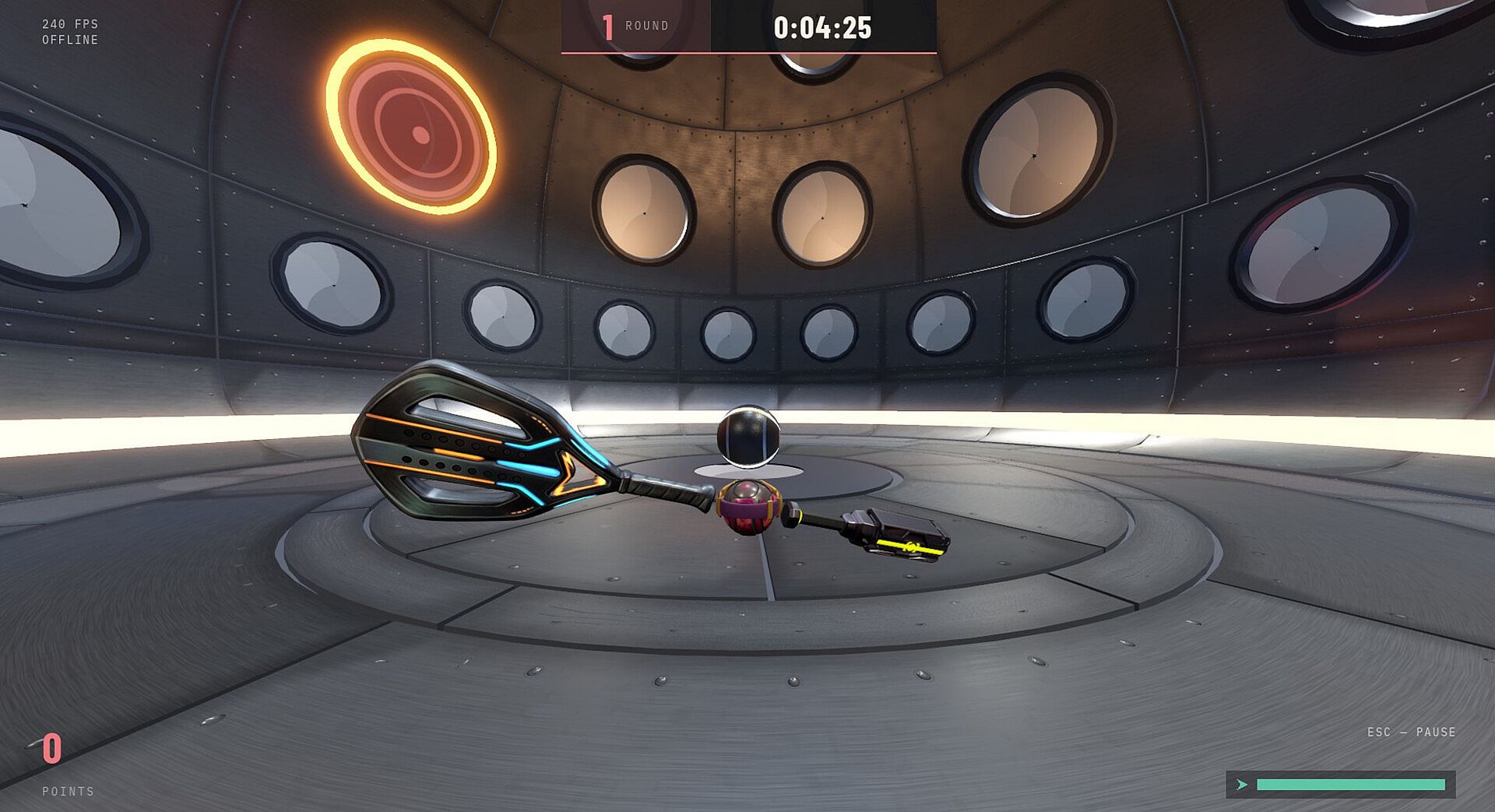
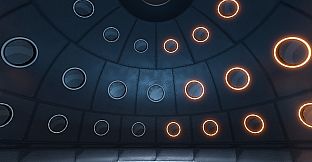
Dome — a domed arena lined with ports that open and close. Close them all
before the clock runs out; good shots put time back on it. The layout
changes every round, and the same seed always produces the same round, so
scores can be compared.
The Ladder — twelve short exercises that teach the mechanics one at a
time, with bronze, silver and gold on each. Most of what this game can do
is not obvious. This is where you find it.
Practice — an empty arena and a ball. No clock, no score.
SETTINGS
Mouse sensitivity, field of view, camera distance and height are all
adjustable. The controls are the game, and people hold a mouse
differently.
CURRENT STATE
Online play is what we are building now. The demo is single player: Dome,
The Ladder and Practice. The arena, the physics and the controls are
close to what we want them to be. The rest is not finished, and we would
rather say so than not.