







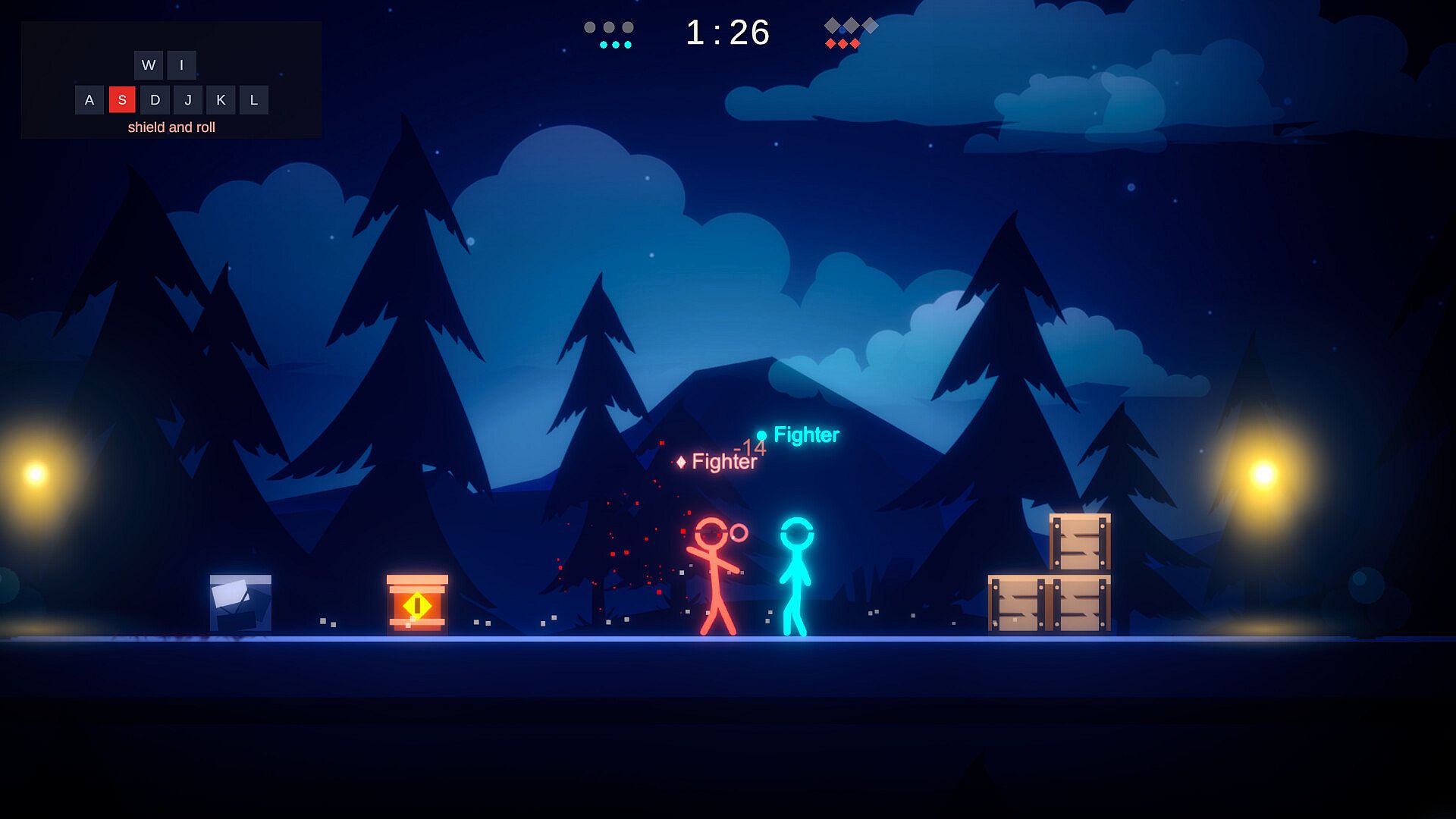
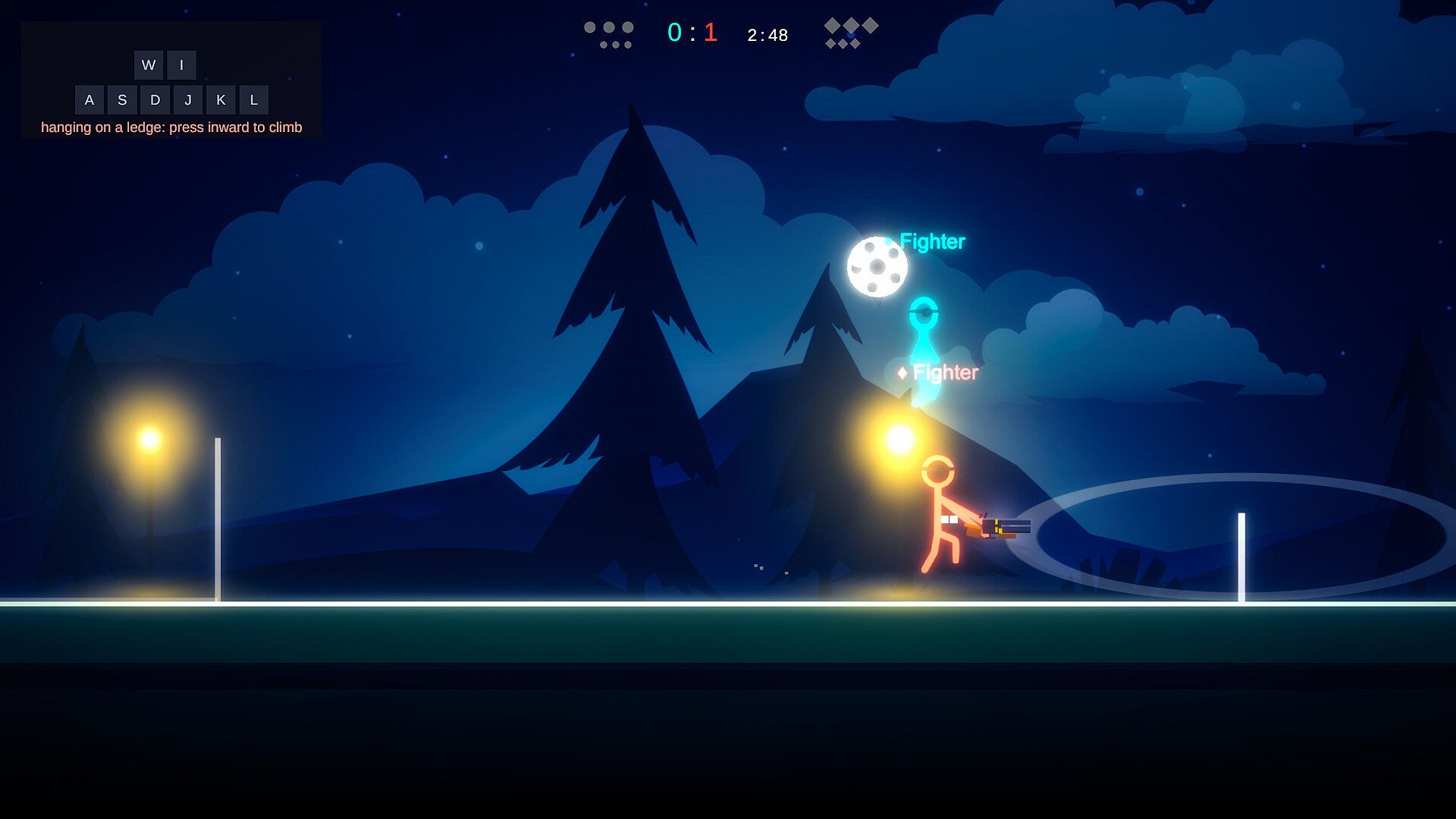
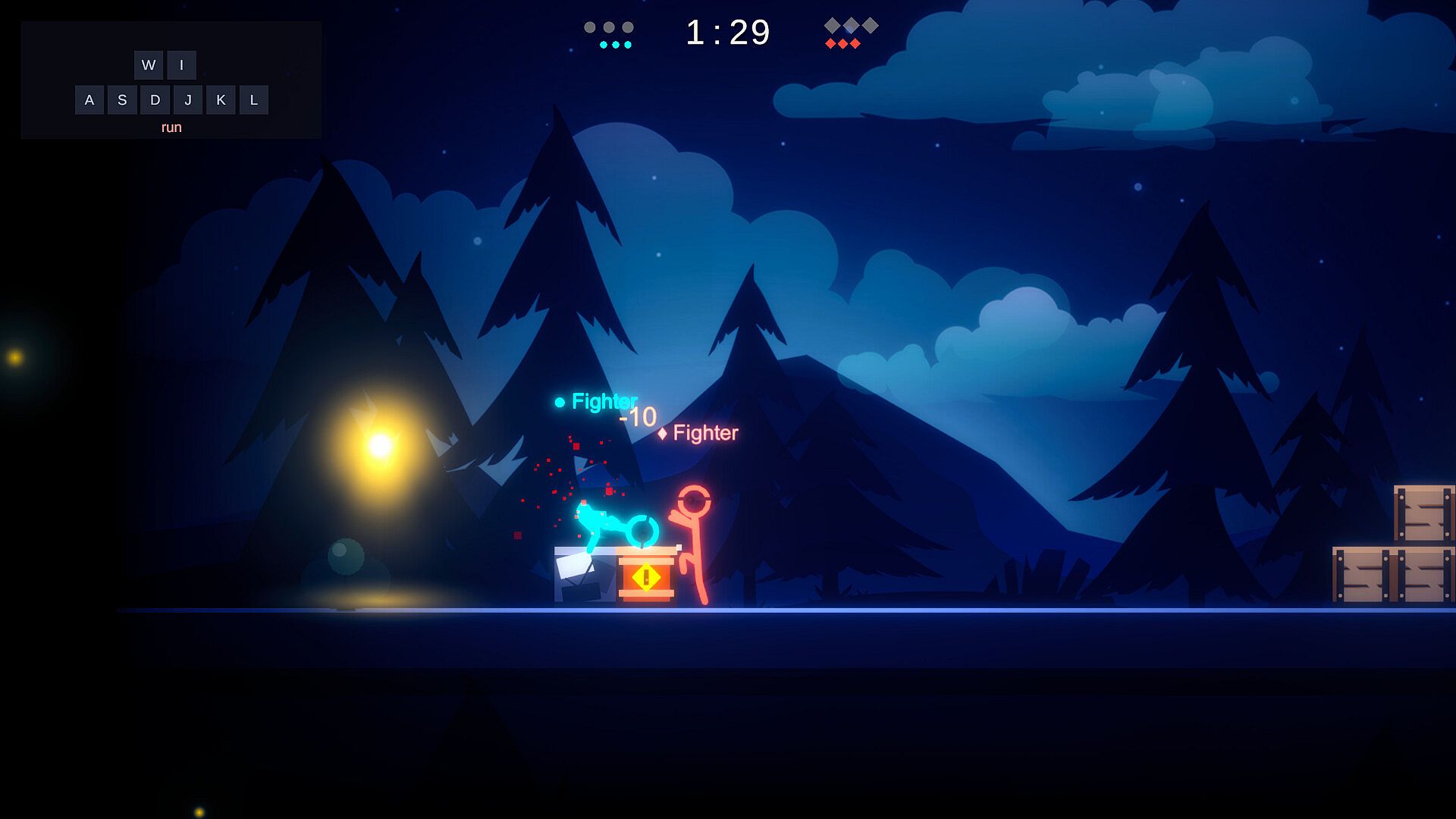
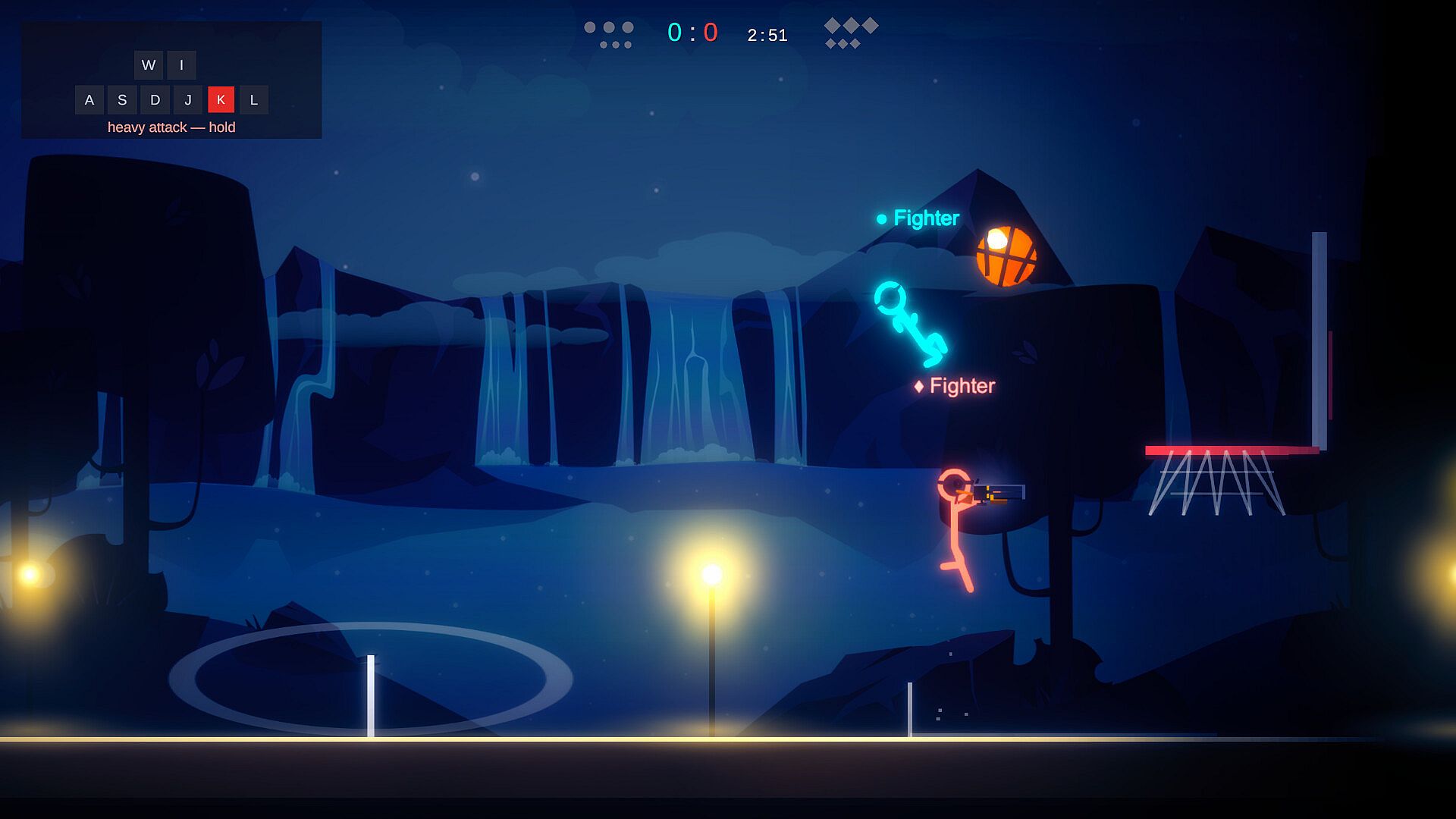
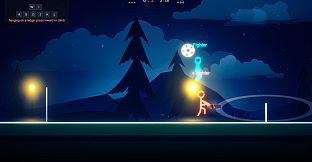
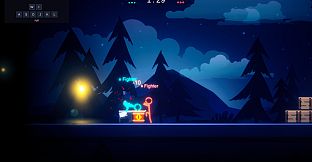

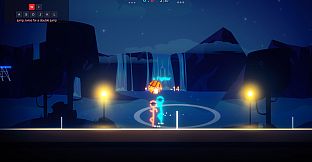
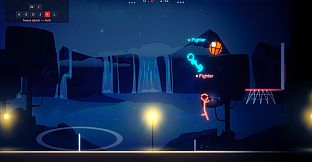
SplatStick is an action indie game built around physics-driven stickman combat on PC. Players engage in fast-paced fights where positioning, timing, and environmental hazards matter as much as direct attacks. The core loop centers on managing two separate bars for each fighter, one for health and one for accumulated damage that influences knockback distance. This setup creates opportunities for edge throws as a quicker elimination method once damage builds up, especially in longer rounds.
Gameplay
Combat revolves around a straightforward set of moves that reward precise execution. Basic attacks and held heavy attacks deal damage, while grabs enable throws that send opponents flying based on their current damage level. Shielding at the right moment triggers a parry, and rolling provides quick evasion. Aerial movement includes a double jump and directional dashes, plus the ability to push off walls for extra mobility. Falling short of a ledge allows hanging and climbing back up, though the vulnerable position makes the player an easy target for others.
Arenas actively interfere with matches through random events such as low gravity, meteor showers, earthquakes, and item rains. These are telegraphed by banners several seconds in advance, giving players time to reposition but not enough to secure a kill. Crates drop independently and contain useful pickups like medkits, speed boosts, or weapons including shotguns, bazookas, lasers, mines, knives, boomerangs, grenade launchers, anvils, and black holes. The shared nature of these hazards keeps every participant on equal footing regardless of skill or position.
Game Modes
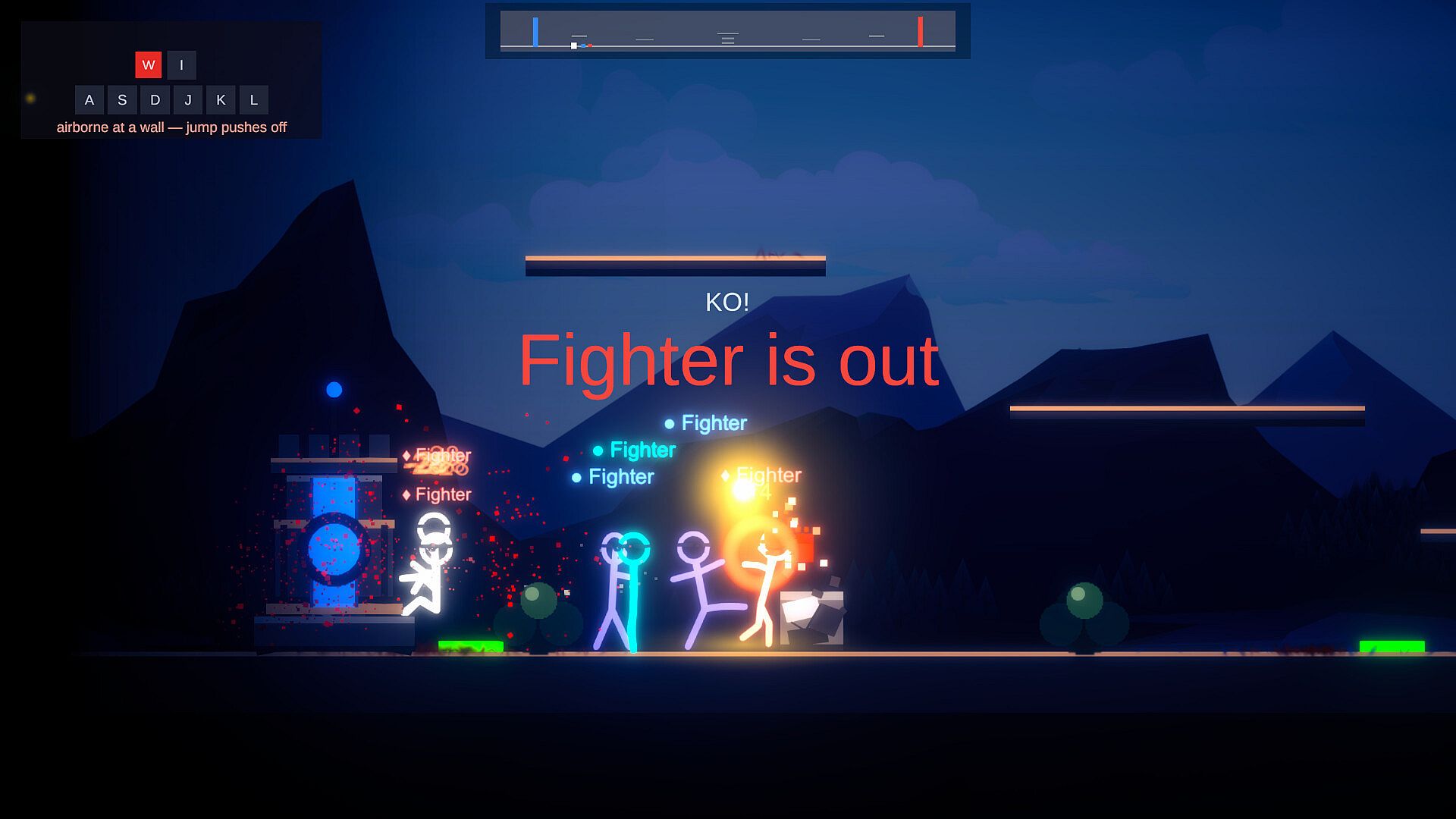
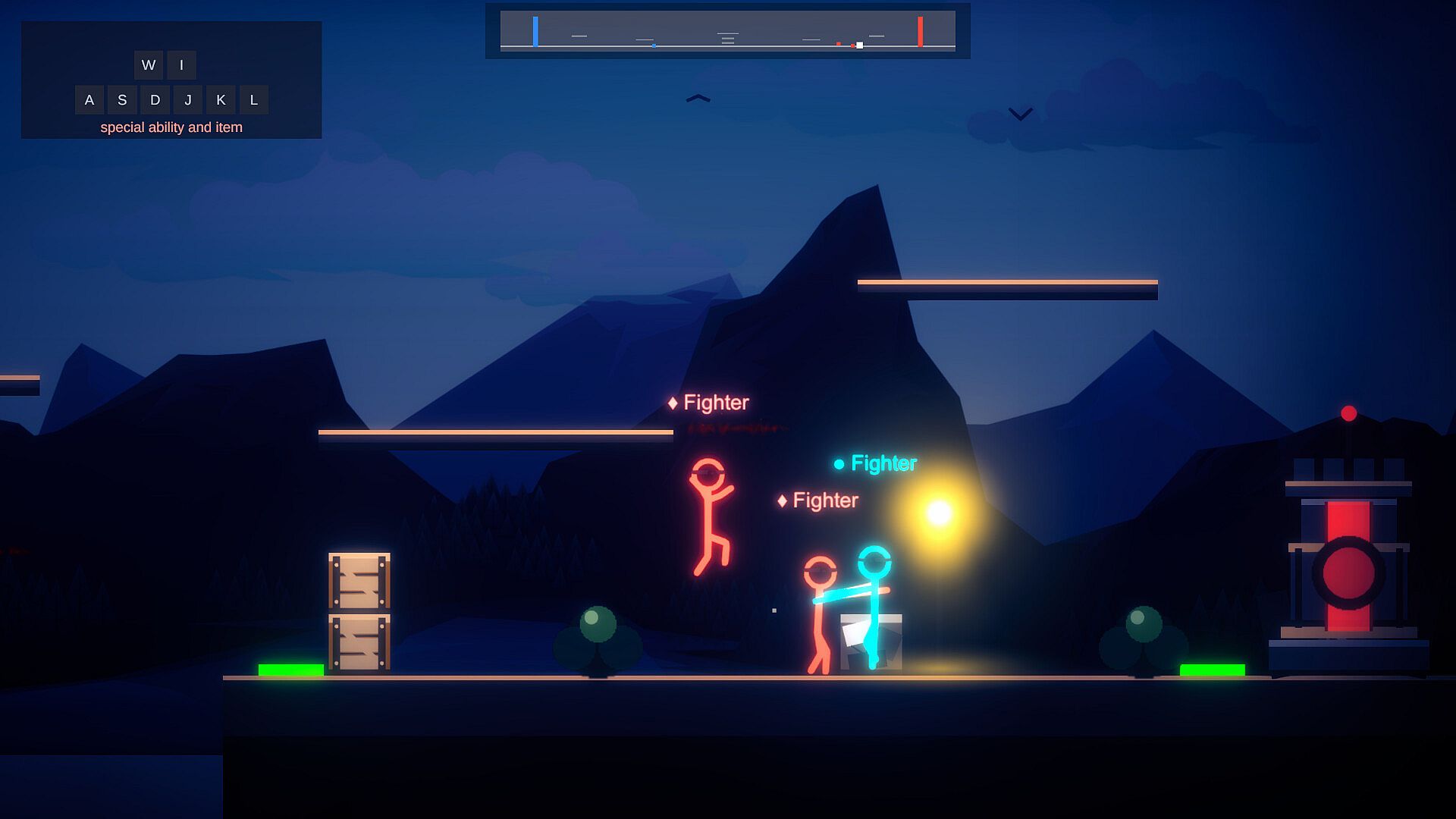
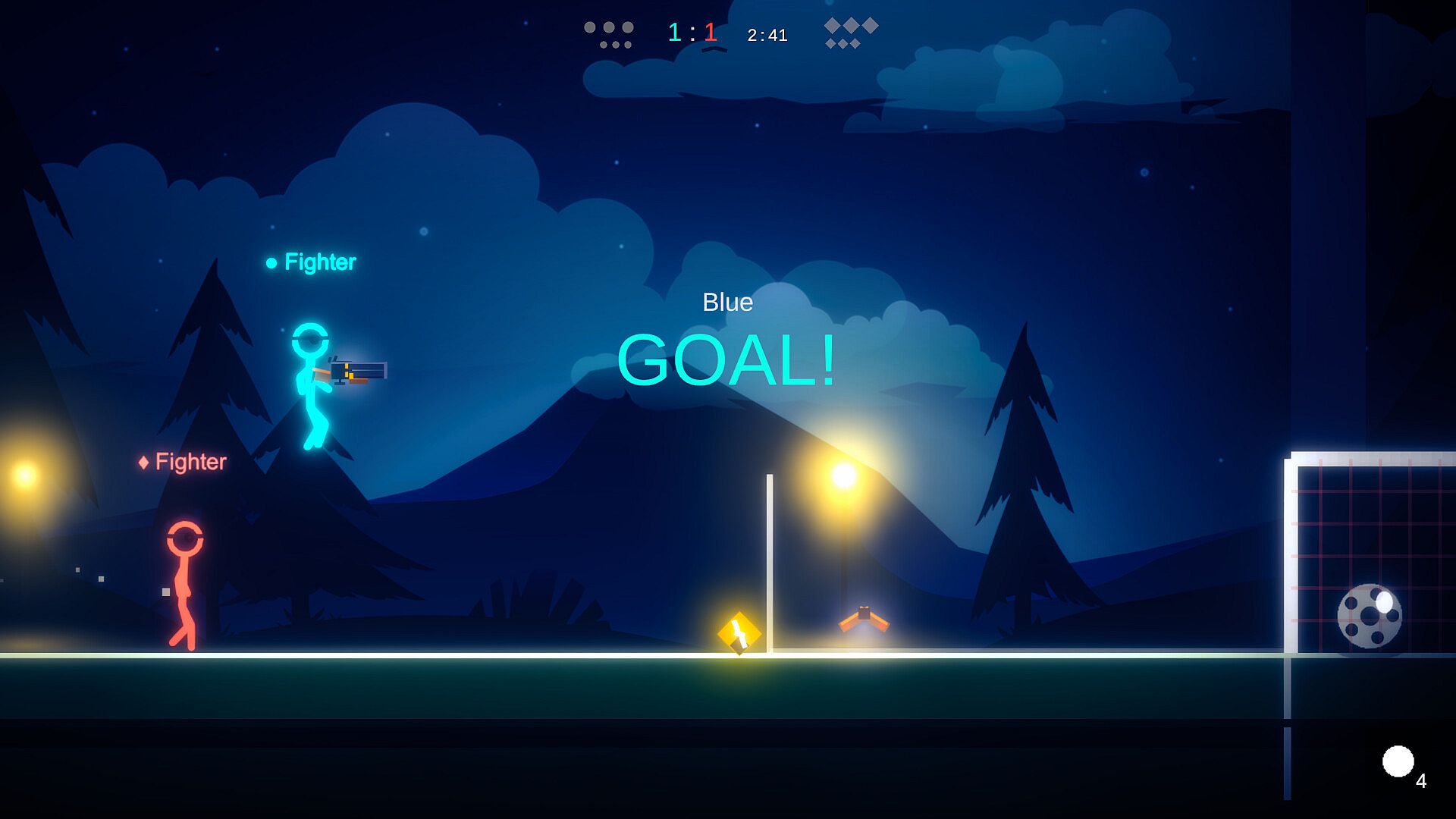
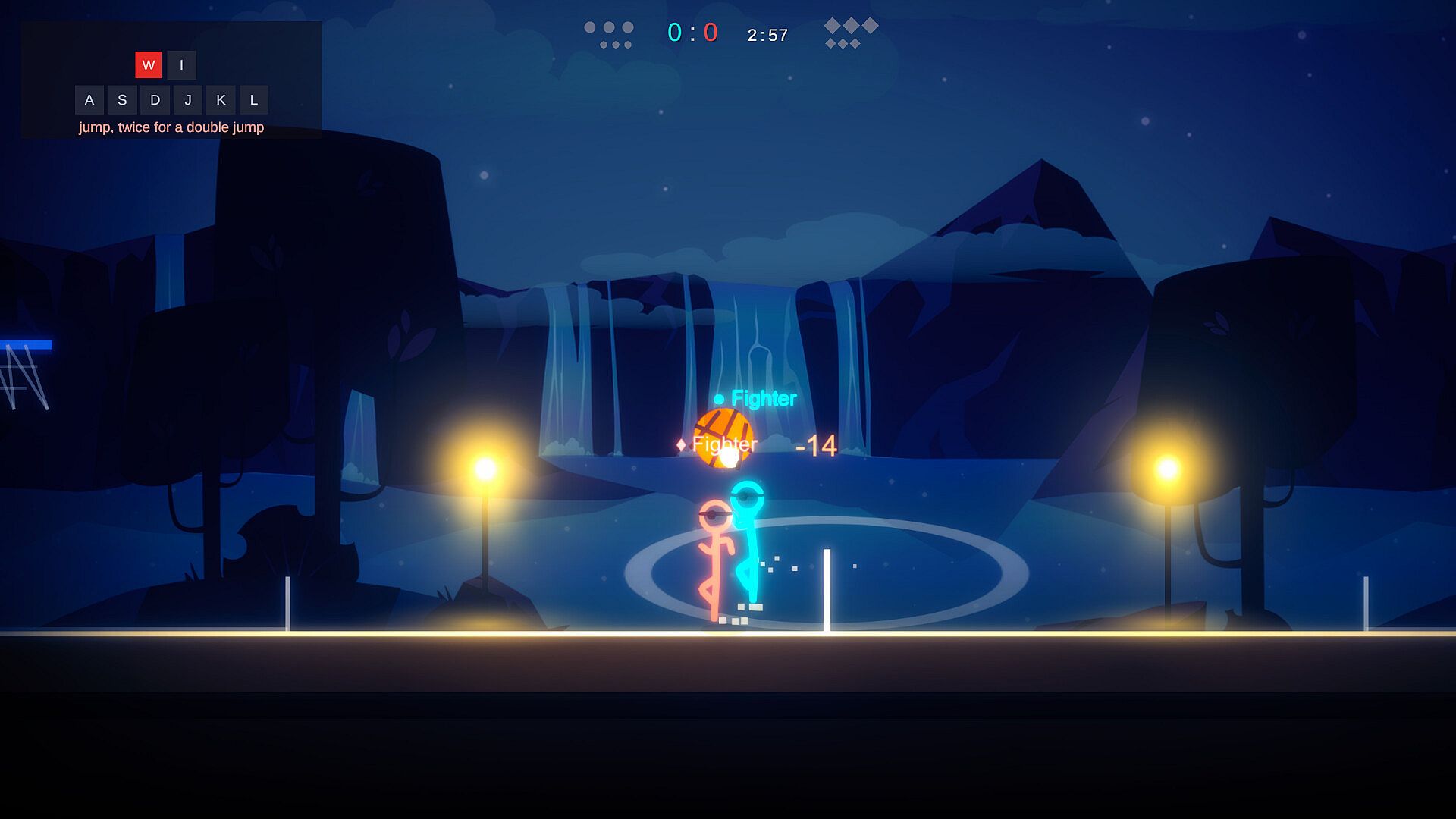
Nine distinct modes support different playstyles and group sizes. Deathmatch uses limited lives across rounds, eliminating players who exhaust their stock. Siege pits teams against opposing towers that enable respawns until destroyed. King of the Hill requires sole control of a zone, with no progress awarded when multiple fighters occupy it. Football and basketball adapt ball sports to the fighter rules, where knockouts do not eject participants and scoring happens through specific goal conditions. Rugby emphasizes carrying the ball while hits dislodge it. Capture the Flag involves transporting the enemy flag to base, with automatic returns on drops. Hot Potato passes a bomb between players via contact or strikes until the fuse expires on the holder. Waves stands apart as a cooperative survival option against AI opponents only.
Matches accommodate up to six players online in 1v1, 2v2, or 3v3 formats, with the host selecting mode and map while bots fill gaps to ensure starts proceed smoothly. Local play supports two players sharing one keyboard or using separate gamepads.
Arenas and Maps
Eight arenas provide varied layouts tailored to mode requirements. The Square and The Well offer compact spaces, while The Siege features fortress elements and The Canyon includes a central chasm. The Skyway suspends action above open voids, and The Foundry incorporates moving platforms. Dedicated fields like The Pitch and The Court handle ball-focused modes. Map selection avoids cramped layouts for modes that demand traversal distance, keeping each pool suited to its gameplay demands.
Is It Worth Playing?
SplatStick targets players who enjoy local couch co-op or small-scale online sessions with friends in a party fighter format. The combination of simple controls, physics emphasis, and mode variety supports both competitive and casual groups, including those who prefer bot-filled matches when numbers are low. Local split-screen and shared keyboard options make it accessible for households without multiple devices. As a title still listed as coming soon with no released version or player feedback available yet, its appeal rests on the described mechanics and features matching individual preferences for physics-based combat and mixed sports-inspired modes. Those seeking deeper single-player campaigns or large-scale matchmaking will find limited options here.












