


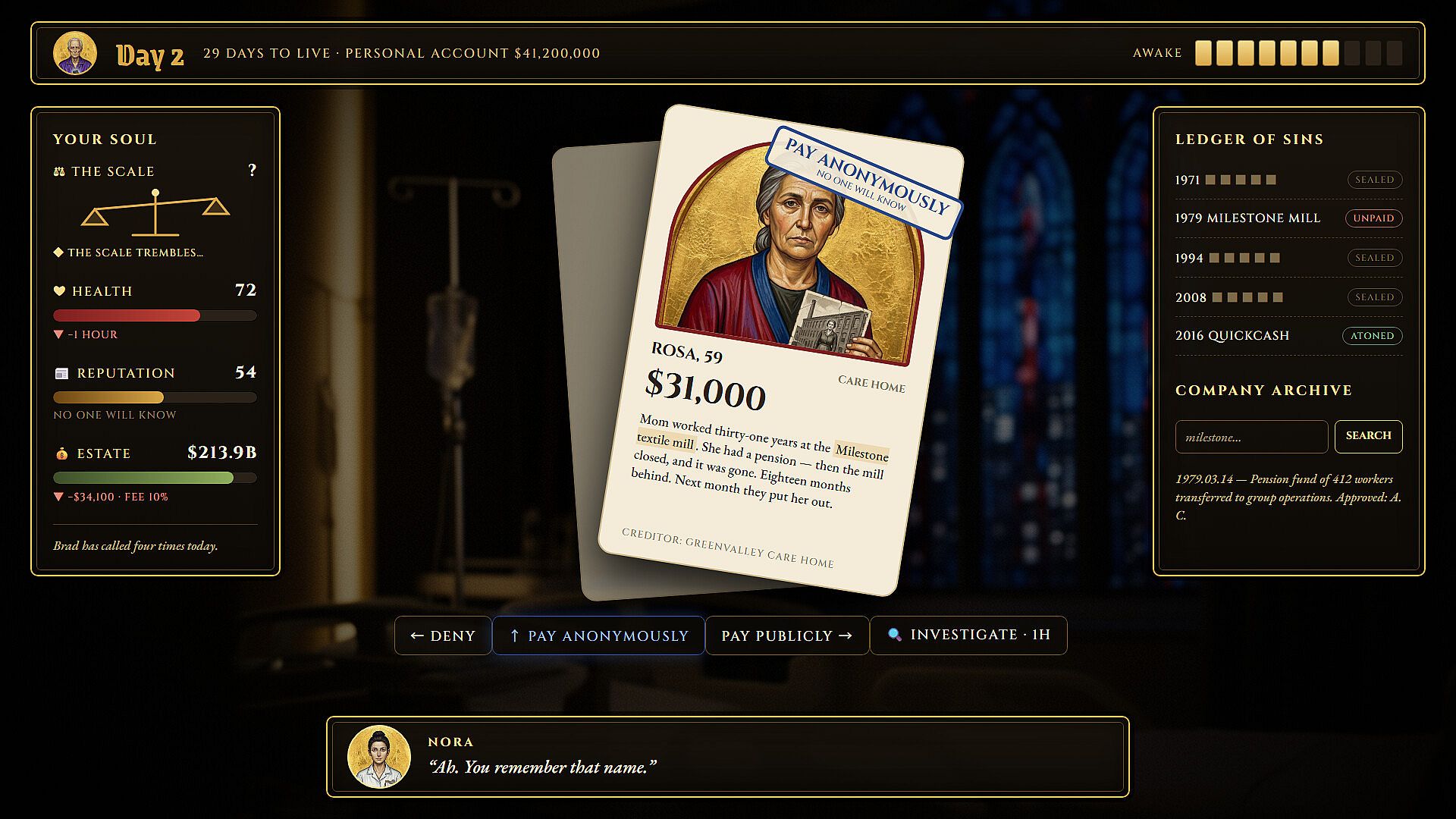





Swipe to Heaven is a single-player strategy, indie, simulation, and adventure game for PC. Players step into the role of a dying billionaire who uses a viral debt-swiping app to decide the fates of strangers while facing the consequences of a lifetime of wealth accumulation.
Gameplay
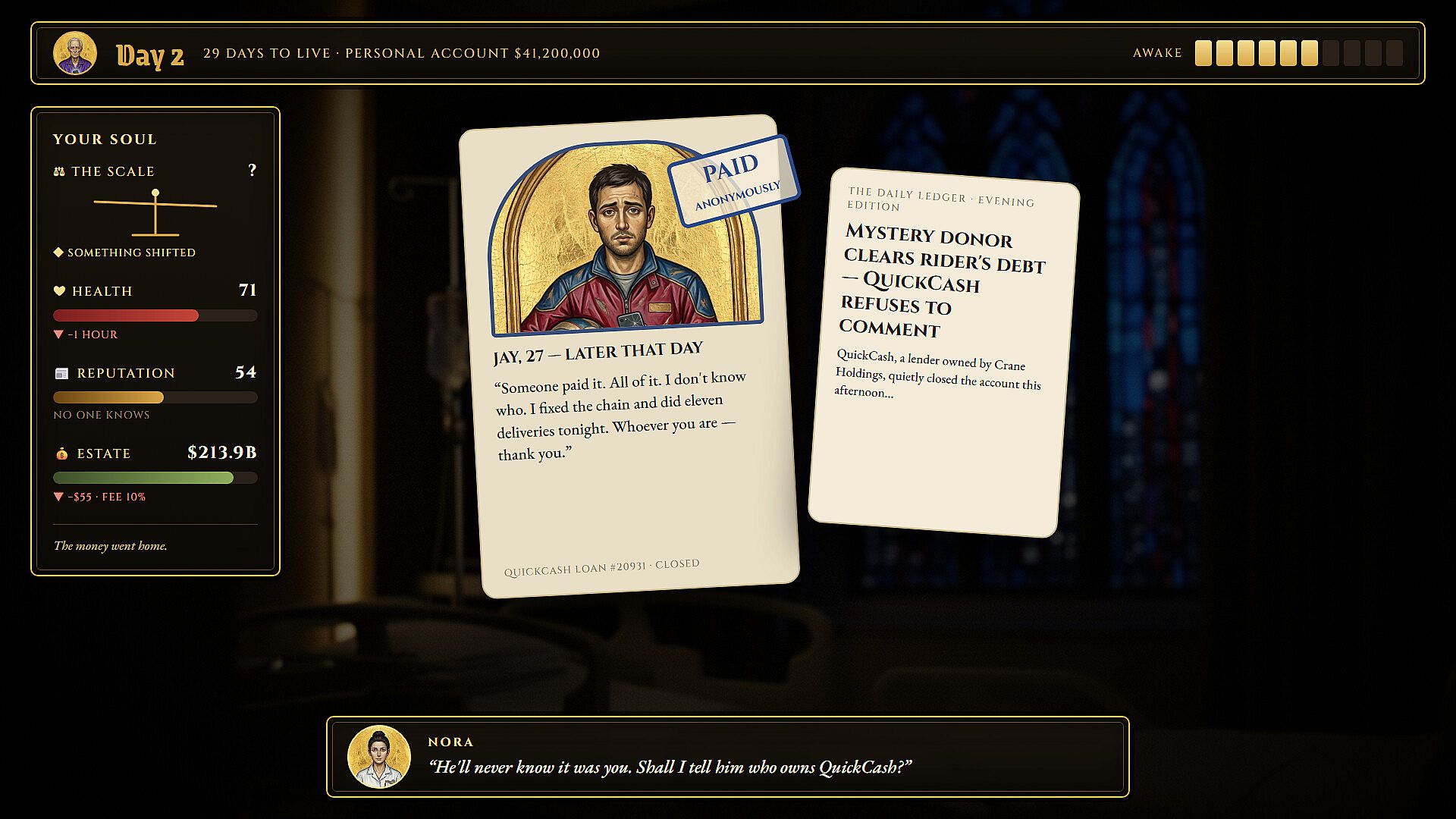
The core loop centers on reviewing digital cards that represent individual debts and personal stories. Each card shows a real person facing financial hardship, such as a rider with a small loan or a family struggling with care costs. Players swipe to pay publicly for visibility, pay anonymously to avoid attention, or refuse and let events unfold without intervention. Every decision carries weight because the app tracks public perception and private records alike.
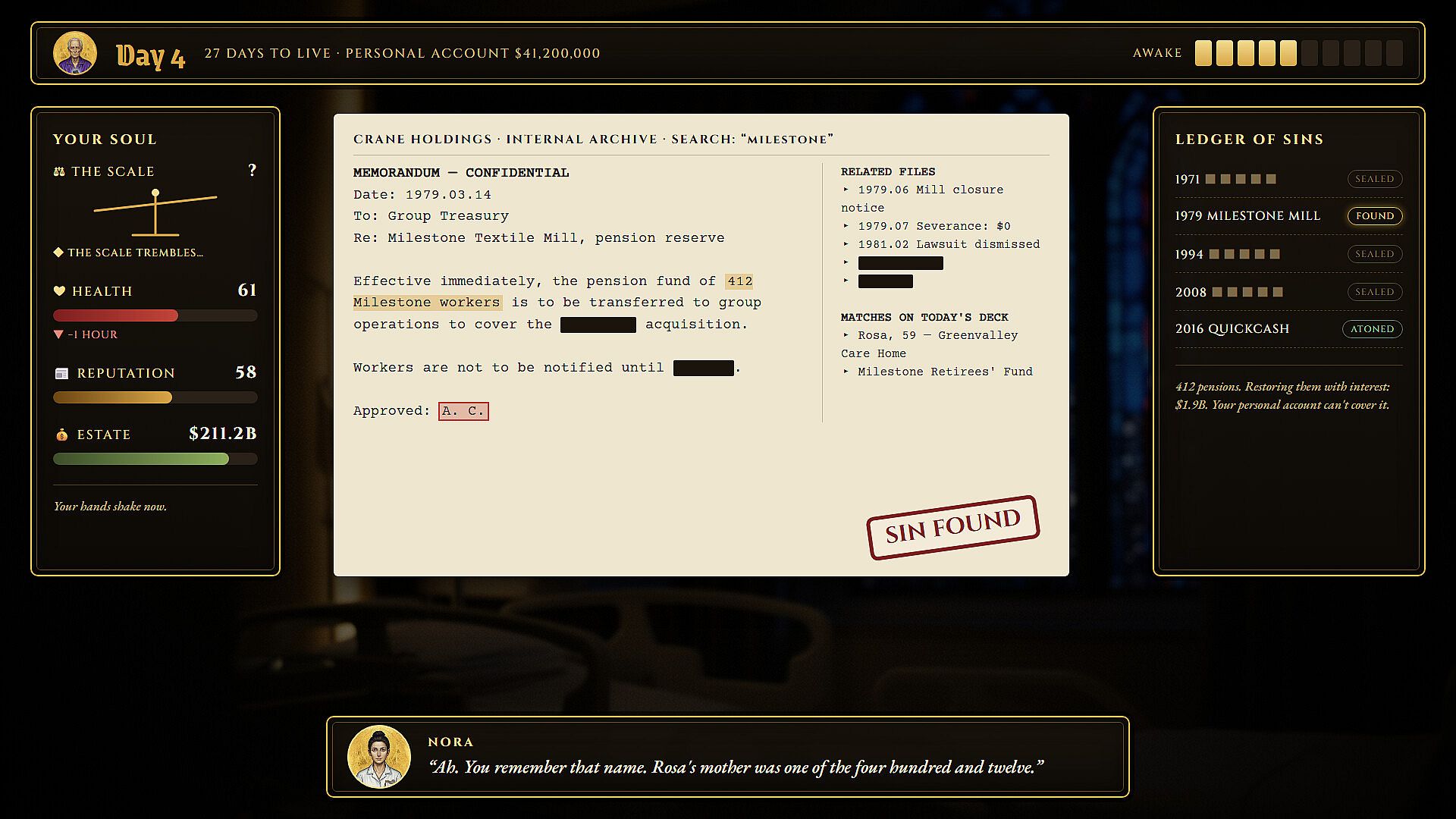
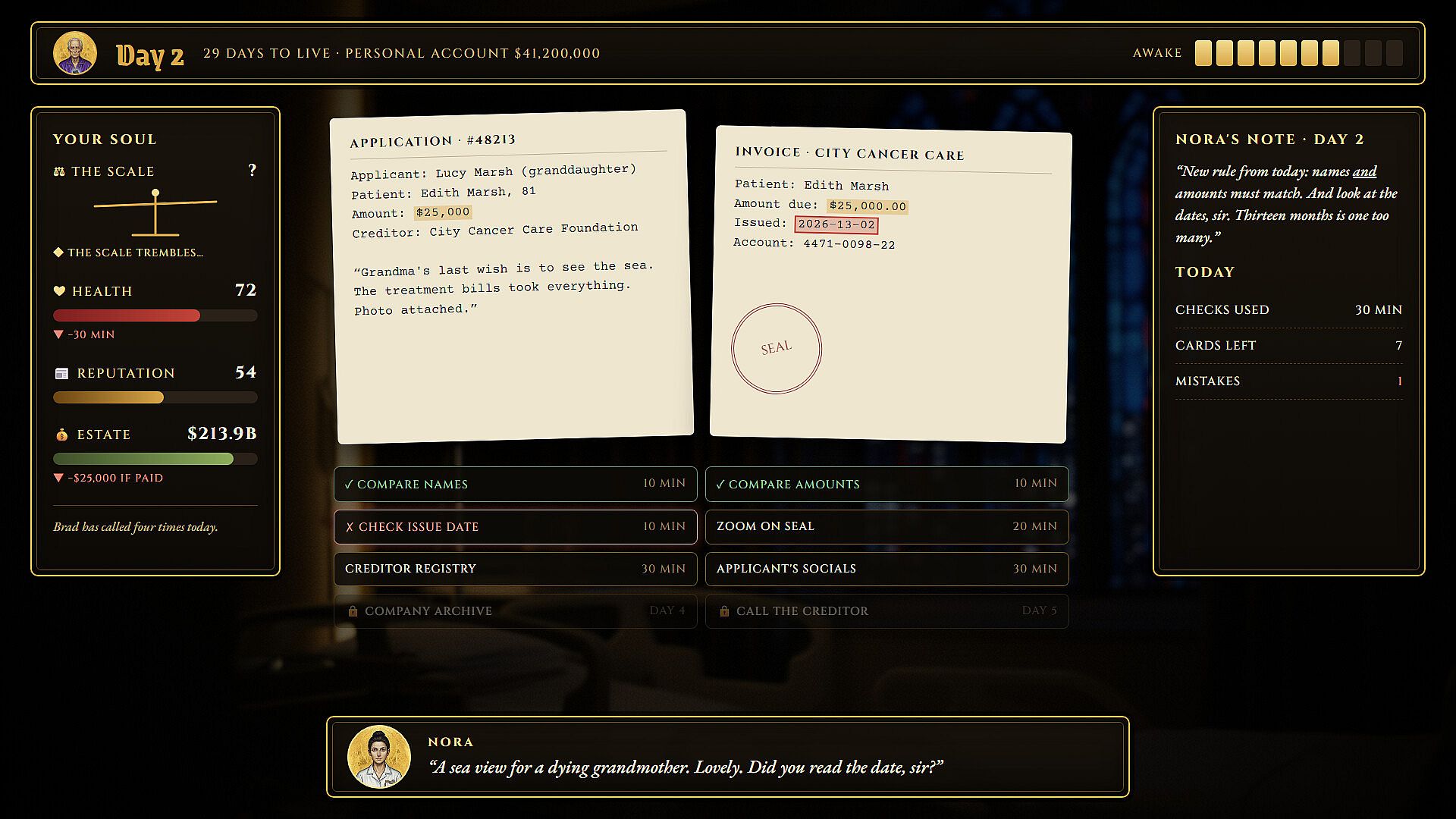
Investigation forms a key layer. Players can cross-reference bills against submitted applications to spot inconsistencies or potential scams, though each verification consumes limited time. Health declines steadily, reducing available hours each day and blurring vision, which forces quicker choices as the story progresses. Company archives become accessible for deeper searches into past business decisions that may connect directly to the people appearing in the deck.
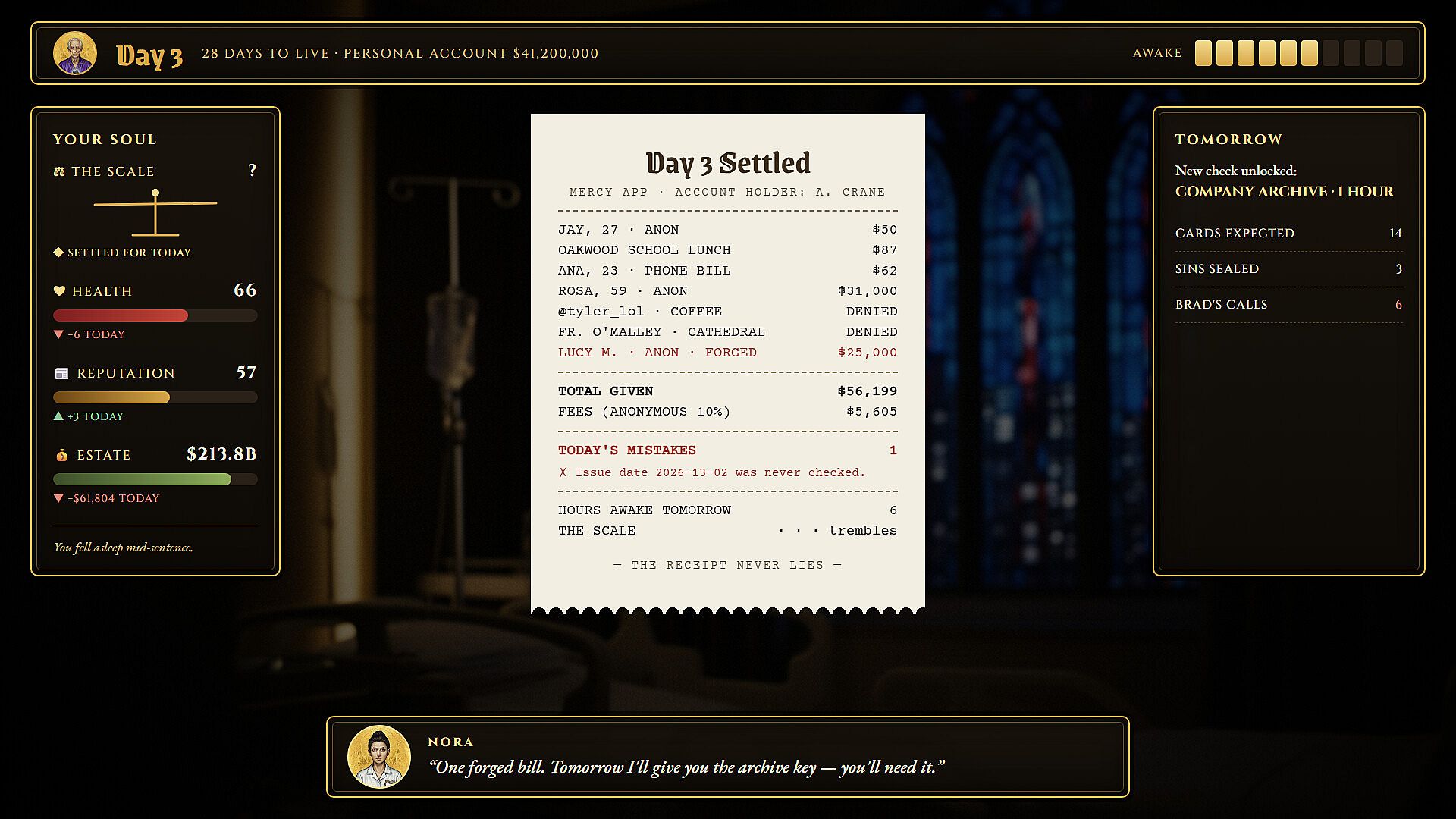
Financial mechanics add another dimension. Selling shares generates funds for payments but triggers market reactions that create new hardships elsewhere. The final receipt compiles every payment and refusal into a permanent record that shapes the conclusion. Multiple endings emerge from the combination of choices, including paths toward heaven, hell, purgatory, and unexpected rebirth scenarios.
Game Modes
Swipe to Heaven operates entirely as a single-player experience with no multiplayer components. The structure revolves around a continuous narrative session where players manage the deck of cards over a limited number of days. Branching outcomes depend on the pattern of payments, refusals, investigations, and personal revelations uncovered during play.
Progression follows the protagonist's physical deterioration, which serves as the primary timer and constraint. No separate modes alter the core rules; instead, replay value comes from exploring different decision paths and their effects on the final receipt and ending sequence.
Narrative and Themes
The story examines the intersection of wealth, guilt, and mortality. Cards introduce ordinary individuals whose lives intersect with the billionaire's fortune, prompting reflection on exploitation and responsibility. Public versus anonymous payments highlight the tension between image management and genuine action.
Mechanics reinforce these themes through the receipt system and health decline. Every action leaves a trace, and the shrinking window of clear decision-making mirrors the protagonist's fading capacity. Players must weigh immediate moral choices against long-term consequences that ripple through the simulated world.
Is It Worth Playing?
Swipe to Heaven suits players who value deliberate choice-driven narratives and moral decision systems in a single-player format. The combination of swiping mechanics, investigation requirements, and time pressure from declining health creates a focused experience centered on consequence and reflection. Those drawn to simulation and strategy elements that emphasize personal accountability rather than combat or resource collection will find the approach distinctive.
Because the game remains in development with no released version or player reviews available, interest depends on appreciation for its described systems of debt management, past excavation, and branching conclusions. The concept delivers a compact, introspective session built around one central character and a deck of interconnected stories.