




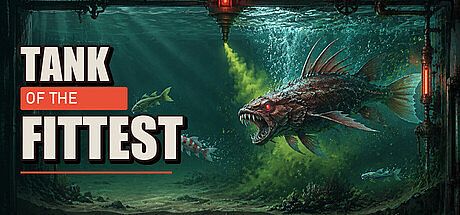


Tank of the Fittest is a single-player strategy simulation game that places players in charge of an industrial aquarium pushed to its limits. The title blends elements of simulation, strategy, and indie design to create a roguelite experience centered on environmental manipulation and specimen evolution. Players adjust conditions to test survival, observe ecosystem shifts, and pursue long-term goals through repeated experiments.
Gameplay
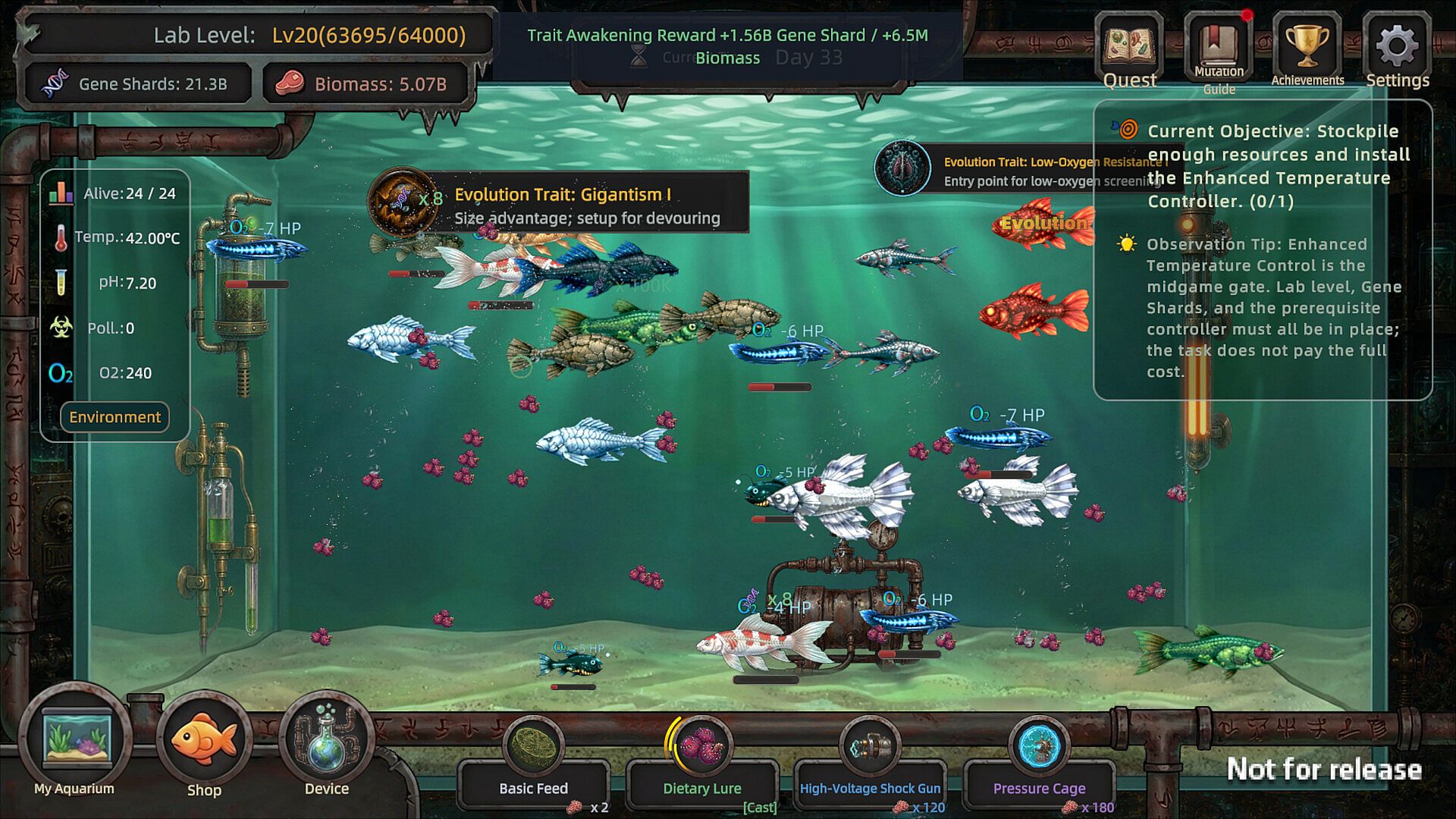
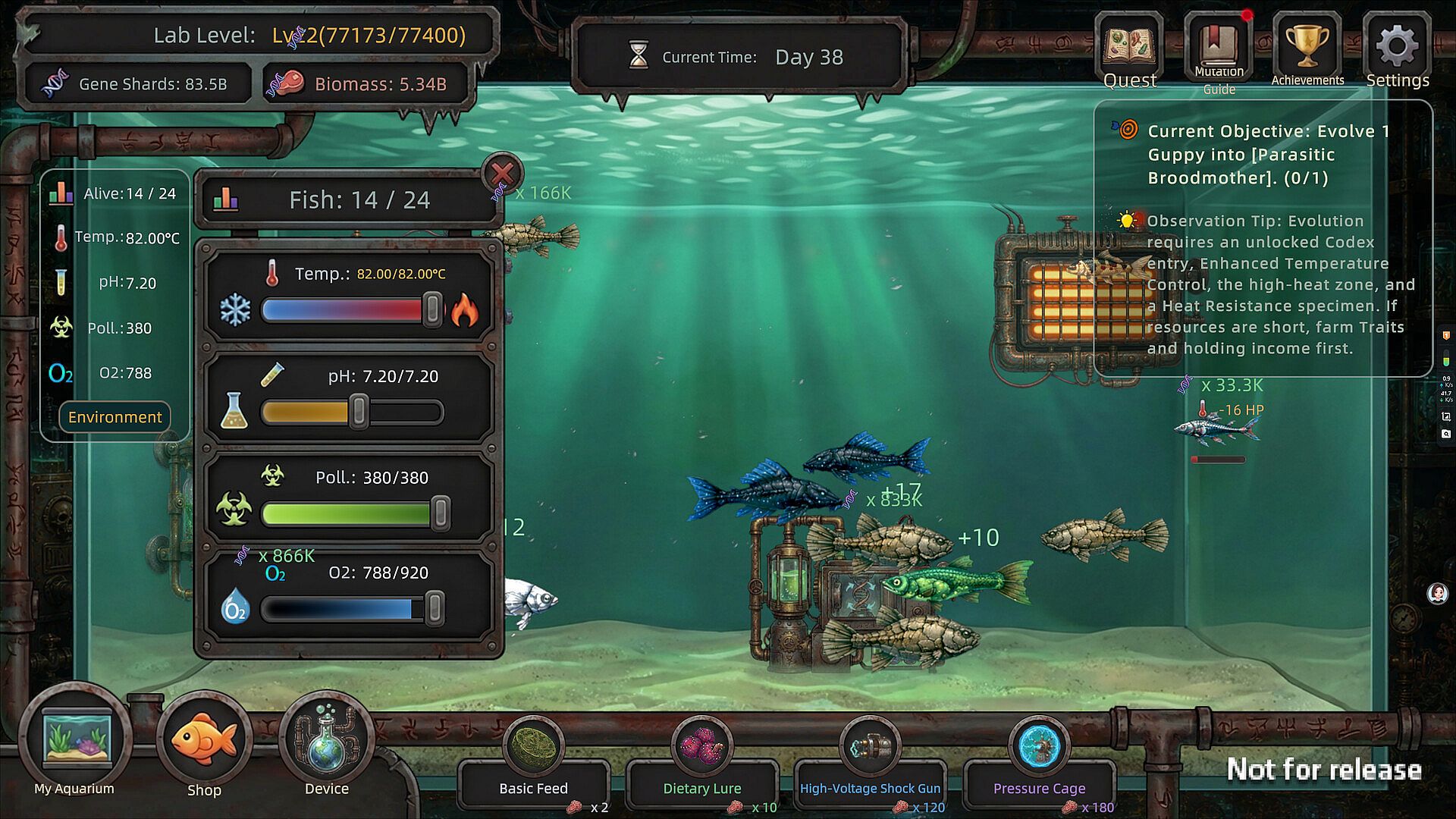
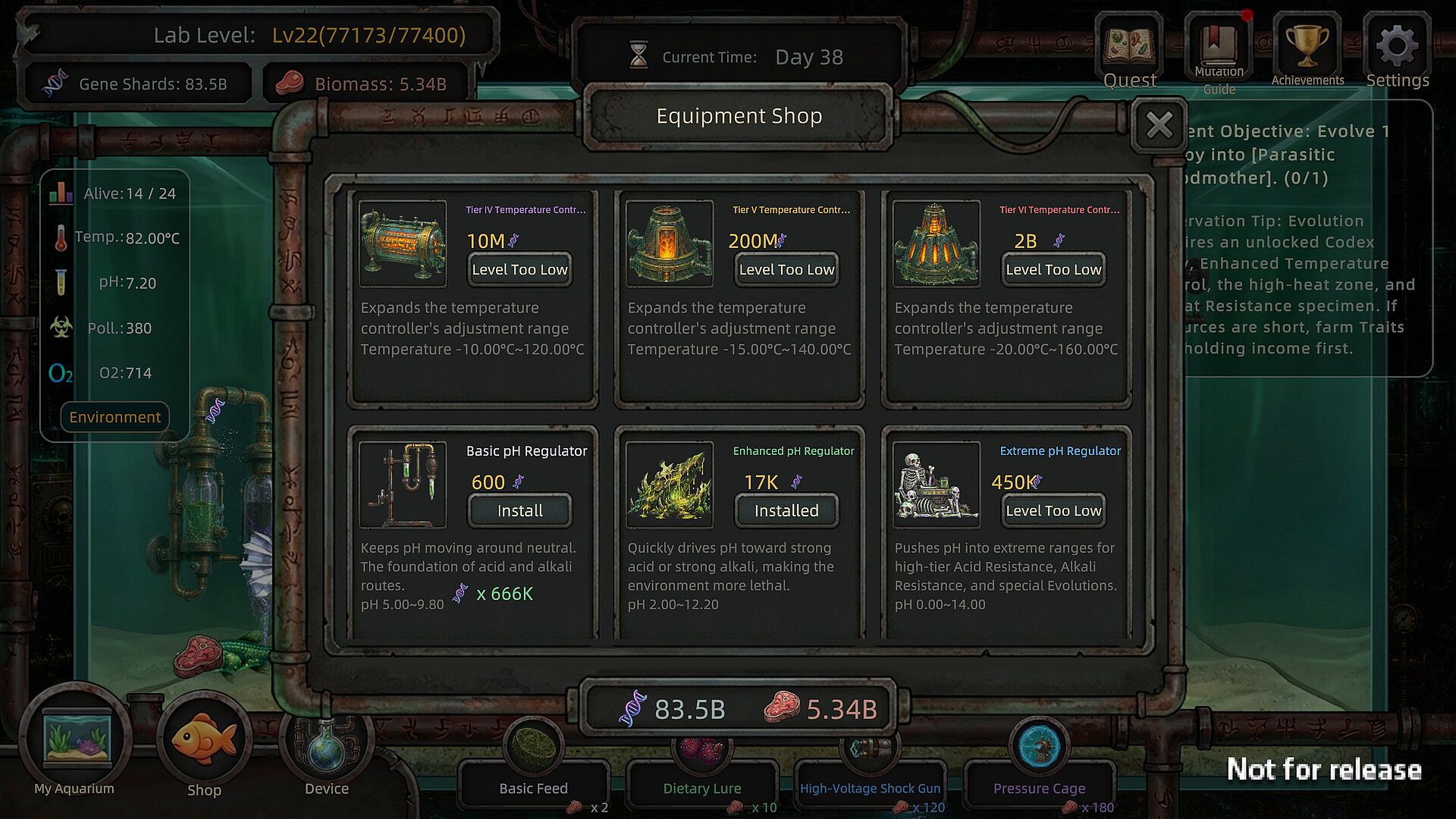
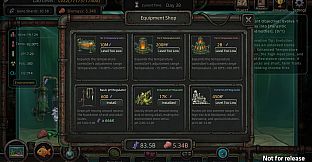
The core loop revolves around managing four key environmental factors: heat, pH, oxygen levels, and pollution. These parameters serve as tools to apply selective pressure rather than simple comfort settings. Increasing heat or reducing oxygen, for example, can eliminate weaker specimens while favoring those that adapt or develop new traits. Death feeds into the system as remains attract scavengers, support predators, and influence pollution levels, creating chain reactions across the tank.
Specimens respond to these pressures by gaining traits and following evolution paths. Focused builds around trait families and synergies allow a single survivor to become dominant. The game encourages committing to specific paths that turn ordinary fish into apex specimens capable of reshaping the entire ecosystem. Pursuit, escape, devouring, and scavenging form observable chains that players can influence through deliberate choices.
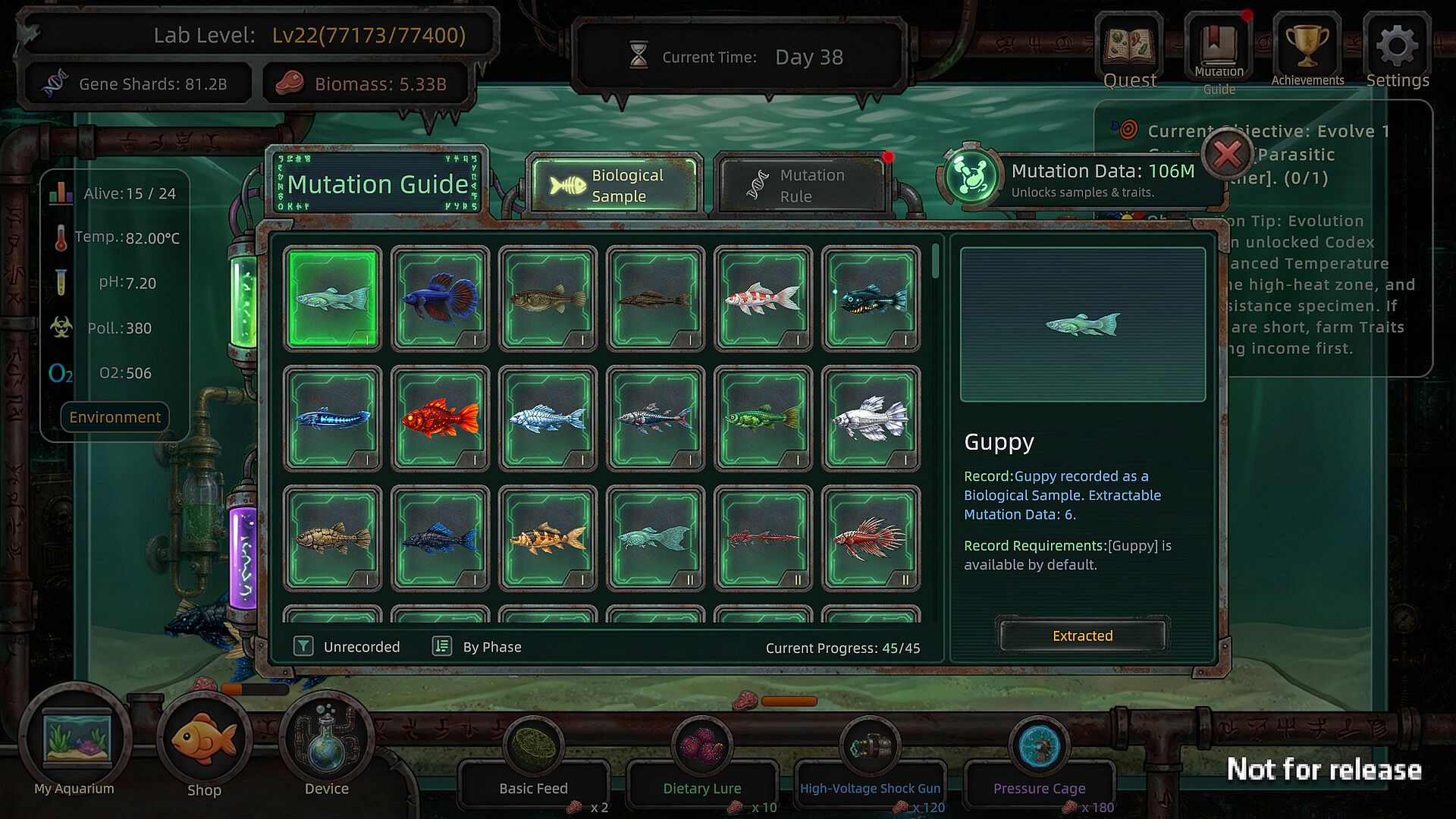
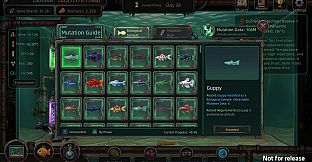
Progression ties into an archive system. Tasks advance the overall experiment, while the Mutation Codex unlocks new fish lineages. Each run generates data on discovered specimens and traits, which players record for future reference. This setup turns incomplete outcomes into objectives for subsequent attempts, supporting a repeatable structure without relying on external multiplayer elements.
Game Modes
Tank of the Fittest operates as a single-player roguelite with no separate multiplayer modes. The primary experience consists of experimental runs in the aquarium, where each session functions as an independent test of environmental controls and specimen development. Players restart with new parameters or build on archived results from prior runs.
The structure emphasizes iterative experimentation. One session might focus on pollution spread to trigger scavenging chains, while another prioritizes oxygen starvation to force rapid trait acquisition. Results carry forward through the codex and recorded data, allowing players to refine strategies across multiple attempts rather than through distinct named game modes.
Key Mechanics and Features
Control over heat, pH, oxygen, and pollution drives all outcomes. These adjustments create predictable pressures that specimens meet with trait gains or elimination. The system supports 15 base fish lineages, which expand into 45 recorded specimen forms through evolution.
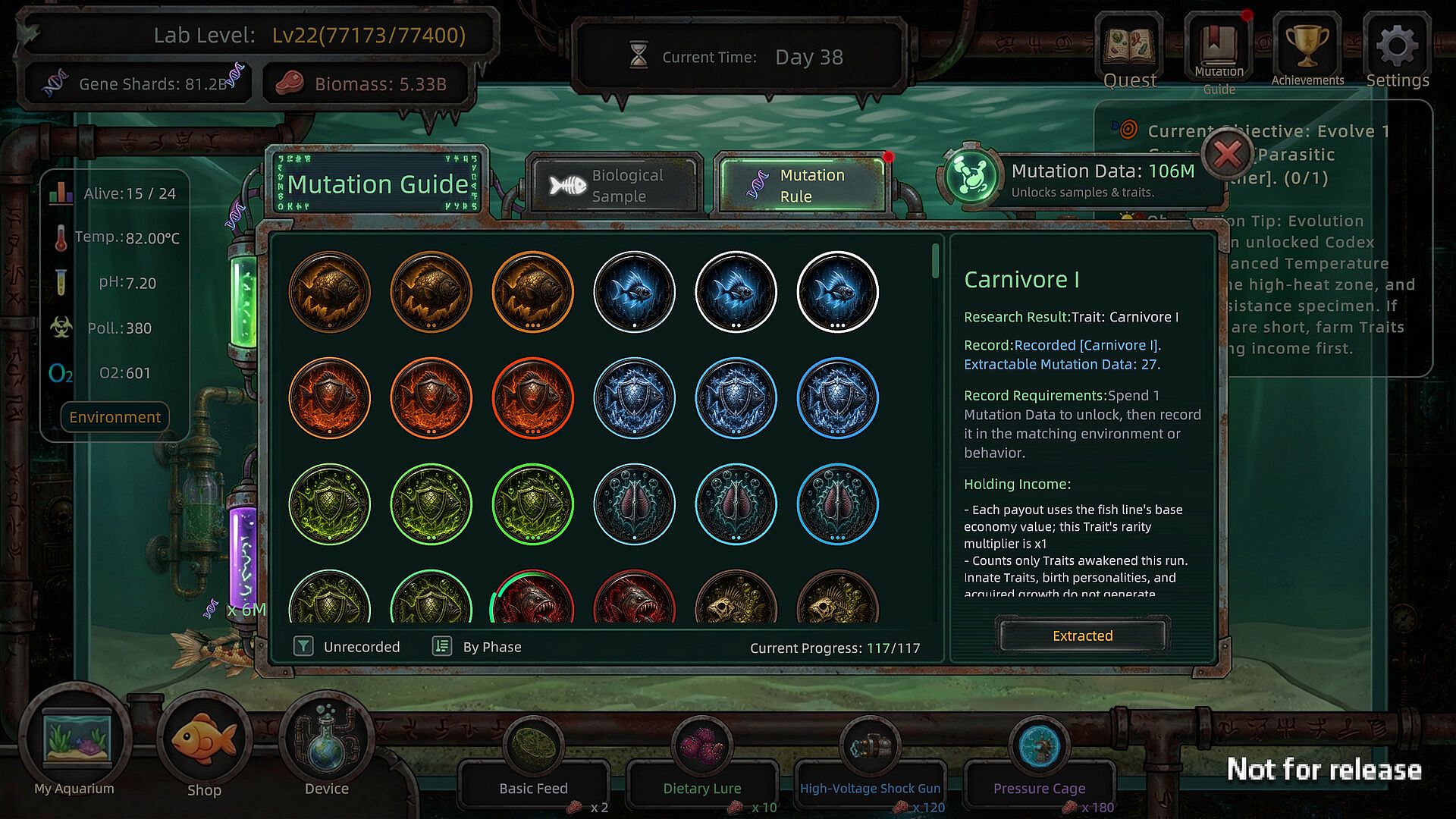
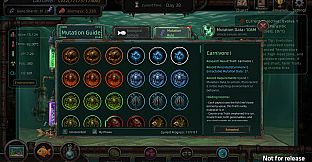
Players explore 117 obtainable traits and 36 synergies. These elements combine into builds that emphasize trait families, letting one strong specimen dominate through synergies. Ecosystem chains emerge naturally from interactions like devouring and scavenging, turning individual deaths into resources that sustain or alter the tank.
The Mutation Codex serves as the central progression hub. Unlocking lineages and archiving discoveries provides concrete goals between runs. This documentation layer rewards observation and planning, turning each experiment into both a test and a source of future data.
Who Is It For
The game appeals to players interested in simulation and strategy titles that reward careful environmental management. Those who enjoy roguelite structures with persistent unlocks will find value in the codex and trait recording systems. Casual and indie audiences seeking a focused, single-player experience without competitive elements may appreciate the deliberate pace of observation and adjustment.
Mechanics center on cause-and-effect relationships rather than fast action. The emphasis on building around survivors and analyzing ecosystem responses suits players who prefer planning over immediate reflexes. Availability on PC supports straightforward access for those matching this preference profile.
Is It Worth Playing?
Tank of the Fittest remains in development with a planned release in Q4 2026 and currently shows no user reviews. Its appeal rests on the verified systems of environmental control, trait evolution, and run-based archiving described in official materials. Players drawn to strategy simulation with roguelite progression may find the focus on specimen builds and ecosystem chains engaging once available.
The single-player format and emphasis on repeatable experiments provide a clear niche. Those seeking detailed management of living systems and long-term discovery through the Mutation Codex can evaluate the title based on its listed features, including support for 15 lineages, 45 forms, 117 traits, and 36 synergies. Final judgment depends on individual interest in these mechanics after launch.











