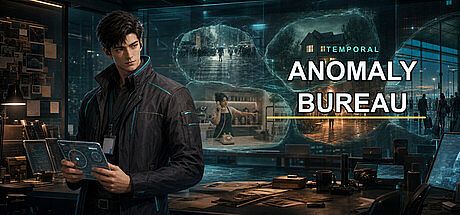




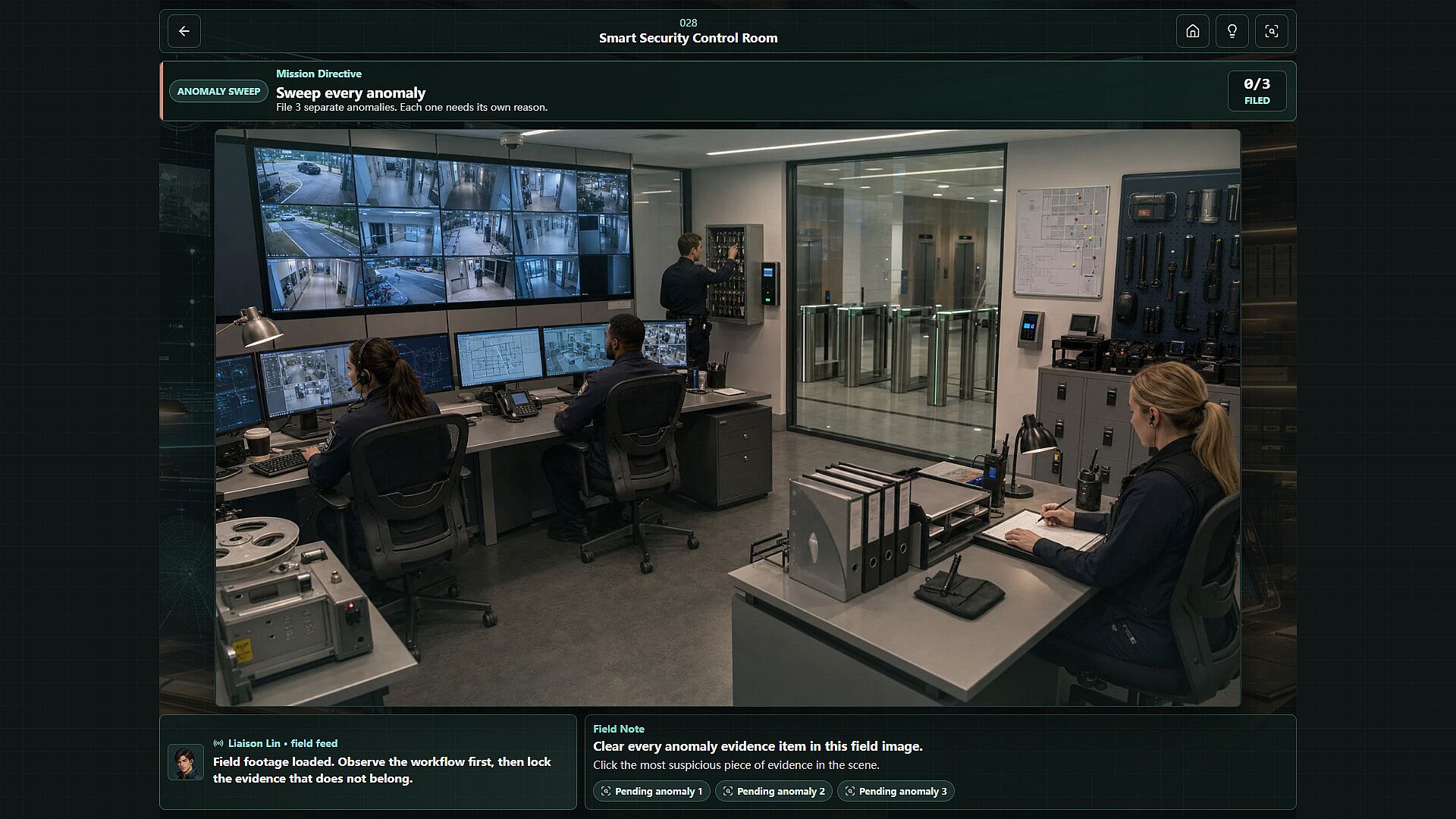
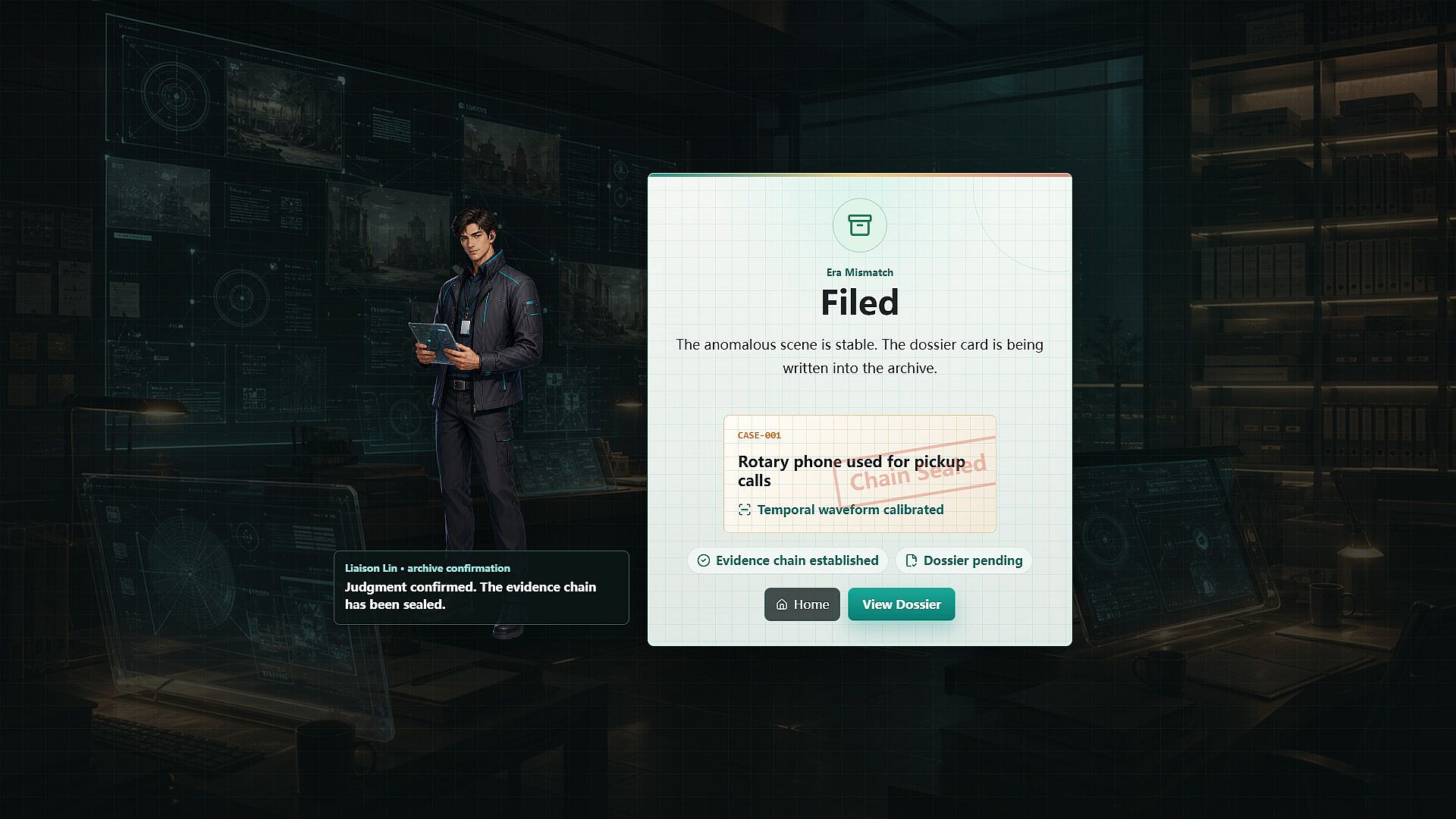
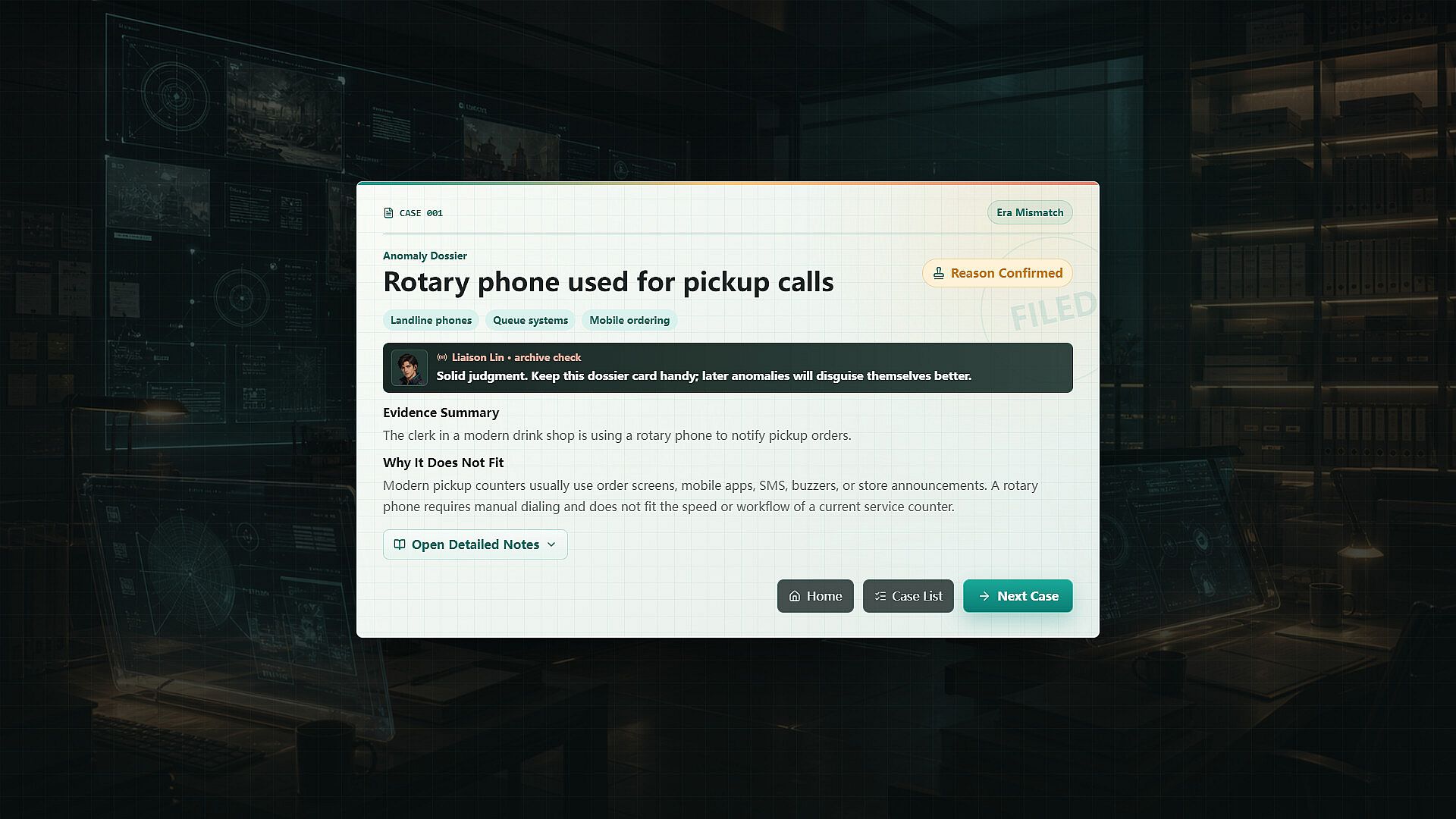
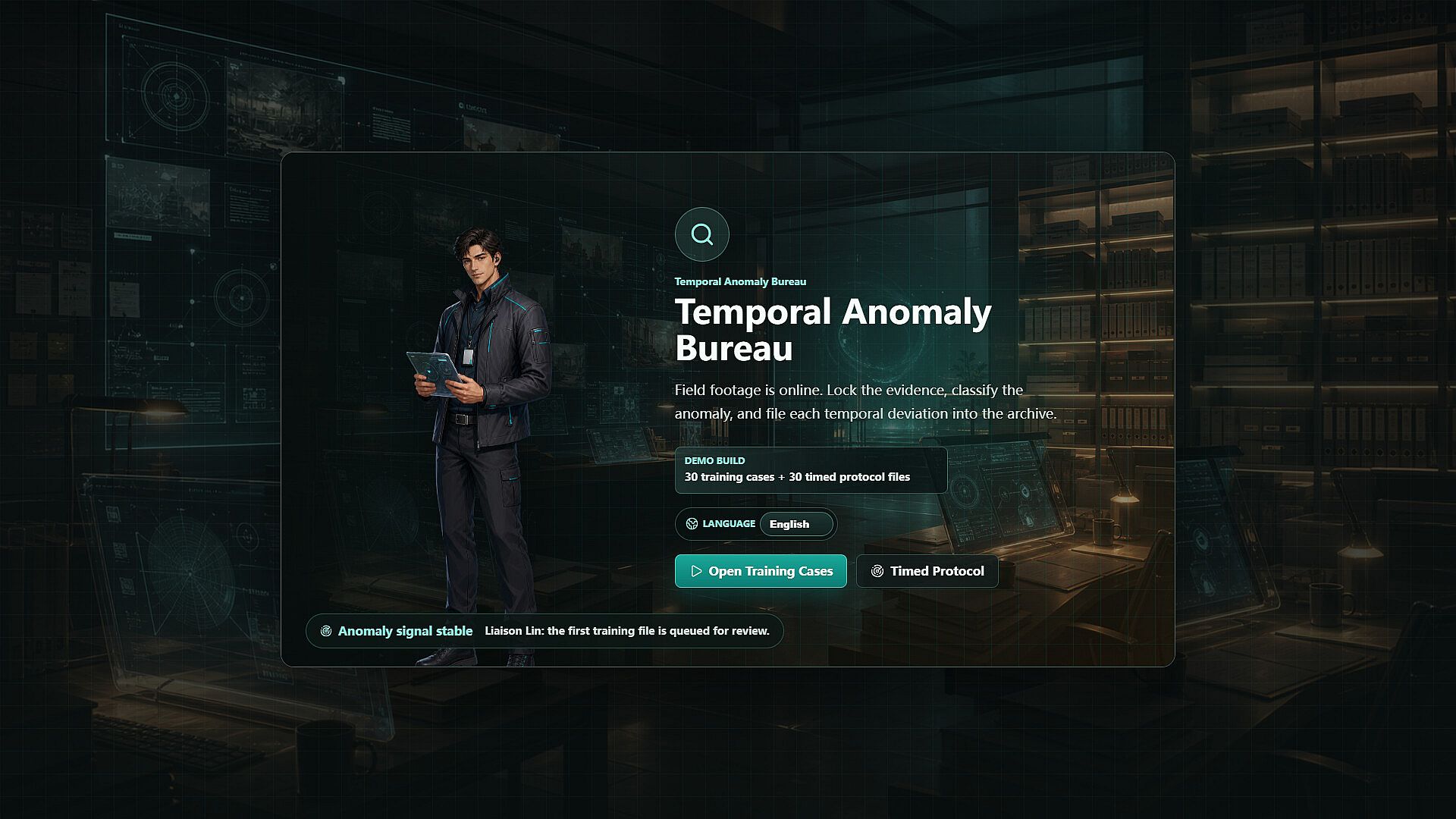
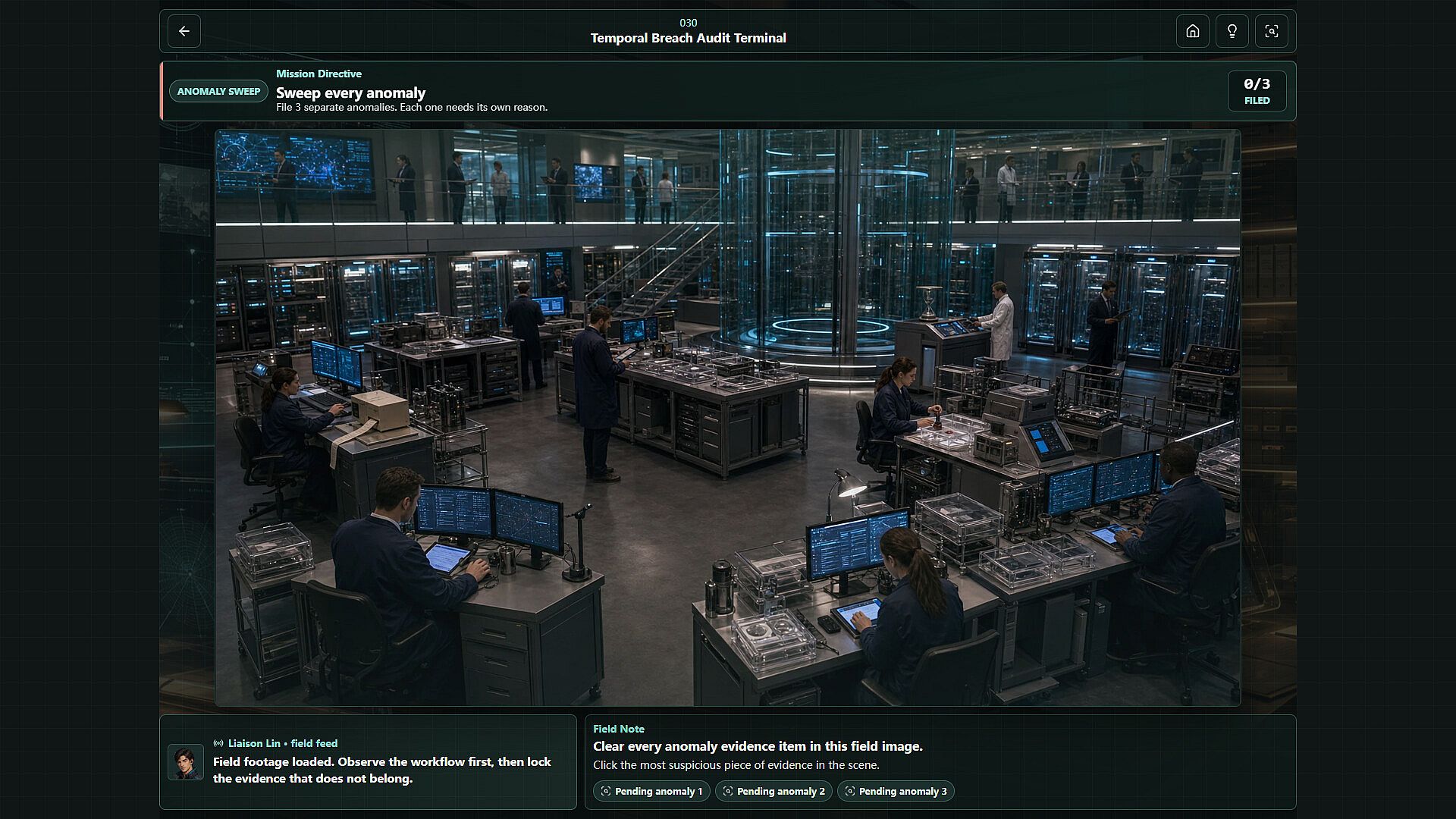



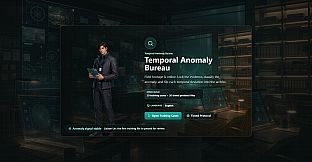
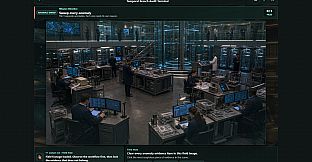
Temporal Anomaly Bureau is a casual single-player puzzle game in which players act as investigators for a specialized agency. The core task involves examining static scenes from homes, offices, public areas, and technical facilities to locate and interpret evidence that breaks established rules of time, profession, or technology.
Gameplay
The central loop requires careful observation of each environment followed by identification of specific anomalies. These can appear as objects from the wrong historical period, tools or procedures mismatched to a given job, or devices operating outside their normal technical limits. A single visible item rarely resolves the case on its own. Instead, players must compare multiple pieces of evidence, trace logical connections between them, and determine the underlying cause before compiling a full case dossier.
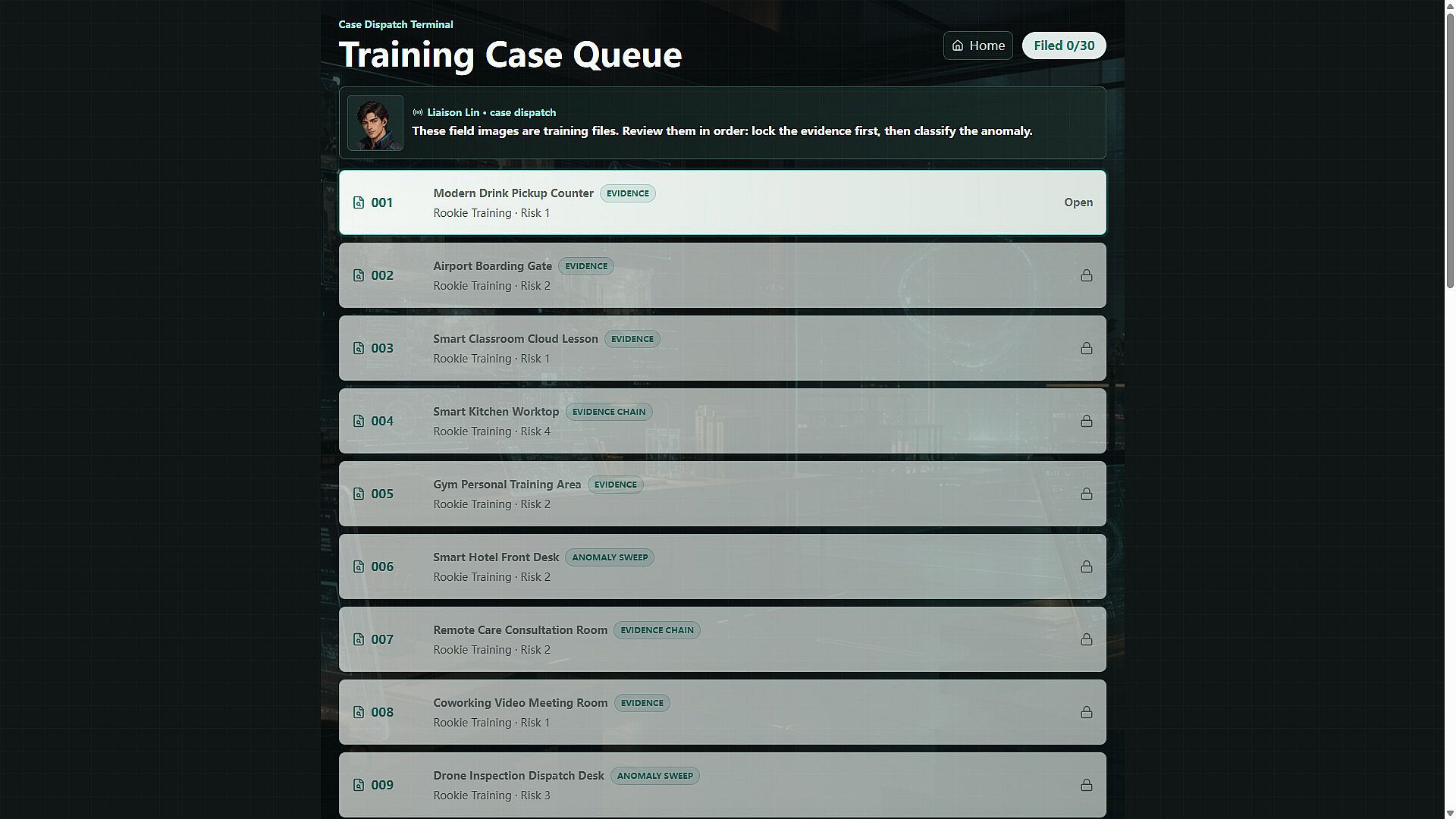
Scenes begin with familiar domestic settings and gradually introduce more intricate professional workflows, infrastructure elements, production lines, and specialized sites. This progression builds familiarity with basic anomaly types before layering in relationships that span multiple areas within a single location. Tools such as an Investigation Lens assist with closer inspection, while hint systems and dossier templates help organize findings without removing the need for independent reasoning.
Every case emphasizes comparison and deduction over rapid clicking. An anomaly might stem from the practical constraints of an older technique, an incorrect application of standard procedures, or a violation of how contemporary equipment functions. The process rewards methodical review rather than surface-level pattern matching.
Game Modes
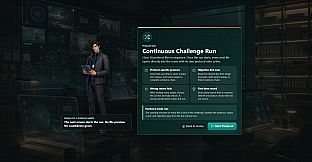
Four distinct modes shape how players approach each investigation. Single Anomaly focuses on locating one primary inconsistency within a scene. Single Anomaly with Plausible Decoys adds misleading but internally consistent elements that must be ruled out through careful cross-checking. Evidence Chain requires players to link a sequence of related clues across the environment to establish the full causal chain. Multi-Anomaly Sweep expands the scope to multiple simultaneous inconsistencies that interact with one another.
These modes alter the depth and structure of reasoning required. Decoy elements test the ability to distinguish genuine breaks in context from plausible alternatives. Chain and sweep formats encourage broader scanning and relational thinking rather than isolated discoveries. The modes become available progressively, with challenge variants unlocking after initial campaign progress.
Campaign Structure and Progression
The planned main campaign consists of 200 cases divided into ten chapters of twenty cases each. Early chapters emphasize everyday locations and straightforward era or technology mismatches. Later chapters incorporate complex professional environments and multi-layered evidence relationships that demand observation across separate zones within the same scene.
A separate library of 100 standalone challenge cases provides additional practice opportunities once unlocked. These cases draw from the same anomaly categories but present them without the narrative framing of the main chapters. Interface support covers both English and Simplified Chinese, with keyboard and mouse controls required throughout.
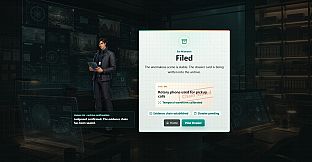
Case dossiers serve as the final output for each investigation. Players assemble findings into structured reports that document the identified anomalies and their explanatory connections. This documentation step reinforces the investigative process and provides a record of completed work.
Is It Worth Playing?
Temporal Anomaly Bureau appeals to players who enjoy logic-based puzzle experiences that reward attention to detail and connective reasoning. The emphasis on context, workflow consistency, and technological rules distinguishes it from simpler spot-the-difference formats by requiring players to understand why a particular element constitutes an anomaly.
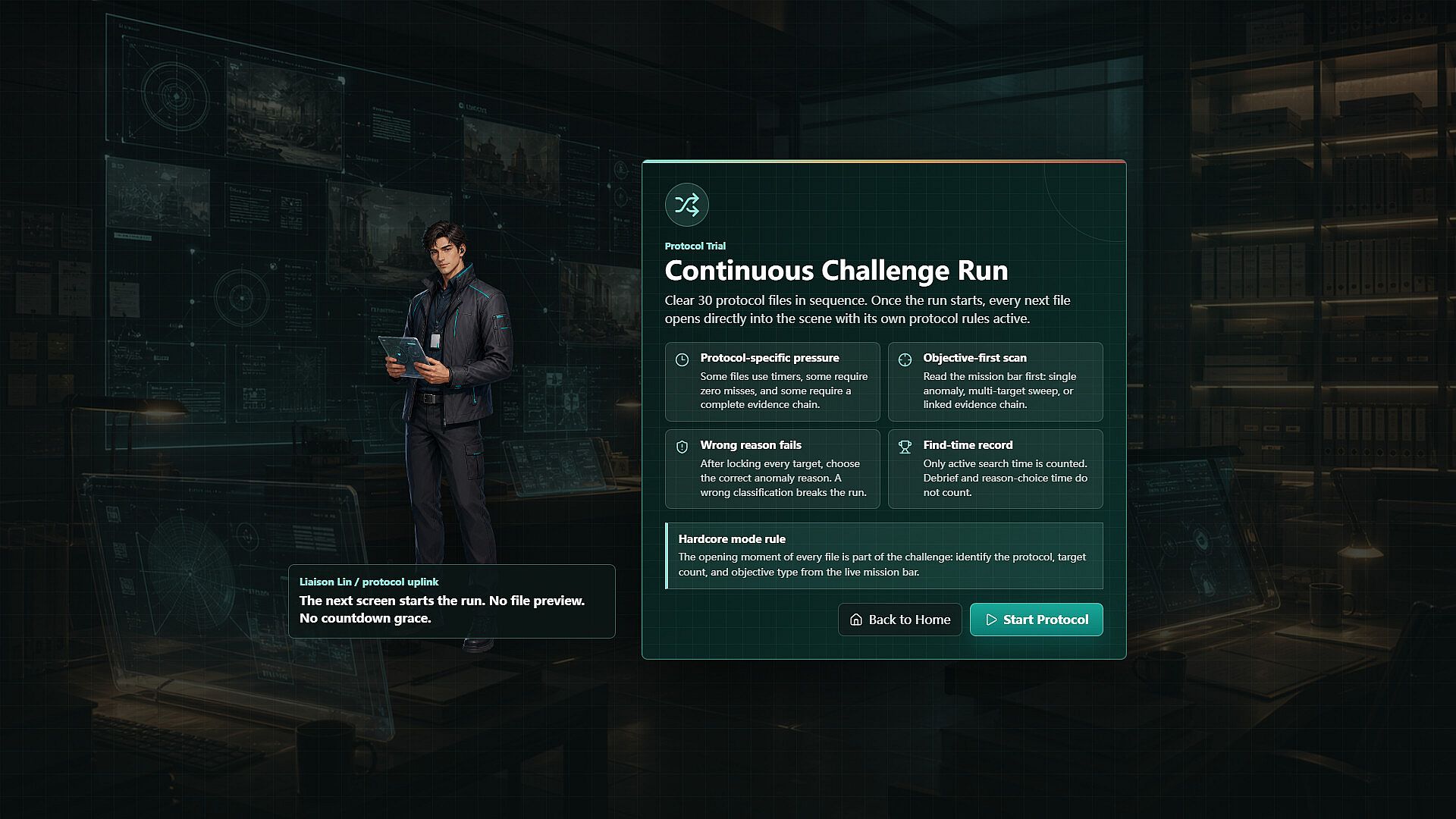
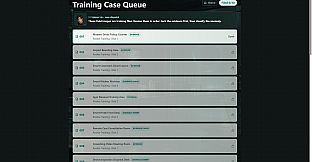
A free demo is currently available and includes thirty training cases plus thirty timed challenges. This provides a direct way to evaluate the observation and deduction mechanics before committing to the full release. The game remains in active development, so final case counts and feature implementation may adjust prior to launch.
Those who appreciate methodical investigation and gradual increases in complexity will find the structure engaging. The single-player focus and absence of time pressure in the main campaign suit sessions of varying length, while the variety of modes offers replay options once the initial campaign is complete.