


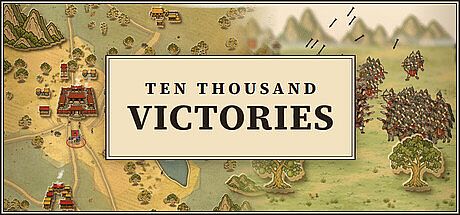


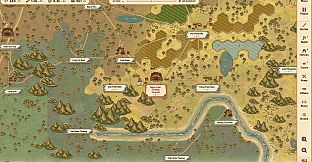
Ten Thousand Victories is a singleplayer strategy roguelite that blends grand strategy, roleplaying elements, and real-time battles set in medieval Đại Việt. The game draws its entire visual style from traditional Đông Hồ woodblock prints, with every province, general, and banner rendered in that distinctive folk art approach using shell-coated paper textures and soot-black outlines.
Gameplay
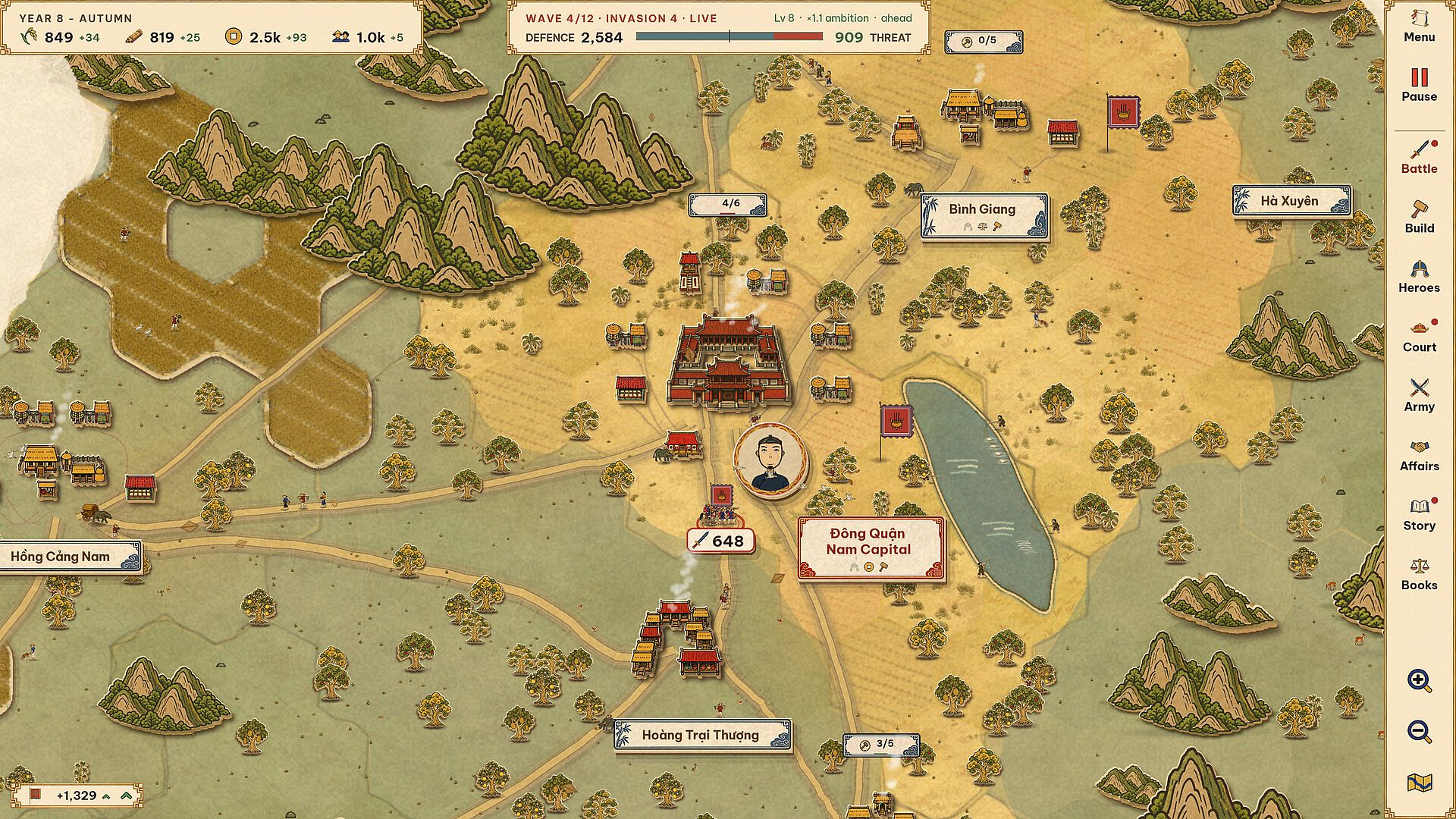
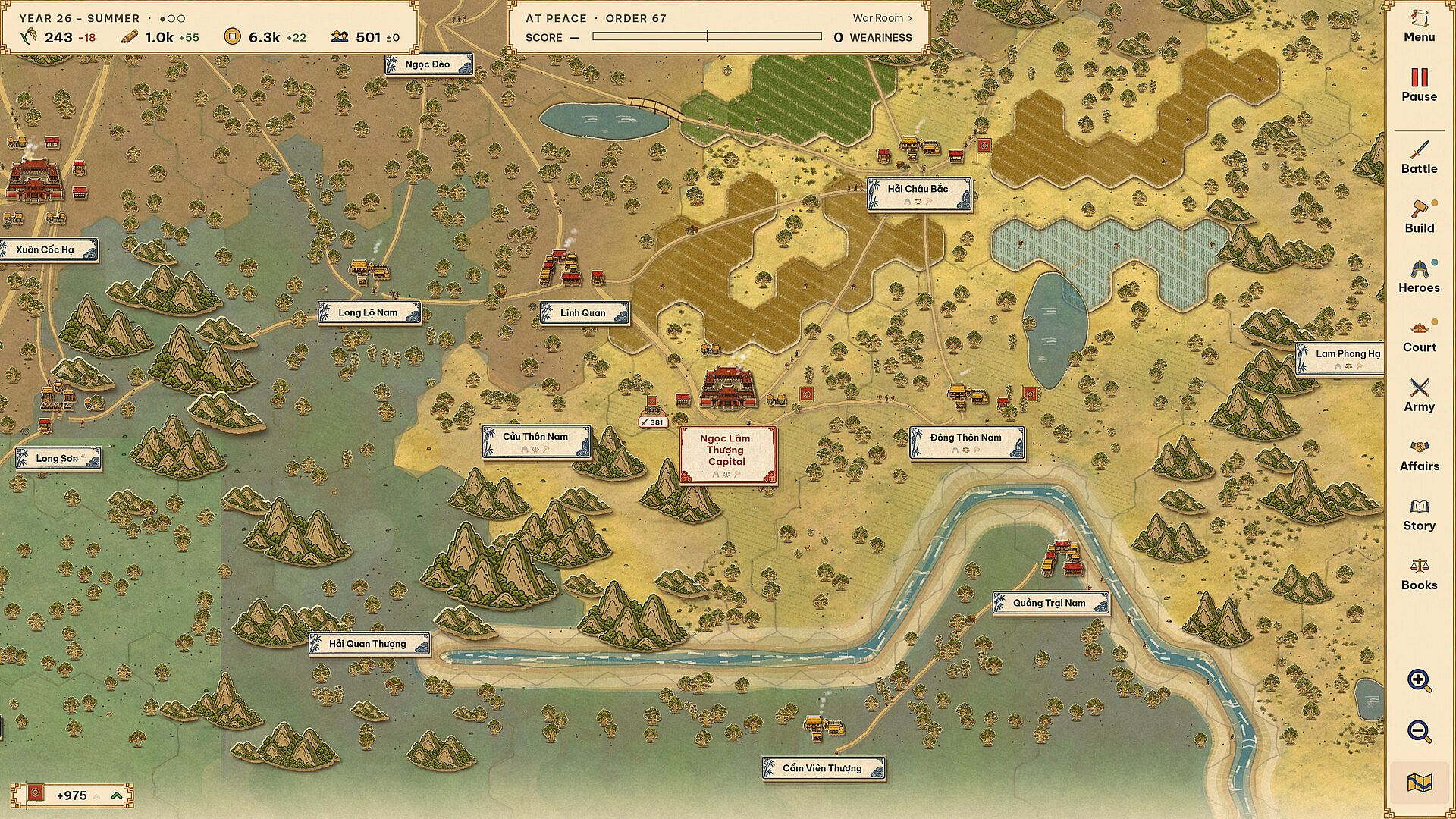
The core loop centers on expanding a realm from a single citadel while managing escalating threats. Forty-two provinces generate anew each run, and the world advances on a real-time clock regardless of player input. Taking territory draws stronger invasions, with waves arriving roughly every year and a half. Every fourth wave functions as a boss encounter telegraphed in advance. Expansion carries direct consequences because larger holdings invite fiercer responses.
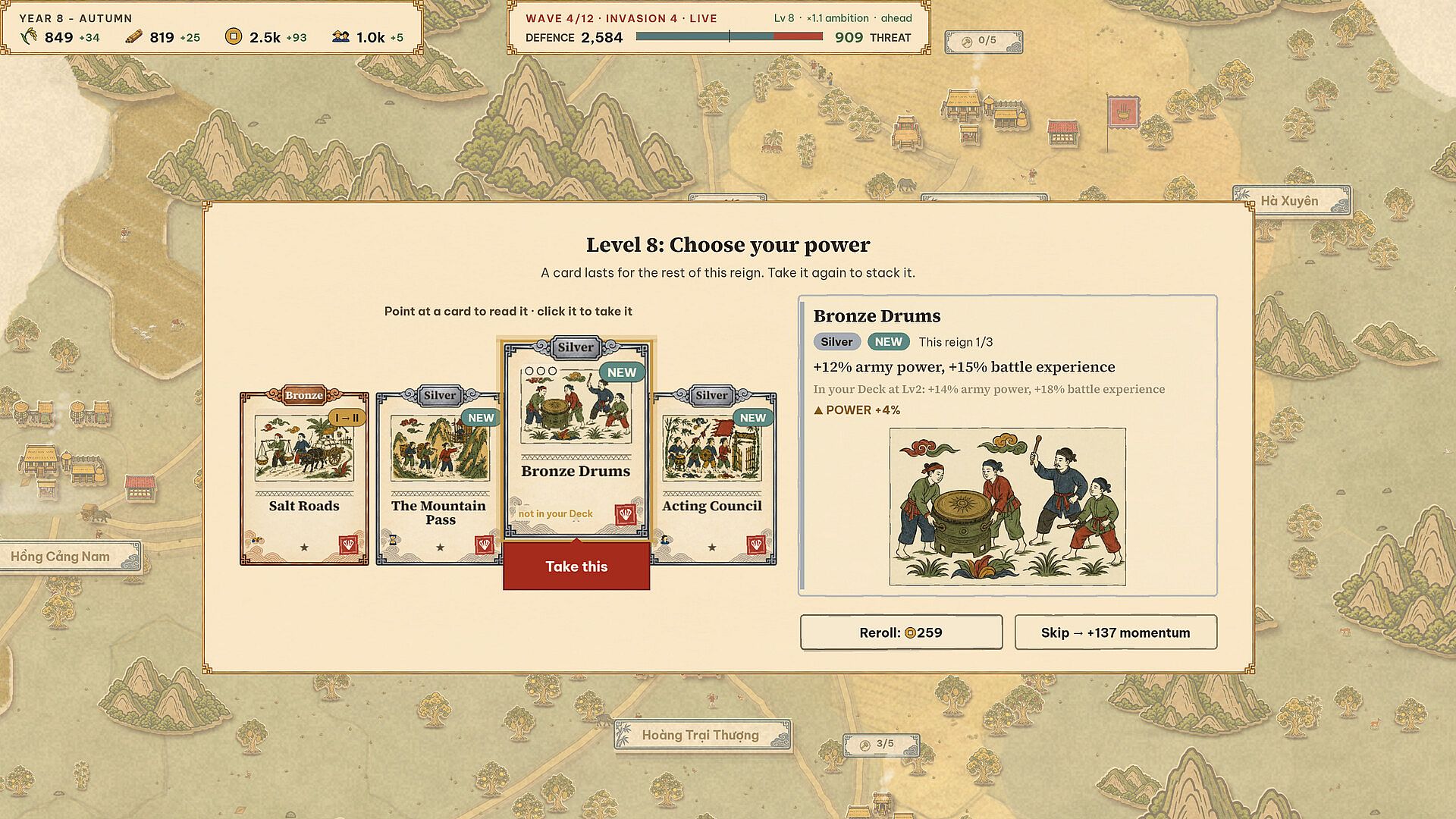
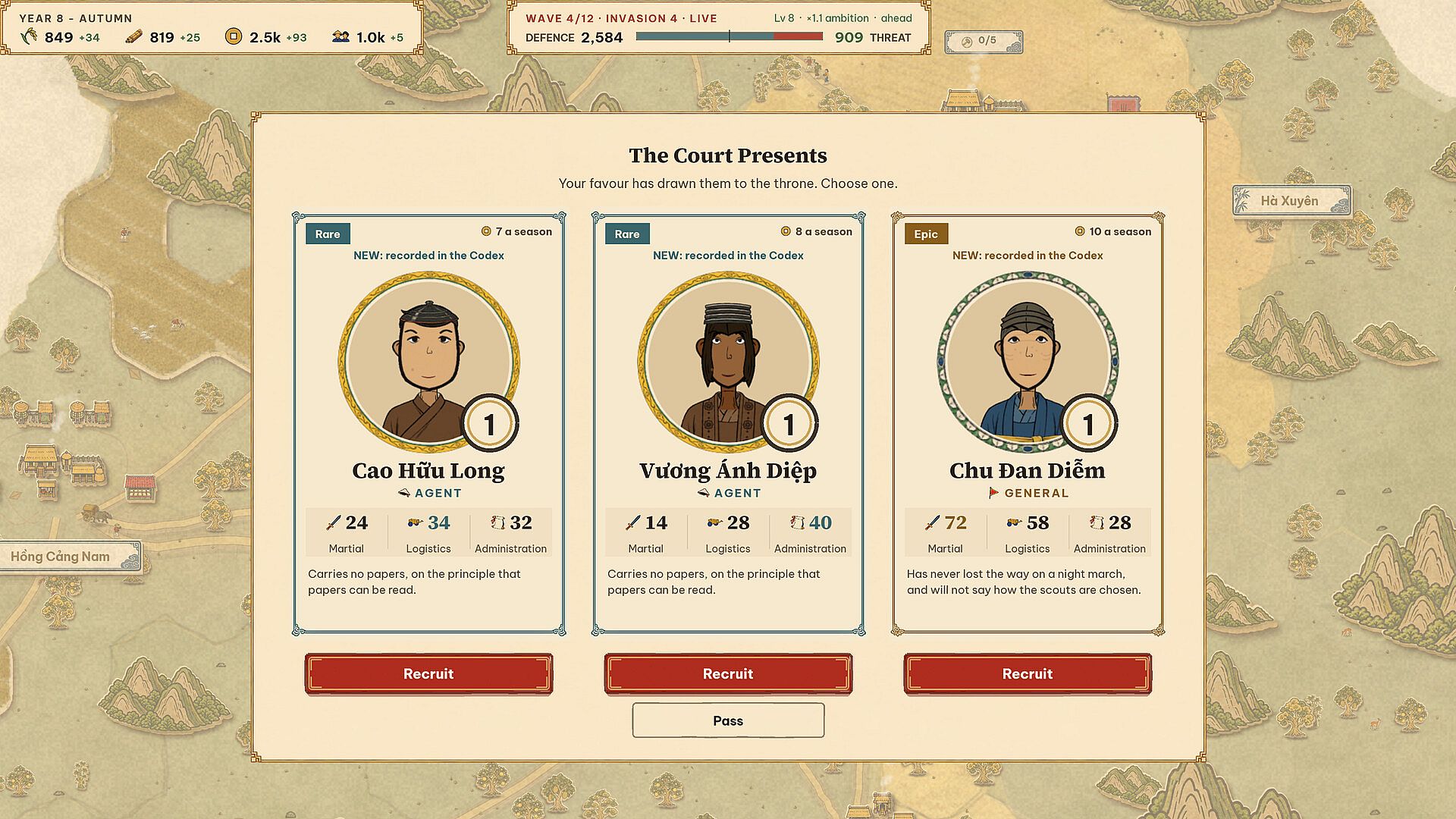
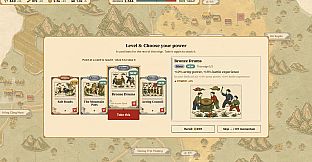
Progression relies on a power draft system. At each level-up, players select one of four card types in bronze, silver, gold, or jade quality. Repeated selections stack effects, and two fully upgraded cards can evolve into a new combined ability. Doctrine decisions appear once per era, letting rulers define the realm's focus as Fortify, Expand, Enrich, or Arm. Runs end with legacy perks that carry forward, encouraging repeated attempts with different emphases.
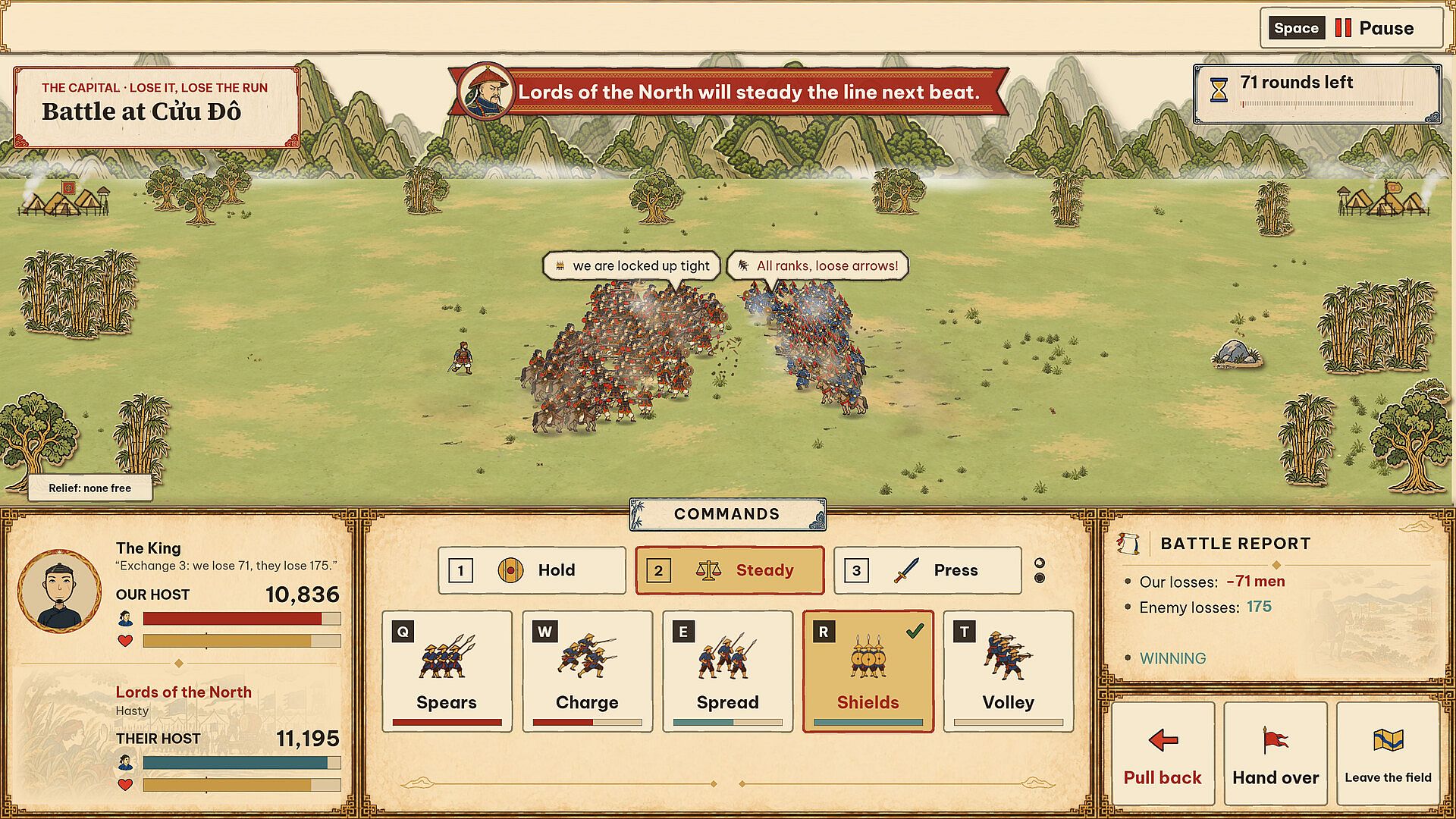
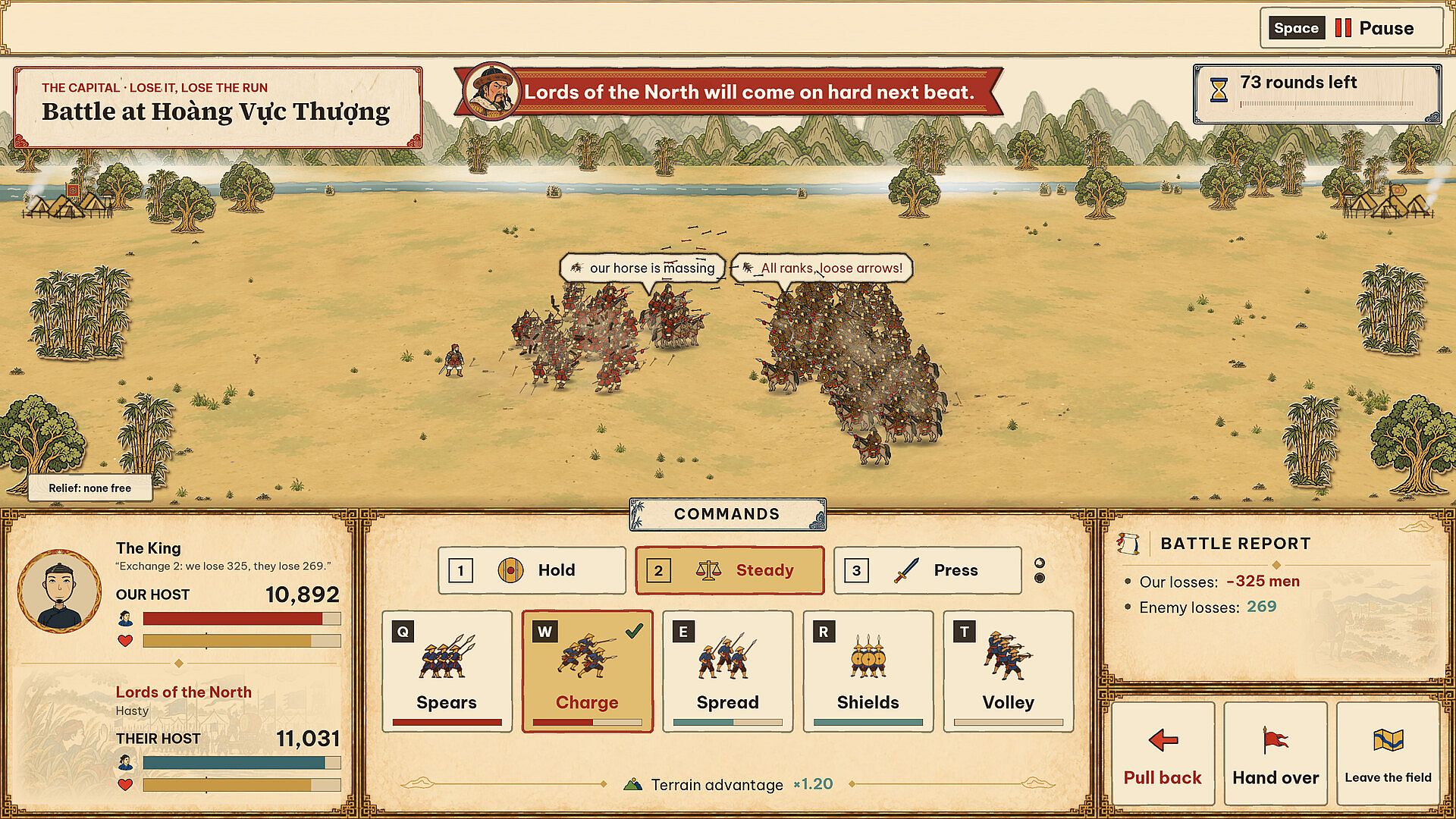
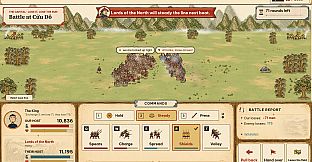
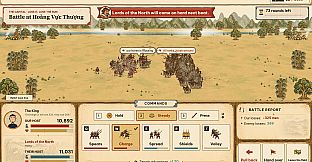
Battles unfold in real time using one of five formations: Chông for a hedge of spears, Xung for a wedge charge, Tán for a loose swarm, Quy for a defensive tortoise shell, and Nỏ for massed volleys. Each formation counters two others in a cycle. The enemy signals its current setup and intended shift, so players watch the opposing line and adjust tempo via a dial that ranges from pulling back to pressing forward. Spears blunt charges while volleys thin ranks, and holding reserves for the right moment can swing an engagement.
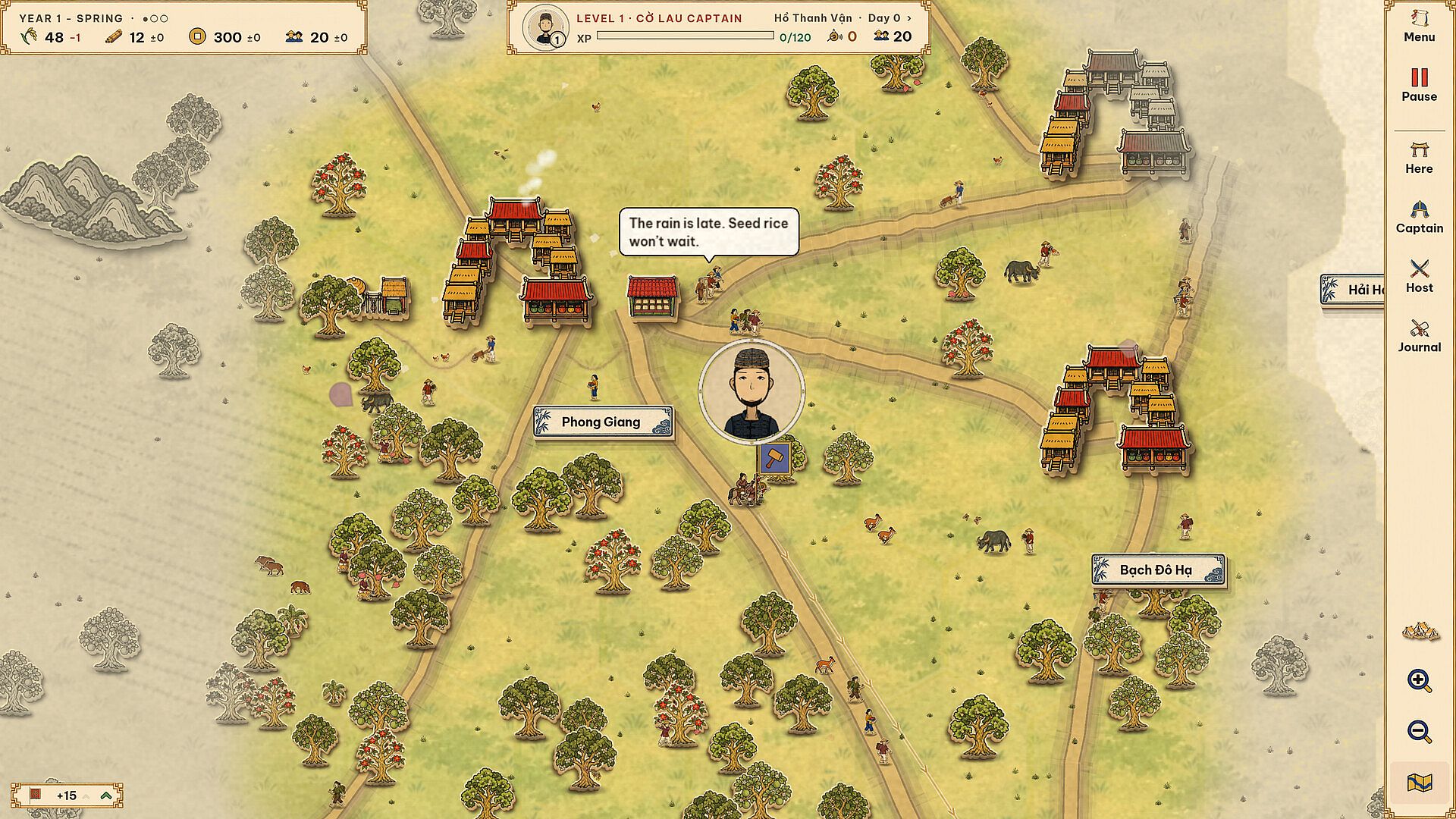
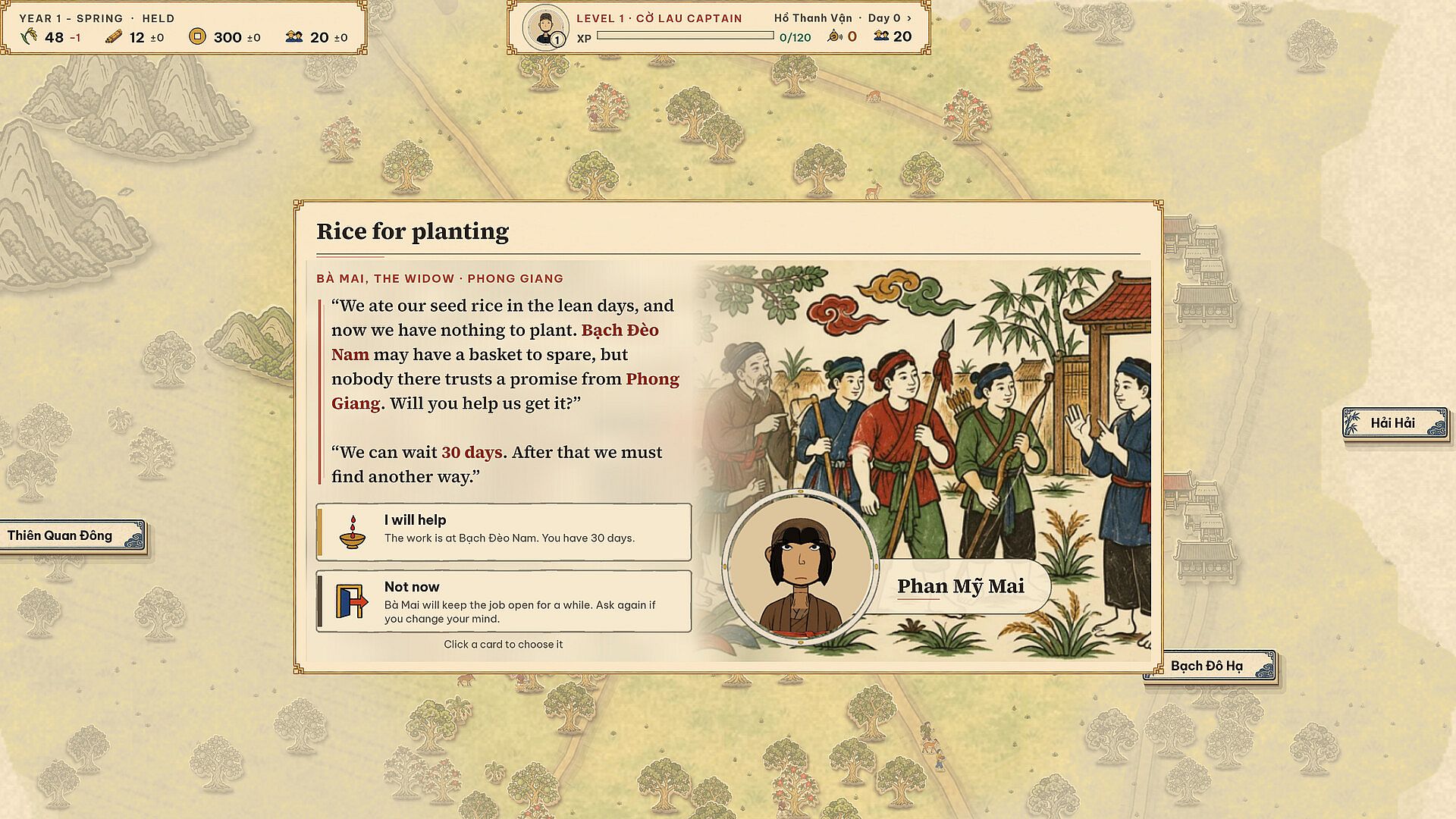
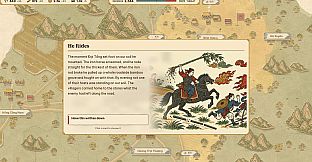
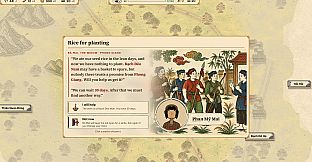
A separate captain mode places the player on the road with twenty followers and a village to protect. Origin choices affect later encounters, such as river-raised captains gaining boatman assistance at ferries. Companions join through conversation and direction-finding, while supplies like rice must be managed between villages. Side activities include local games that shift with the calendar, and personal promises made early can return as consequences weeks later.
Game Modes
Dragon Ascent serves as the primary realm-building experience where players start with one citadel and navigate invasions through province control and power choices. Throne of Empires expands the strategic scope with additional layers of governance and long-term planning. Campaign mode structures play around a directed sequence of events and historical touchstones. Skirmish offers focused, standalone battles that test formation mastery without the full roguelite progression.
These modes share the same underlying systems of card drafting, real-time combat, and province management, yet each alters the pacing and objectives. The roguelite structure ensures that failure in one run informs the next through legacy benefits, while the historical decisions such as those tied to Thánh Gióng or the stakes at Bạch Đằng appear as high-cost choices that the in-game Chronicle records.
Historical Setting and Presentation
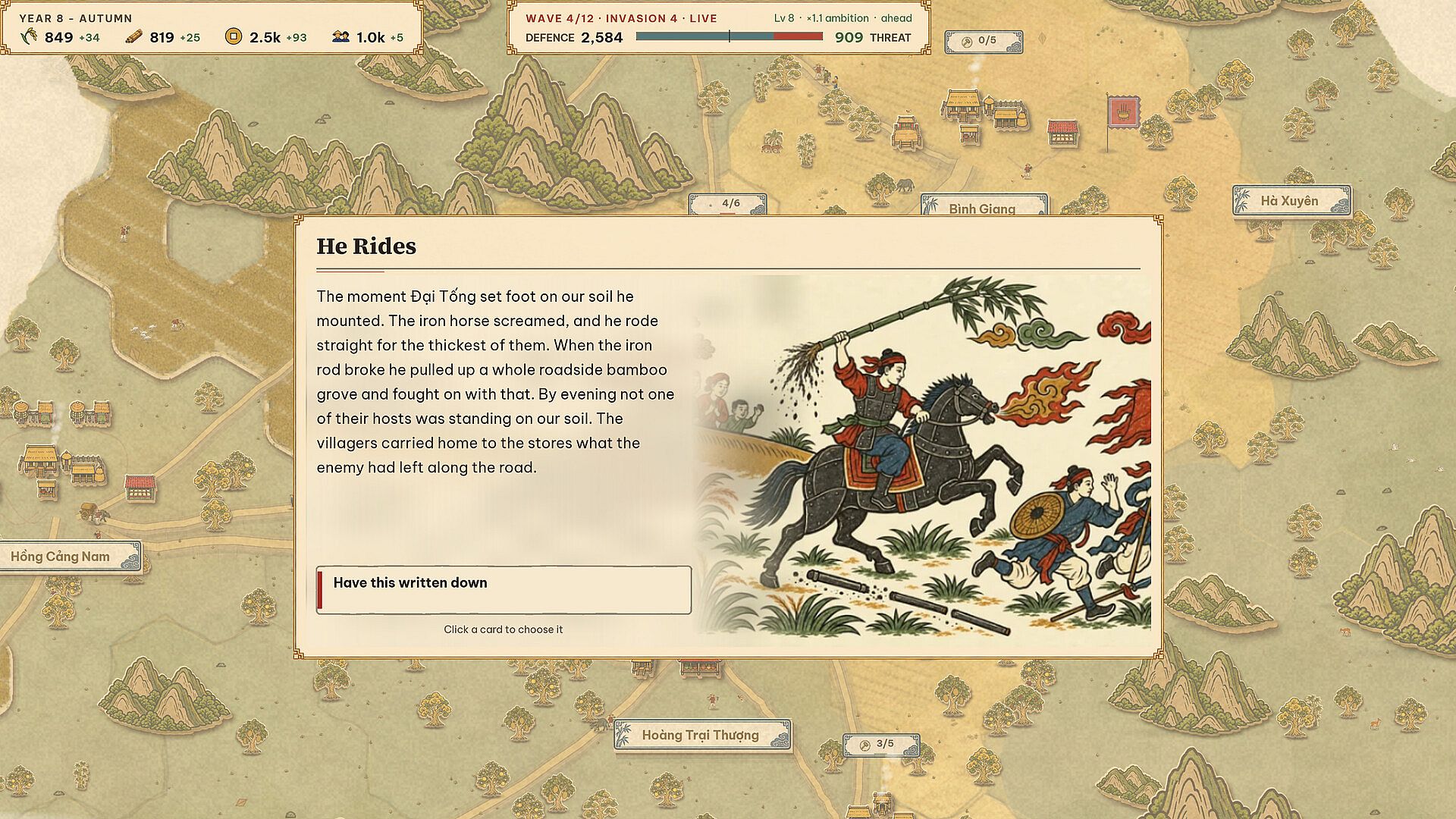
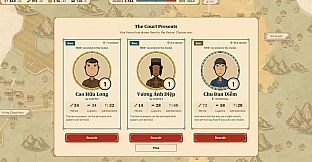
The game situates its mechanics within Vietnamese history through specific references to events and figures like the elders of Diên Hồng and the battle of Đống Đa in 1789. These arrive as illustrated decisions that carry tangible costs in gold and soldiers. Generals and officials possess individual backstories, six stats each, seasonal wages, and portraits assembled from hundreds of drawn elements that reflect era and rank.
Exploration beyond controlled land relies on talking with locals and following directions rather than a revealed map. Villages offer markets for supplies and changing minigames such as ô ăn quan or bầu cua during festival weeks. The art style remains consistent across every element, ensuring the world feels hand-printed rather than procedurally assembled.
Is It Worth Playing?
Ten Thousand Victories suits players who enjoy deliberate grand strategy combined with roguelite replayability and real-time tactical battles. The formation system rewards observation and timing over simple numerical superiority, while the card draft and doctrine choices create meaningful branching paths across runs. Those drawn to historical themes will find the specific cultural references and woodblock aesthetic add distinct flavor without requiring prior knowledge.
The game supports both short sessions focused on a single battle or captain journey and longer campaigns that track realm growth over multiple invasions. Its singleplayer focus and emphasis on consequence-driven choices make it a strong fit for strategy fans who prefer thoughtful pacing over fast action or multiplayer competition. Recent updates have refined the province generation and battle tempo options, keeping the experience fresh for returning players.











