




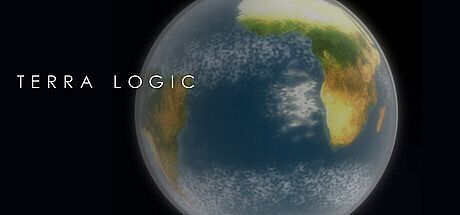


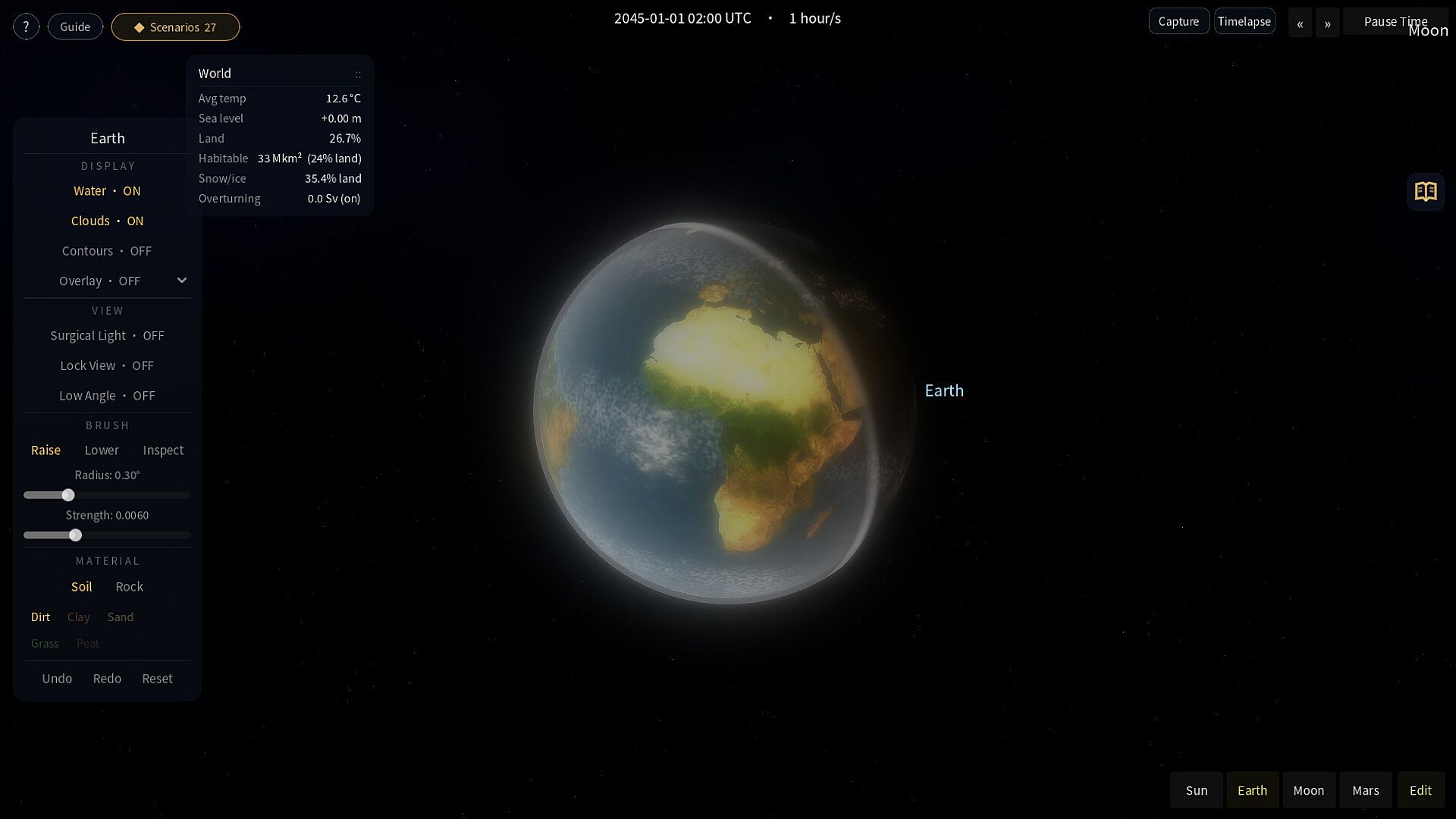
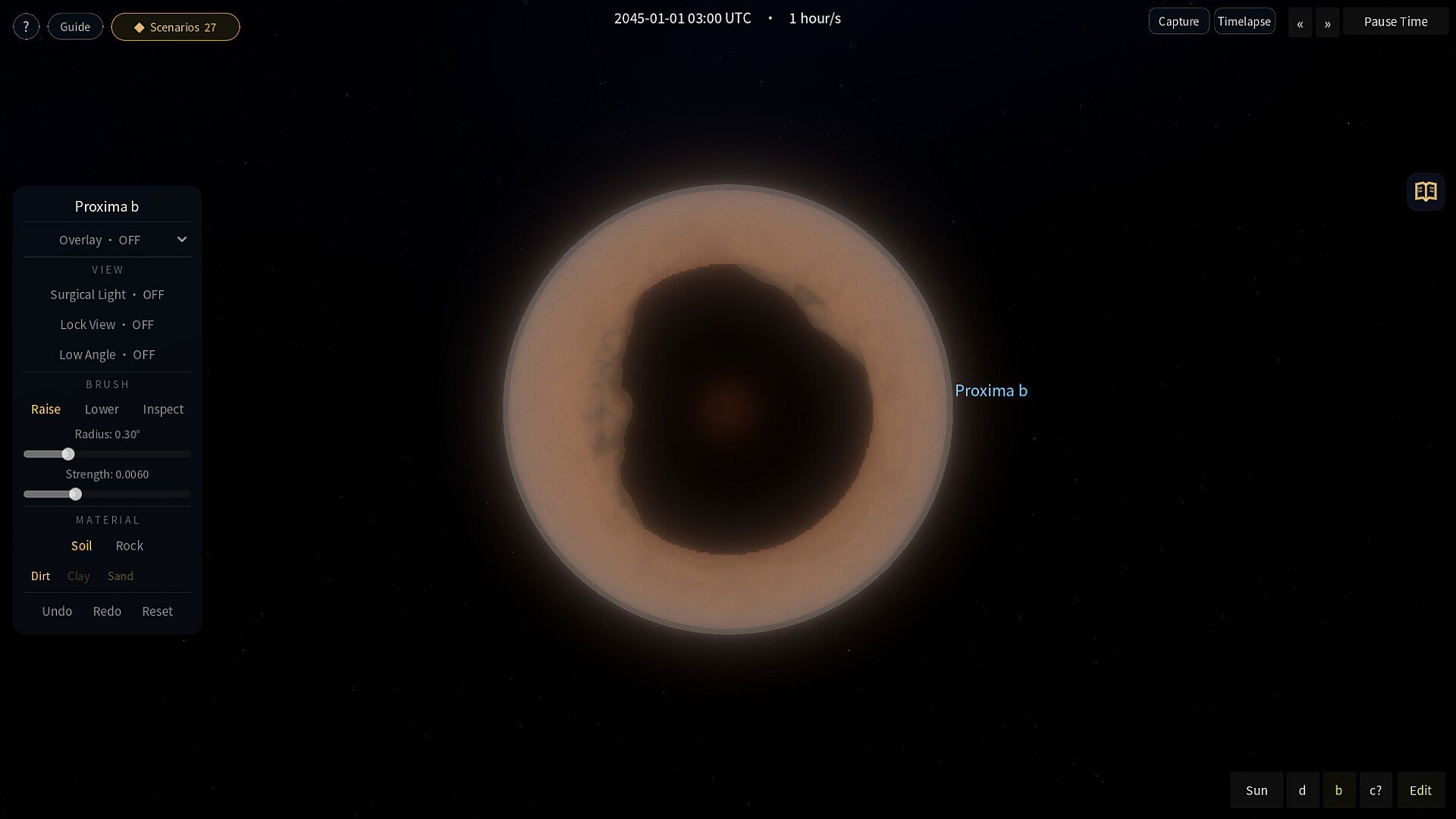
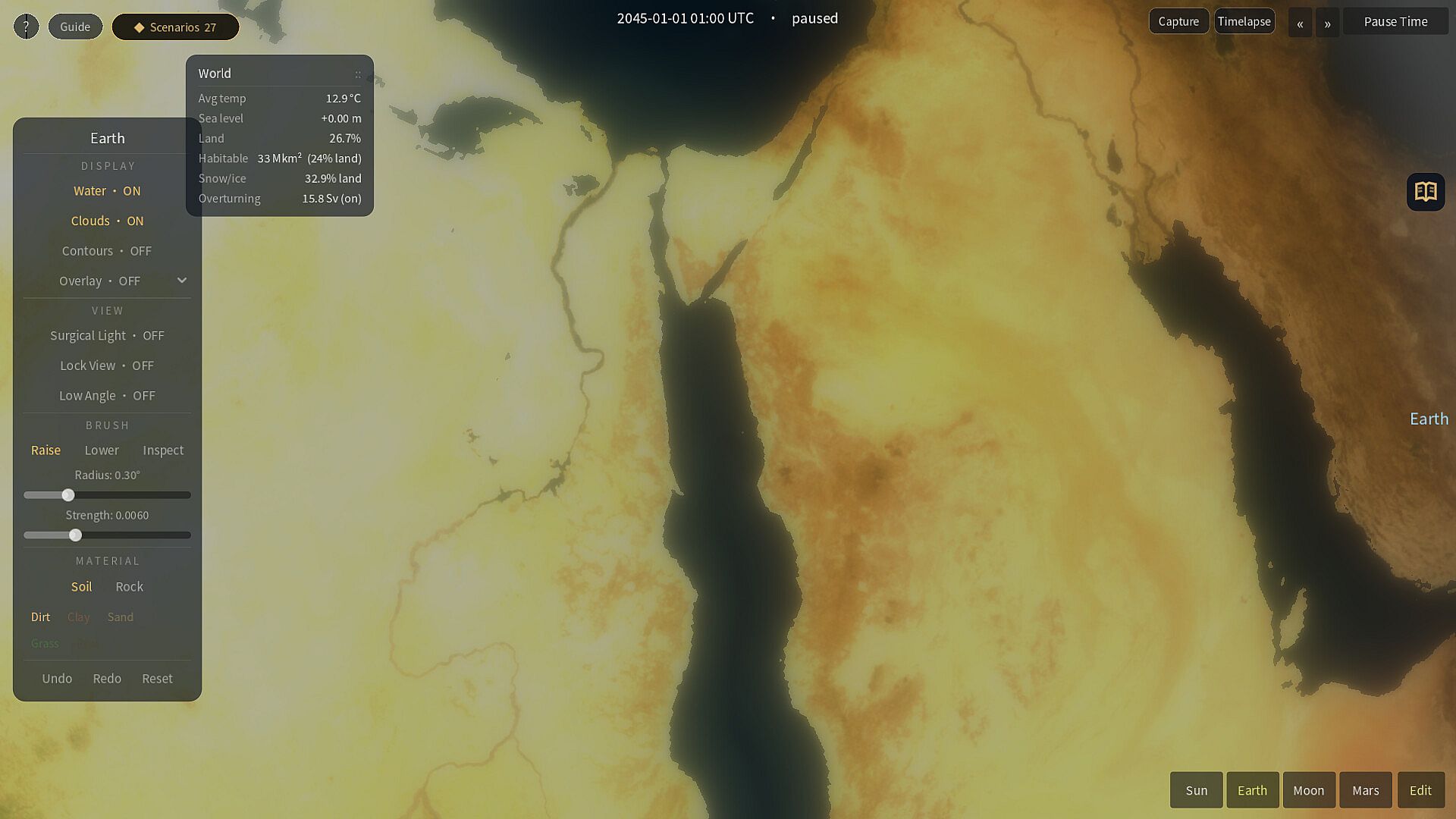
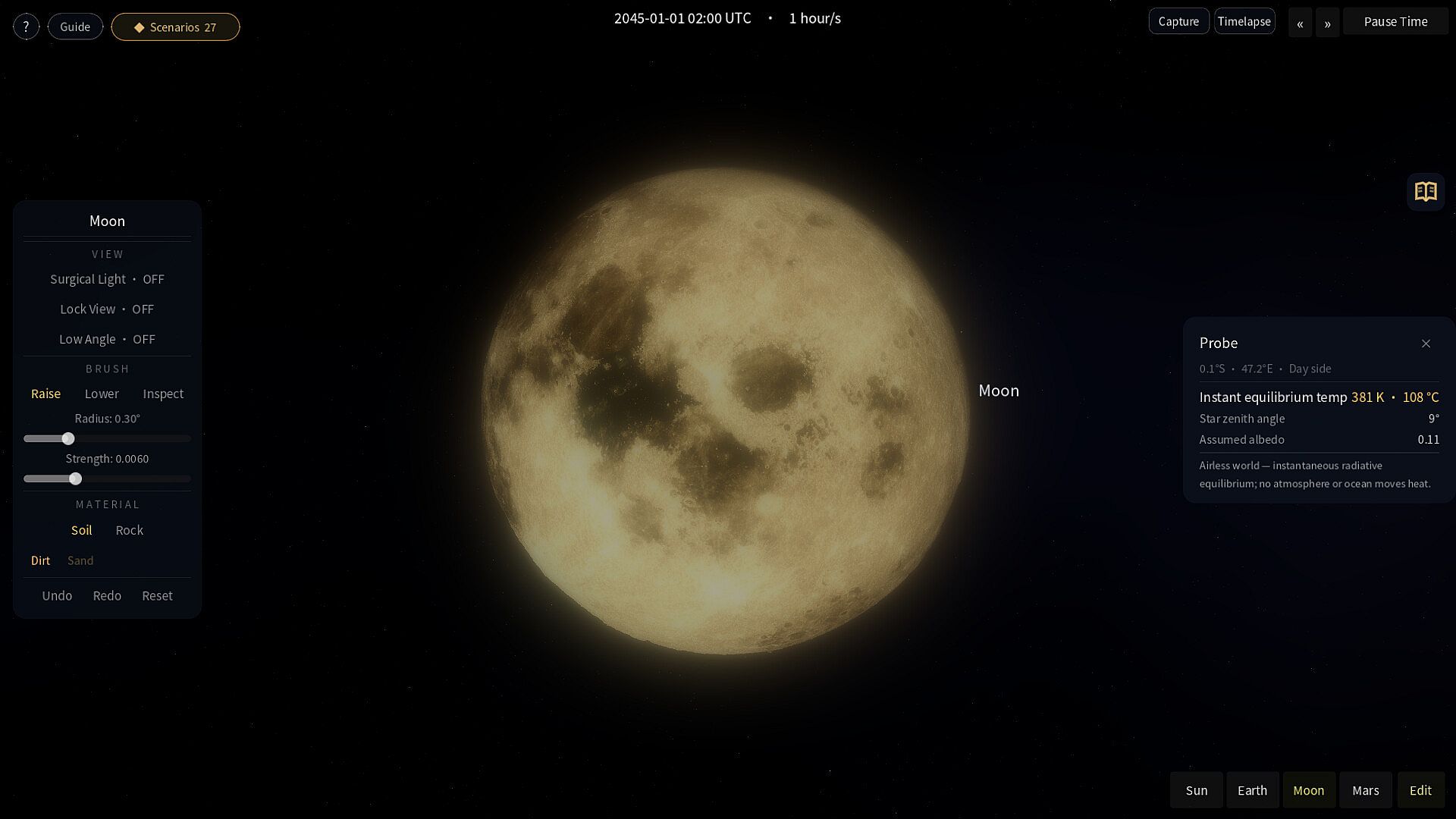
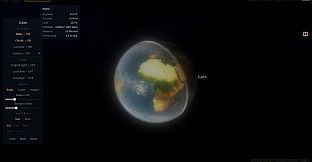
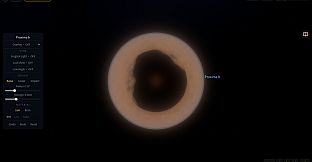
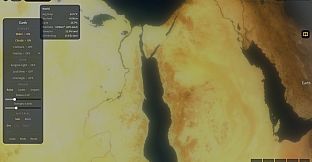
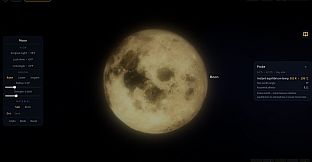
Terra Logic is a single-player strategy simulation game that places players in control of planetary surfaces through direct edits. The core experience revolves around a physics-driven model where brush strokes alter elevation, water flow, and atmospheric conditions on Earth, the Moon, Mars, and several exoplanets. Genres include strategy, indie, casual, and simulation, with an emphasis on cause-and-effect exploration rather than resource management or conflict.
Gameplay
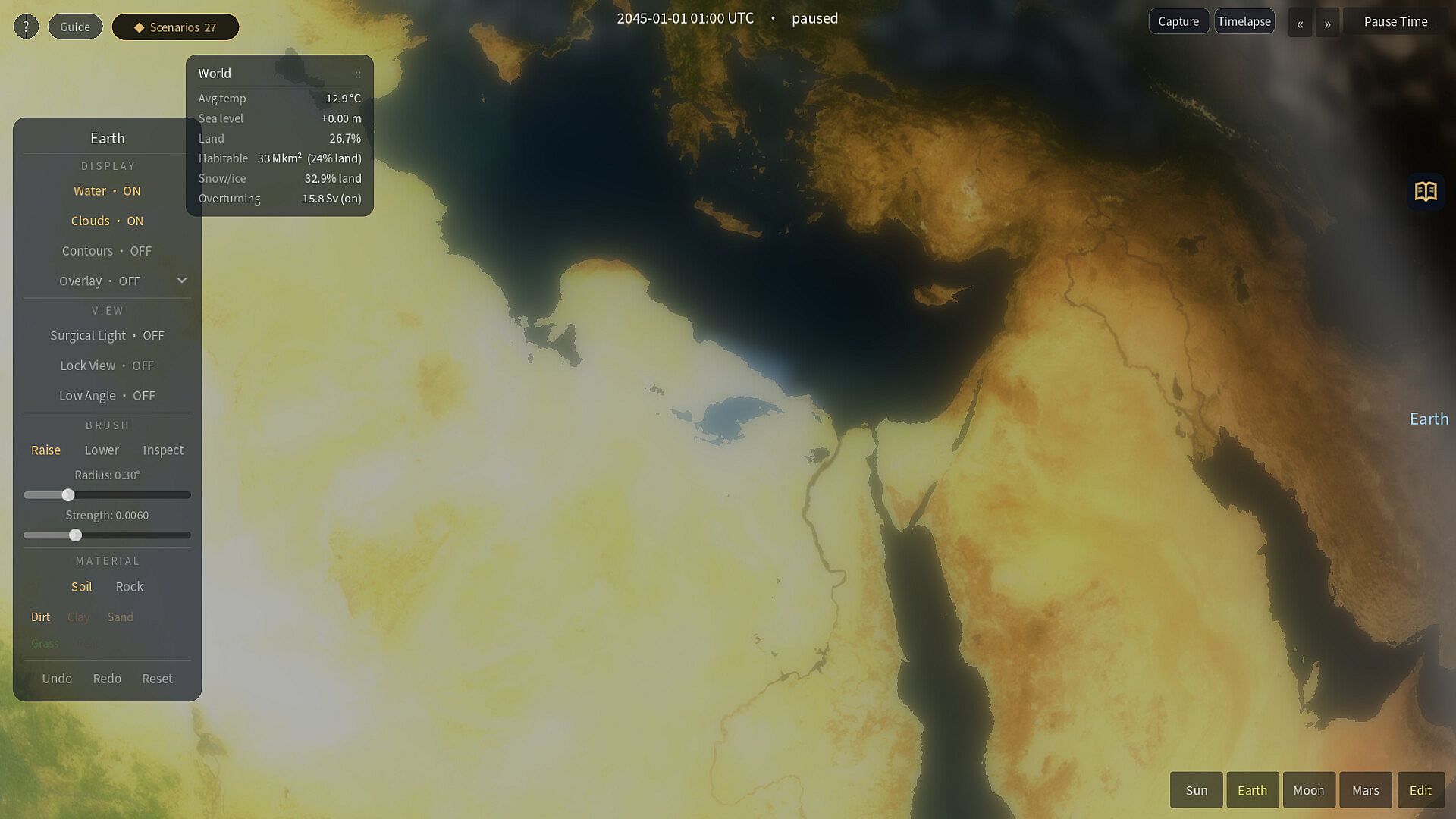
Players draw directly on planetary heightfields to reshape terrain. Each modification immediately feeds into an energy-balance climate model that calculates temperature, ice coverage, rainfall patterns, and biome shifts. Water conservation rules ensure that liquid flows downhill, fills depressions, or evaporates according to physical principles, while a three-layer ocean system simulates wind-driven gyres, thermohaline circulation, and sea-air interactions. Erosion mechanics allow rivers to carve channels, breach barriers, and reroute over time.
A causal probe tool lets users click any location to inspect the contributing factors behind local conditions. The readout details latitude effects, elevation influences, current contributions, and the precise impact of recent edits. This transparency turns the simulation into an auditable system where outcomes can be traced and replayed through a built-in chronicle feature. Background audio includes public-domain recordings of Beethoven and Bach, paired with a muted interface and optional whispering narration that provides ambient context without interrupting focus.
Game Modes
Terra Logic centers on two primary approaches to interaction. Scenario mode presents 38 structured challenges across multiple worlds, each with a clear engineering objective and an achievable solution path. Examples include greening the Sahara by altering depressions, reopening the Panama seaway, breaching or damming Gibraltar to control Mediterranean water levels, and stabilizing the thermohaline circulation in the North Atlantic. Every scenario incorporates real-world geographic or astronomical data where applicable.
Free play mode removes objectives entirely, granting unrestricted access to the same simulation tools on every available body. Users can experiment indefinitely, testing combinations of edits and observing long-term consequences such as monsoon belt shifts after lowering the Tibetan Plateau or the formation of new coastal vegetation after introducing ocean water to below-sea-level basins. The absence of timers, enemies, or resource constraints keeps attention on the physics responses themselves.
Planetary Bodies and Scenarios
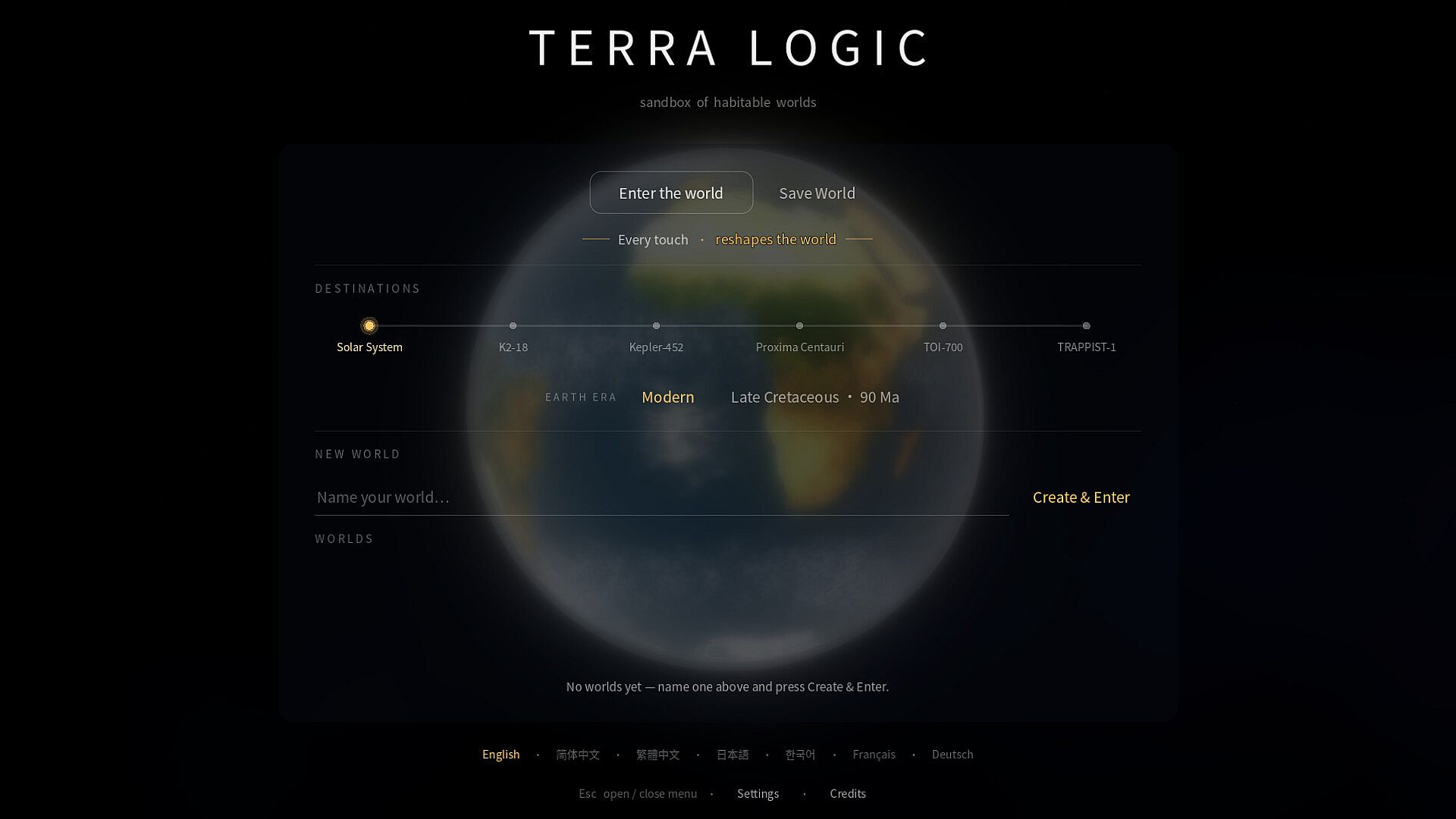
The game includes Earth in its modern configuration along with a Cretaceous reconstruction from 90 million years ago, where continents follow paleogeographic placements. Additional bodies encompass the Moon and Mars, plus five exoplanet systems drawn from observational data: TRAPPIST-1, Proxima Centauri, TOI-700, Kepler-452, and K2-18. Tidally locked planets receive specialized handling, producing permanent day and night hemispheres with ice accumulation on the dark side and potential ocean formation along the terminator zone.
Scenarios extend to lunar tasks such as positioning six lighthouses and various Earth-focused interventions that demonstrate hysteresis in circulation systems or long-term desertification and recovery cycles. All scenarios operate within the same core simulation rules, ensuring consistent physics across locations.
Simulation Features
Key systems include a real climate model governing temperature, precipitation, ice, and vegetation distribution. Ocean dynamics feature three distinct layers with coupling between surface winds, deeper currents, and atmospheric exchange. Erosion operates on the heightfield in real time, allowing channels to deepen and redirect based on water volume and slope. Water remains conserved throughout, moving only according to gravitational and topographic rules.
- Energy-balance calculations drive all thermal and moisture outcomes
- Thermohaline conveyor behavior can stall or recover depending on freshwater inputs
- River incision and breach events reshape terrain progressively
- Probe and chronicle tools expose every causal link for review
Support for seven languages appears in the interface and narration options, with Steam Workshop integration and a level editor available for community-created content.
Is It Worth Playing?
Terra Logic targets players interested in deliberate, physics-based planetary editing without competitive pressure or time limits. Its single-player focus and quiet presentation suit those who enjoy tracing environmental consequences through repeated experiments. The upcoming release on May 20, 2027, means current information rests on the detailed simulation framework and scenario structure already outlined by the developer. Individuals drawn to climate modeling, erosion processes, and open-ended geographic what-if scenarios will find the mechanics align closely with those interests. The lack of resource bars or external threats keeps the experience centered on the simulation responses themselves.











