




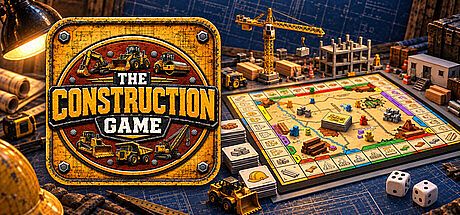


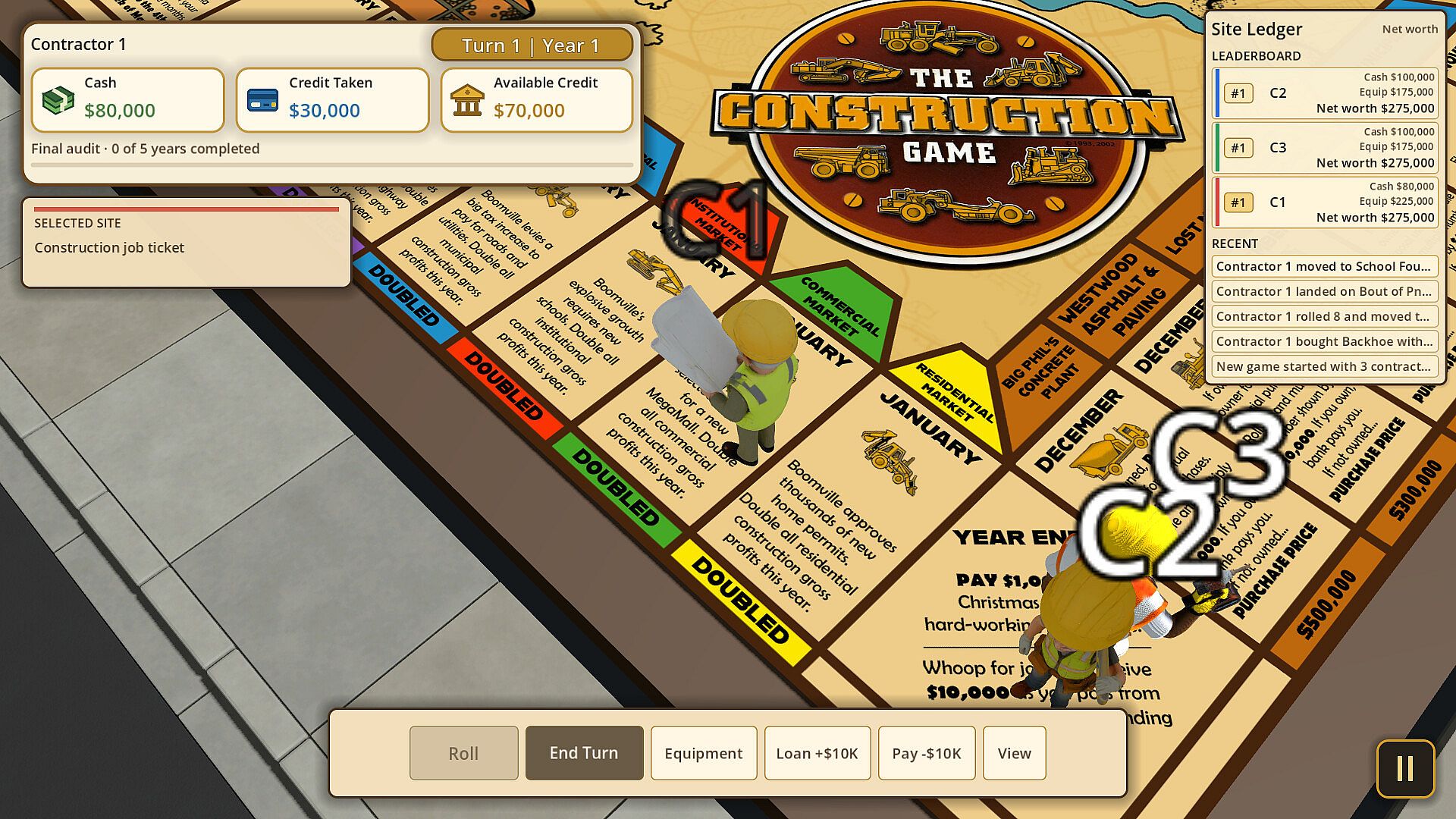
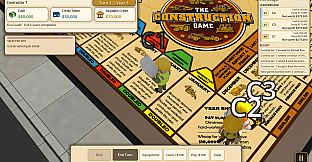
The Construction Game is a strategy simulation title on PC that adapts the core experience of a competitive board game into a digital format. Players manage construction companies, make financial decisions, and compete through a mix of planning and chance elements drawn from dice rolls. The game supports solo play against artificial intelligence or sessions with up to five other participants, fitting its listed genres of strategy, indie, casual, and simulation.
Gameplay
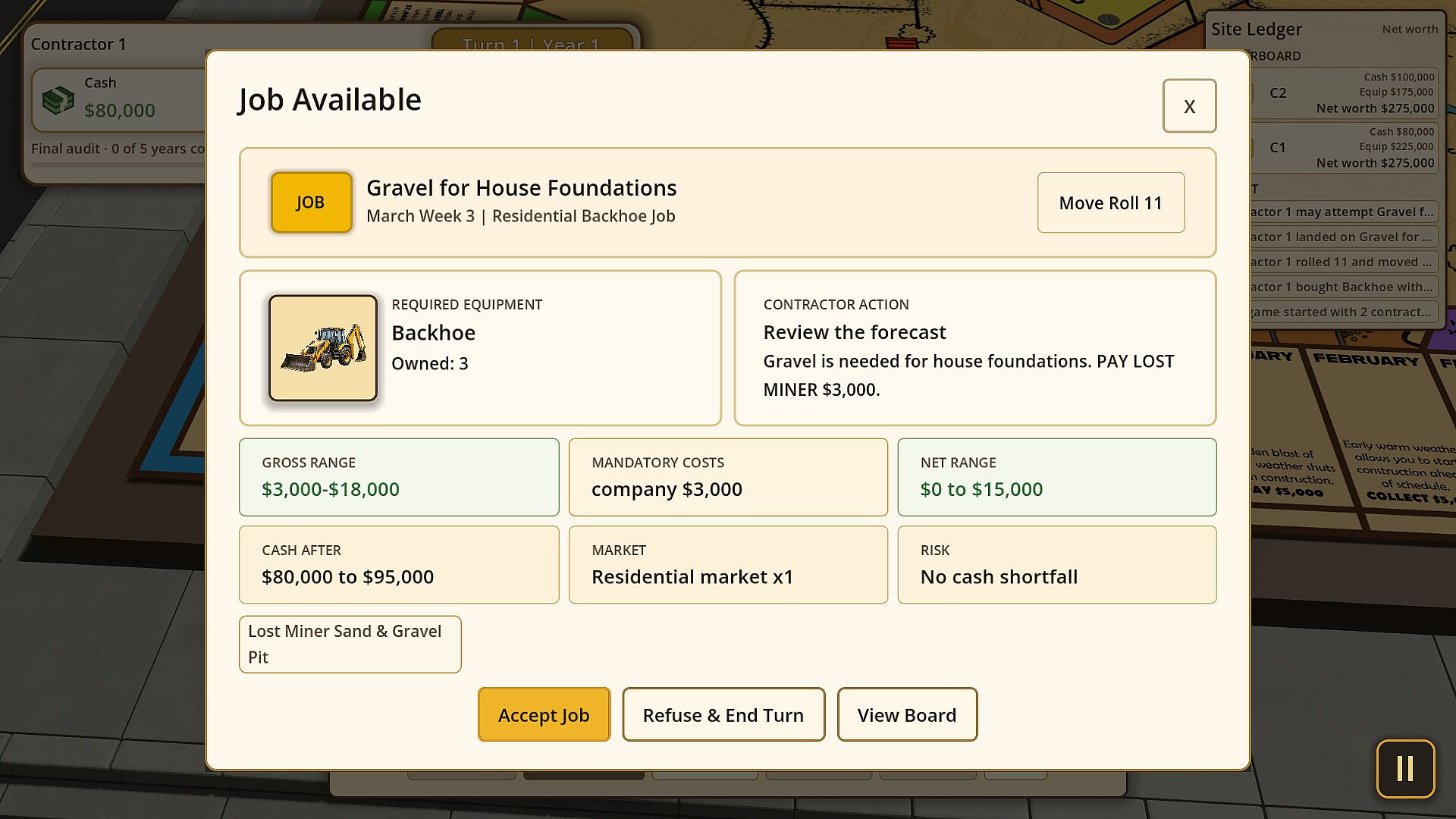
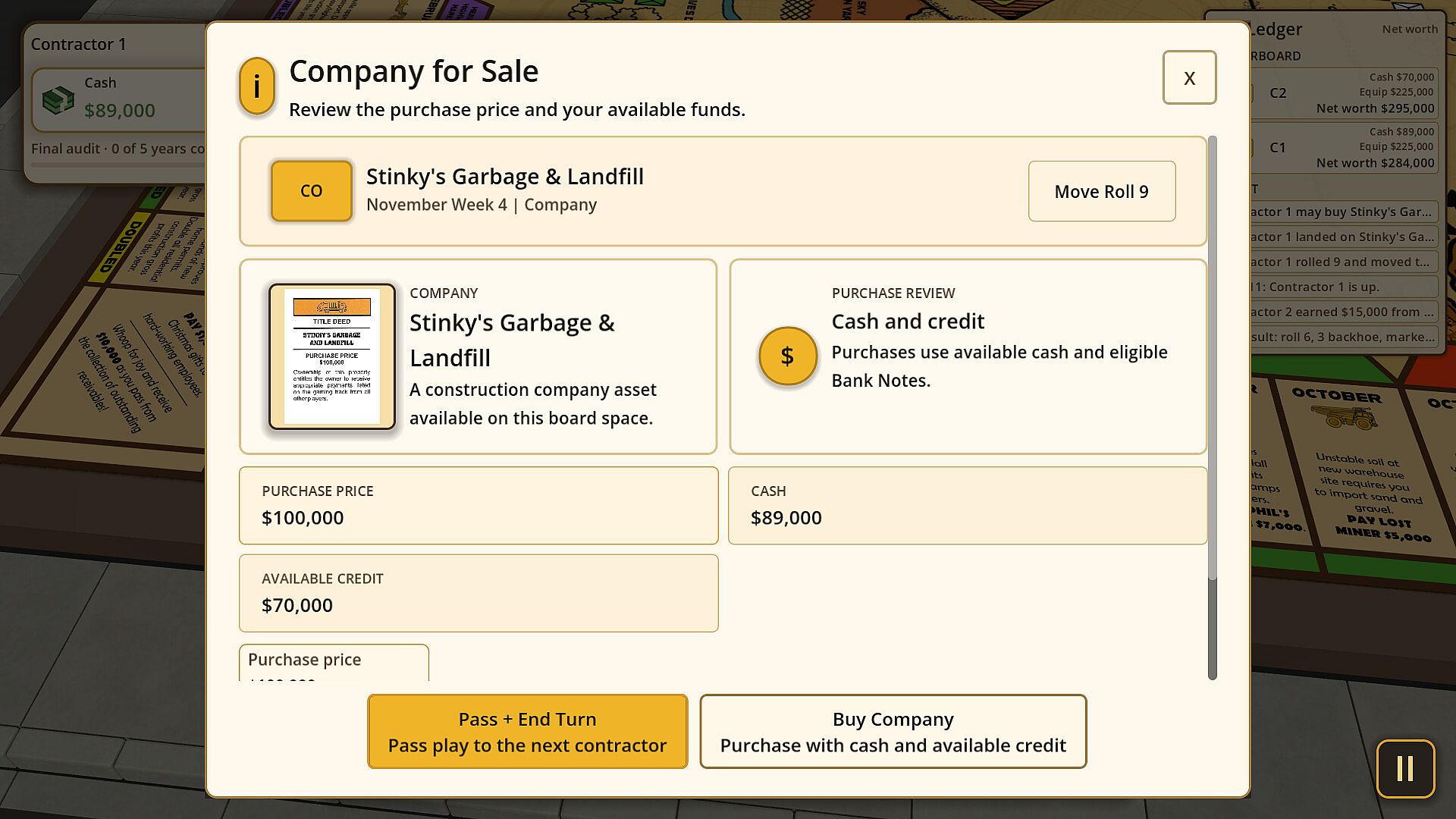
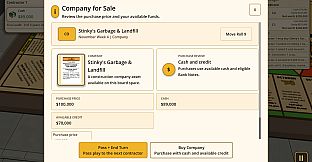
Core play revolves around building and expanding a construction business. Participants buy equipment to handle larger or more varied jobs while deciding whether to finance purchases, maintain cash reserves for surprises, or pursue other investments. Jobs appear through bidding and auction processes where players weigh potential returns against their current resources and risk tolerance. Additional growth comes from purchasing entire companies when opportunities arise.
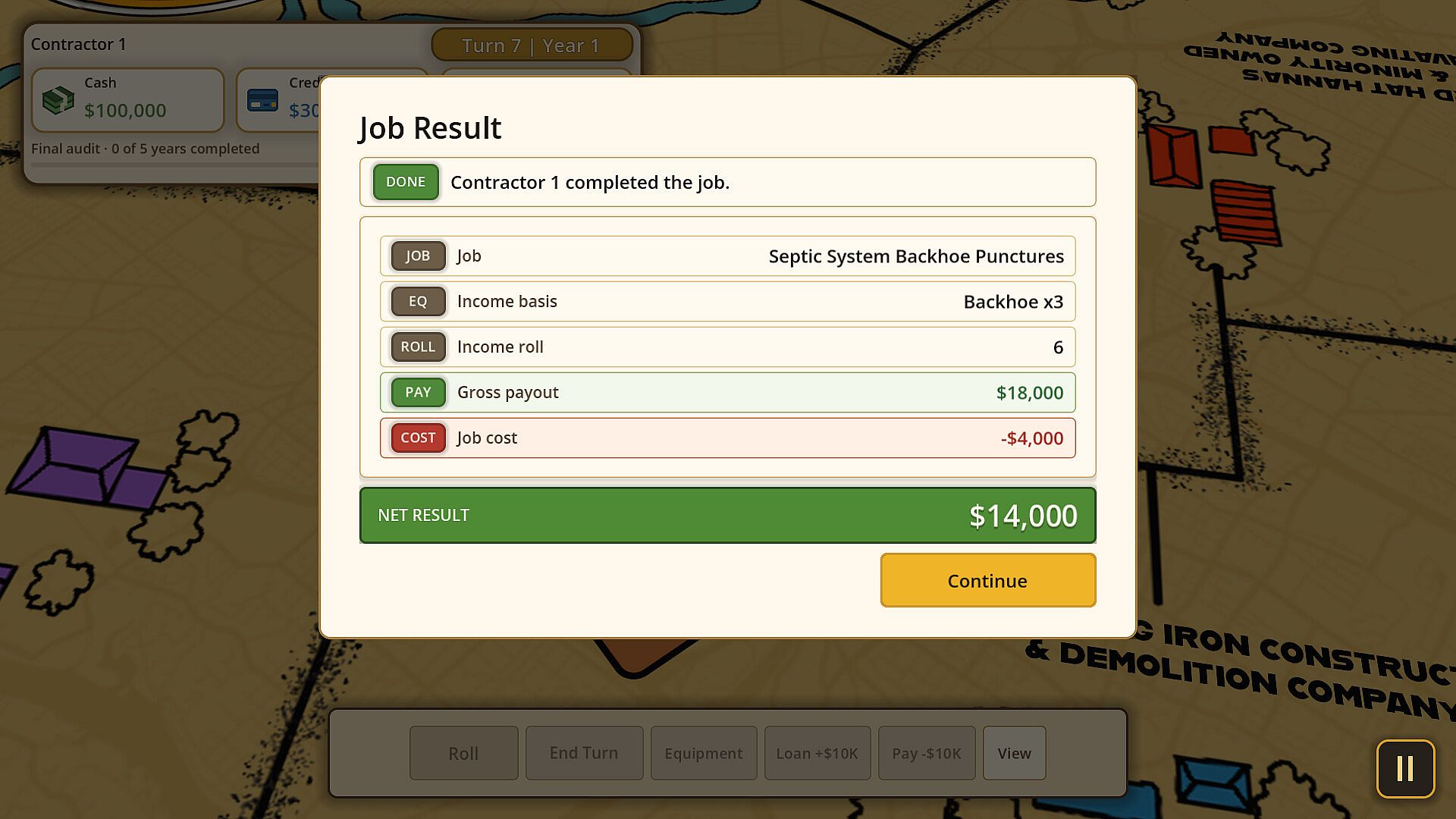
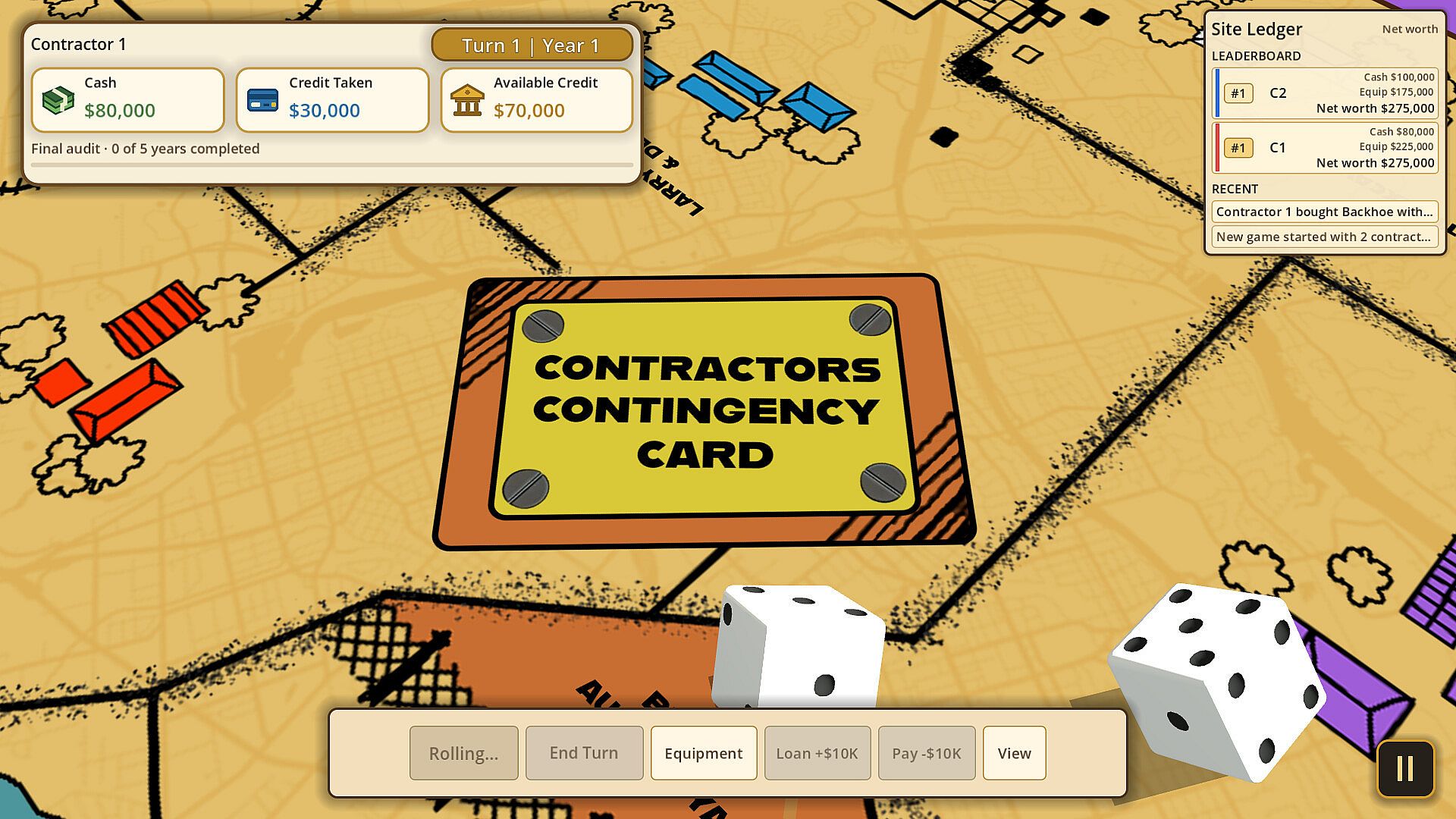
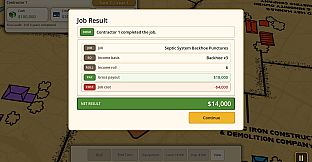
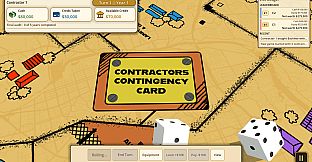
Every round involves resource management and opportunity evaluation. Equipment expands the range of available contracts, yet each acquisition carries ongoing costs that must be balanced against incoming revenue. Dice introduce variability in outcomes, affecting movement, job progress, or unexpected events that can shift a player's position. The loop encourages repeated evaluation of short-term needs versus long-term company growth, with success depending on adapting to both planned strategies and random results.
Progress tracking allows players to save sessions and resume later, supporting longer campaigns or shorter sittings. Financial decisions remain central throughout, as every purchase or bid affects available capital and future flexibility.
Game Modes
Matches can be configured with different goals that alter win conditions and pacing. Players select from easy, normal, or hard difficulty when facing AI opponents, which adjusts how aggressively the computer manages bids, finances, and expansion. Local or online play against friends is supported alongside the single-player options, allowing groups of two to six total participants.
AI opponents provide consistent competition without requiring additional human players, while the adjustable difficulty levels let newcomers ease into the systems or challenge experienced participants. Match goals can be customized before starting to emphasize different aspects such as rapid growth, steady accumulation, or survival through economic swings.
Key Mechanics and Features
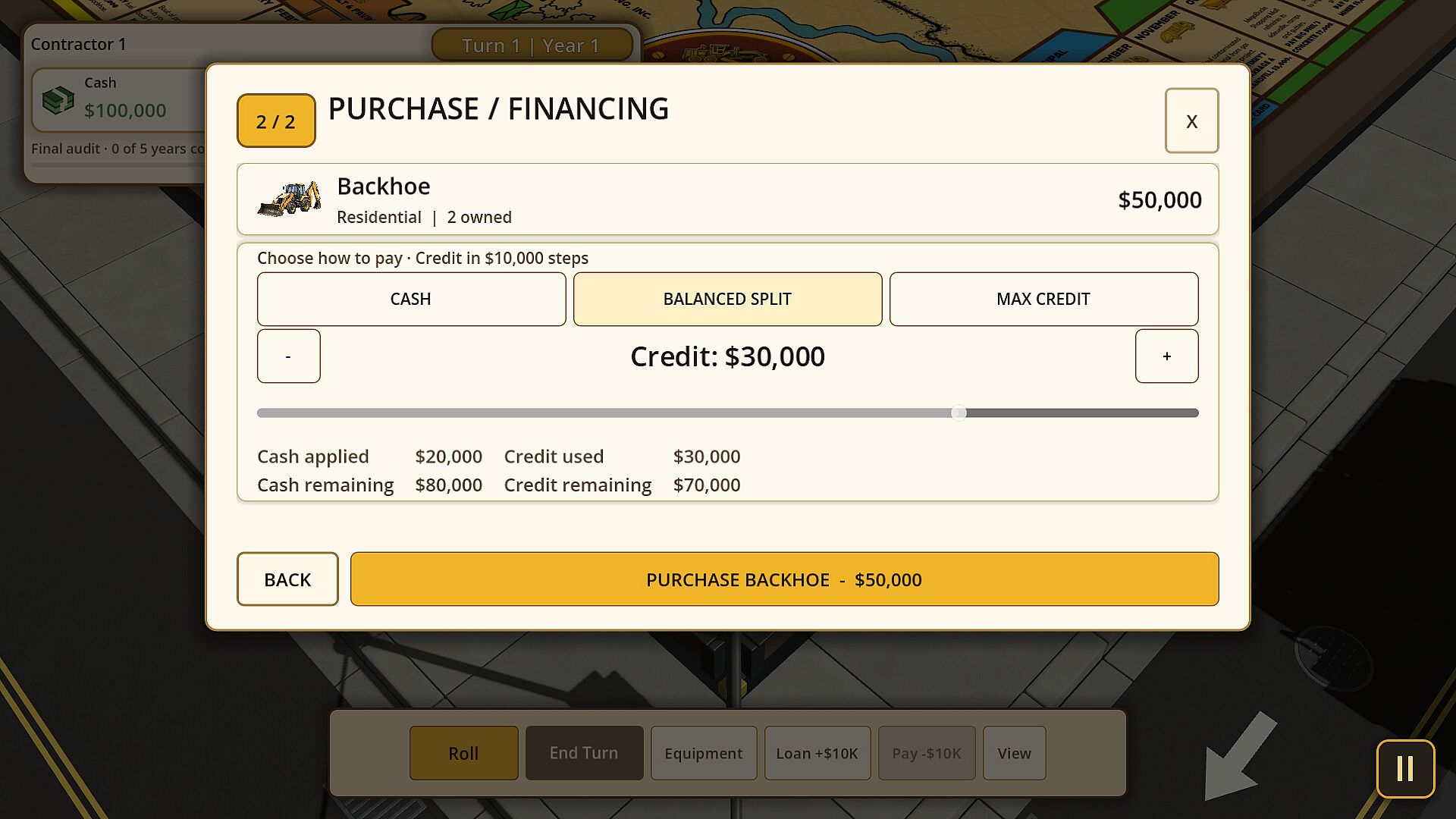
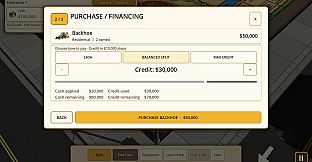
Equipment acquisition forms a major progression path. Players choose between immediate cash outlays or financing options that spread payments over time but reduce flexibility. This system directly influences which jobs become accessible and how quickly a company can scale.
Bidding and auctions create direct competition. Participants submit offers based on their current holdings and risk assessment, with successful bids granting contracts that generate revenue upon completion. Company purchases offer another layer of expansion, allowing players to absorb assets or capabilities from rivals when the timing and price align.
The combination of deliberate choices and dice-driven outcomes supports varied playstyles. Careful planners focus on steady equipment builds and cash buffers, while risk-tolerant players leverage financing and aggressive bids for faster gains. Both approaches remain viable depending on the match goals selected.
Is It Worth Playing?
The Construction Game suits players who enjoy turn-based strategy with economic management and light randomness. Its board-game roots translate into accessible sessions that reward attention to cash flow and equipment timing without overwhelming complexity. Those seeking competitive multiplayer experiences with friends or reliable AI opponents will find the supported player counts and difficulty settings accommodating.
Progress saving and customizable match goals add flexibility for different session lengths and preferences. The game appeals most to fans of simulation and strategy titles that blend planning with occasional chance events, particularly in group settings where bidding and auctions create direct interaction. Availability on PC makes it straightforward to access for anyone interested in construction business decision-making presented in a compact digital package.











