







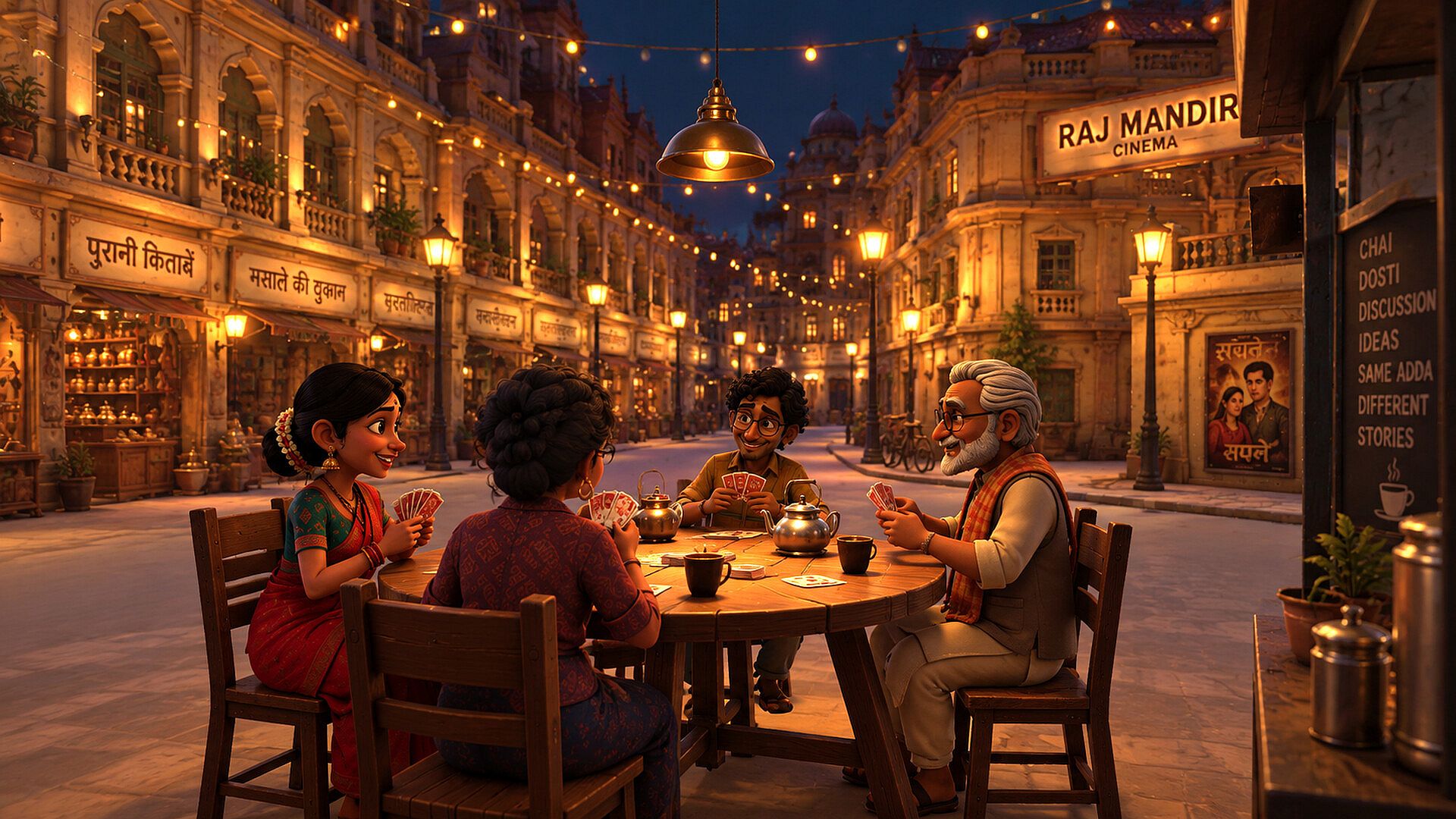



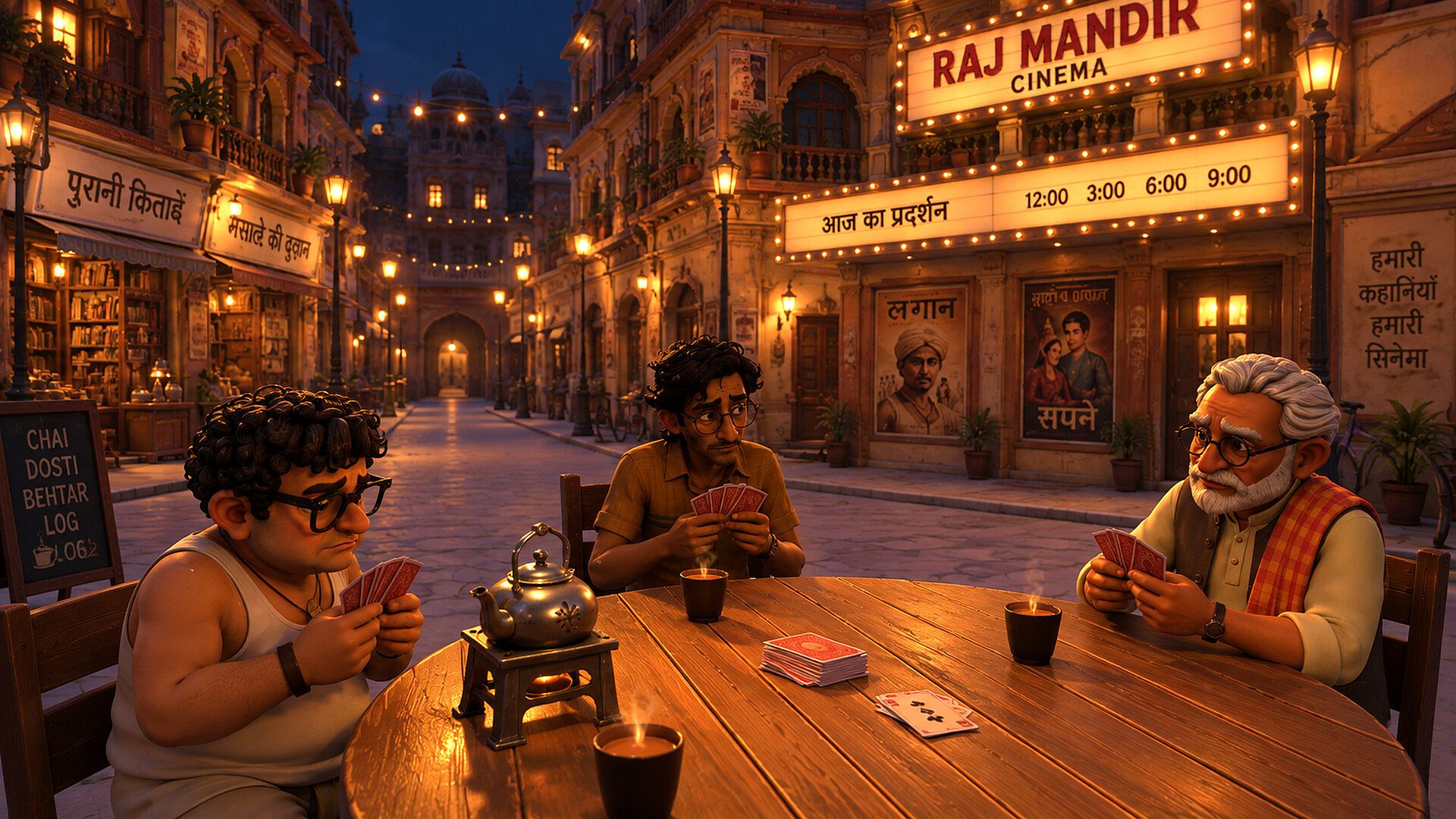
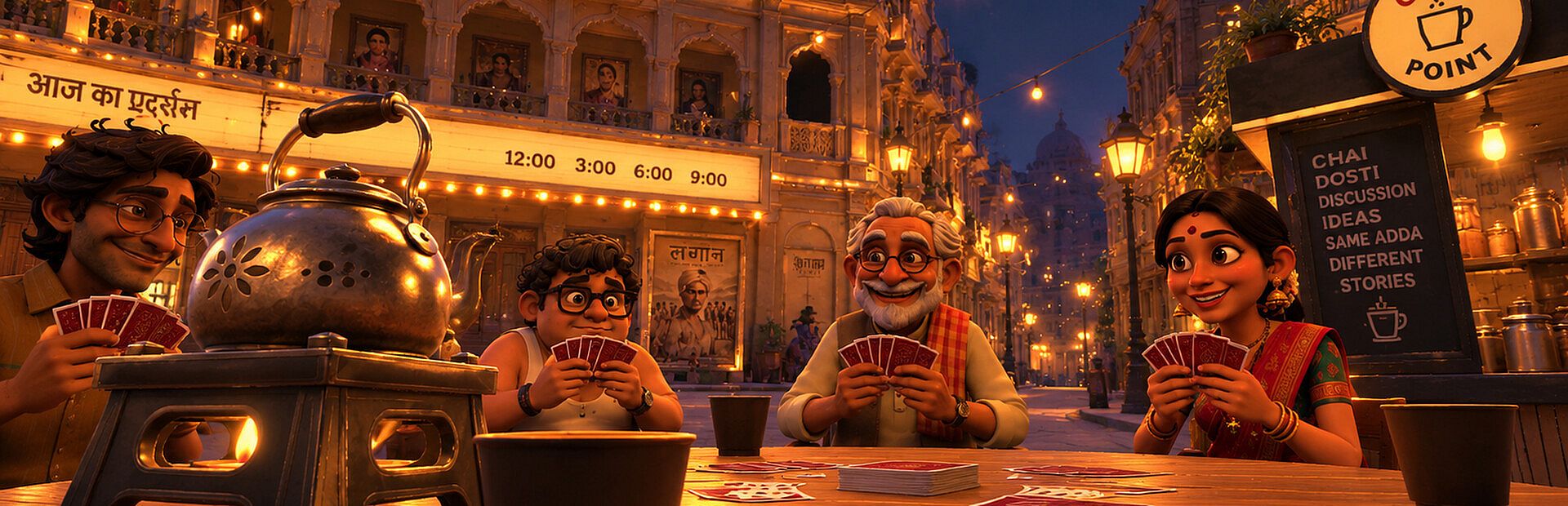




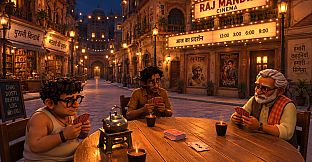


The Last Cup of Chai is a multiplayer strategy game that blends bluffing, card play, and social deduction in a lively setting inspired by a South Asian chai stall. Available on PC in Early Access, it combines elements of strategy, indie design, casual accessibility, and simulation through its core loop of hidden information and risky decisions. Players gather around a table of cups, knowing how many are poisoned but not which ones, then use cards and conversation to shift the odds before someone must drink or spill.
Gameplay
Each round begins with shared knowledge of the number of poisoned cups but hidden locations. Players take turns interacting with the table through cards that alter the situation for everyone. Peek lets a player secretly check a cup. Steal Card takes a random card from an opponent. Swap Hands exchanges entire hands with another player. Assassin's Teapot adds poison or antidote to a cup. Invert Effect flips a safe cup to dangerous or vice versa. Reverse Direction changes turn order. Specific Skip removes another player's turn. Spill Tea removes a cup without drinking it. These actions create uncertainty as information spreads unevenly.
Table talk forms a major part of strategy. Players can tell the truth, lie convincingly, or pretend to hold knowledge they lack. A safe cup might be recommended because the speaker knows it is harmless, or because they want another player to drink poison. Cards provide tools, yet reading opponents often decides outcomes more than the cards themselves. Events such as Street Cat, Power Cut, and Too Much Ginger can suddenly shuffle cups, remove information, or disrupt plans, ensuring no position stays secure for long.
Players start with three lives. A poisoned cup costs one life, while an antidote protects against poison. Safe cups keep a player alive. When a turn reaches its end, the choice is drink a chosen cup or spill a cup to remove it from play. Spilling changes the odds for remaining players. Extra Life cards can restore eliminated players in some situations. The game emphasizes manipulation, theft, and reading others over pure luck.
Game Modes
Standard Mode follows classic elimination rules. Players lose lives until none remain, at which point they are out of the round. The last player standing wins. This mode rewards survival through careful bluffing and timely card use while punishing those who misread the table.
Party Mode runs across a fixed number of rounds with all players staying involved throughout. The winner is the player with the most lives remaining at the end. This format suits larger groups or shorter sessions where everyone wants continued participation rather than early exits.
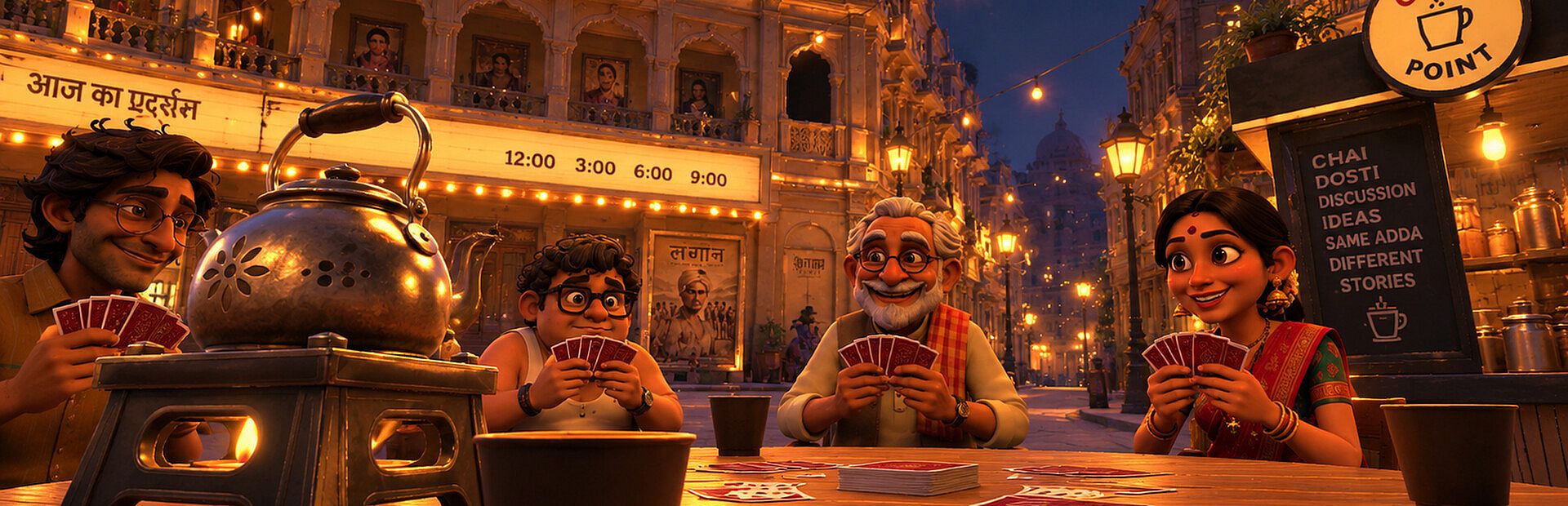
Both modes support the same core mechanics of cards, cups, and conversation. The setting features a bustling chai stall with mischievous characters, a chaotic street cat, comedic events, and dramatic reveals that reinforce the social focus. Rules remain straightforward to learn, yet decisions grow complex as information and deception intersect.
Is It Worth Playing?
The Last Cup of Chai suits groups that enjoy social bluffing and light strategy over solo play or heavy simulation. Its Early Access status means the core experience of hidden cups, card manipulation, and table talk is already present and functional for multiplayer sessions. Players who like games where conversation and reading opponents matter as much as mechanics will find repeated value in the shifting odds and sudden events. Those seeking pure luck or single-player depth may find the emphasis on friends and deception less appealing. The game rewards repeated play with the same group as patterns of trust and betrayal emerge. Availability on PC keeps the focus on local or online multiplayer without additional barriers.
Visuals and Atmosphere
The chai stall theme adds color and personality through character designs and animations that highlight dramatic drinking moments and comedic interruptions. These elements support the chaotic tone without overshadowing the strategic decisions. Animations for reveals and events keep sessions engaging even during longer rounds.











