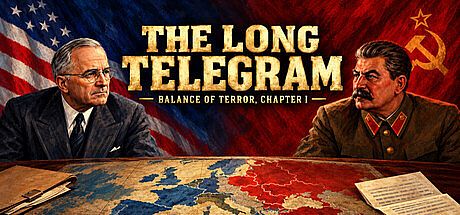


The Long Telegram: Balance of Terror, Chapter I is a turn-based strategy indie game set in 1946, where players lead either Washington or Moscow through the uncertain opening months of the Cold War. The experience centers on managing foreign influence while preserving domestic political power, with every decision carrying trade-offs that affect future options.
Gameplay
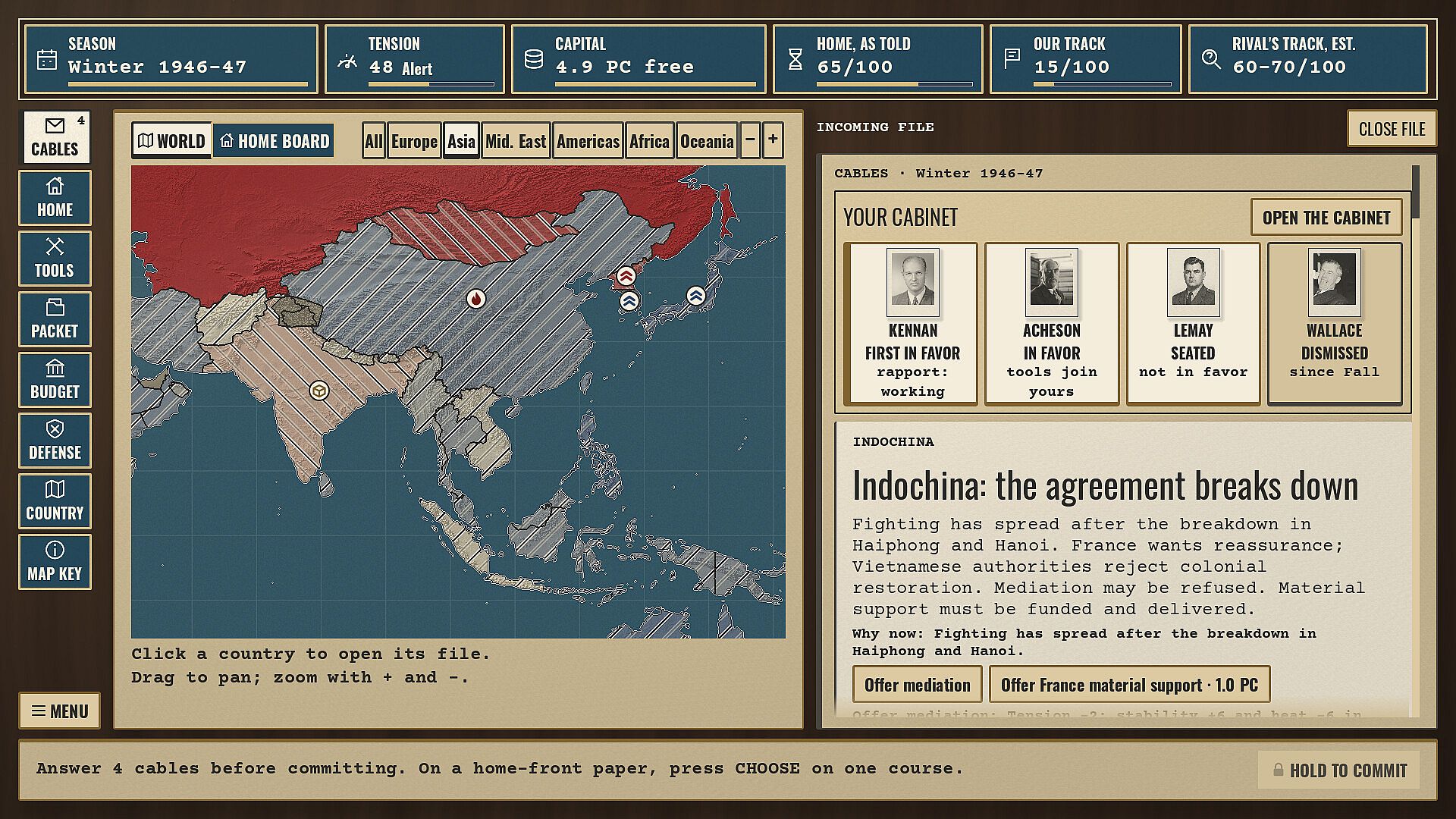
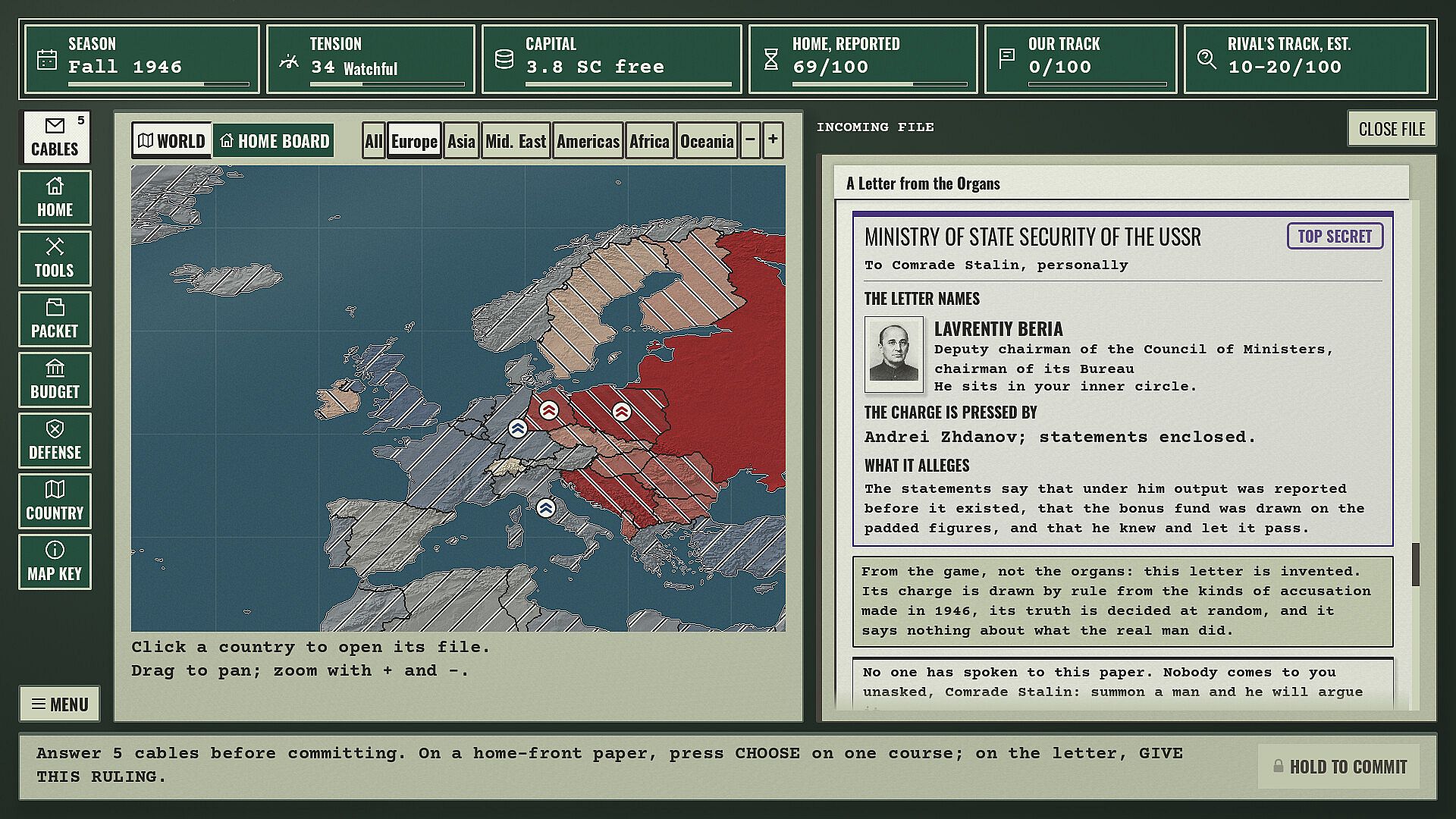
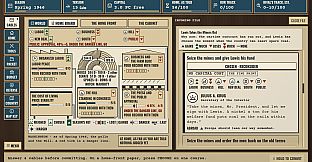
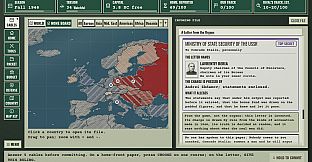
Players assume the role of either Truman or Stalin, navigating a desk filled with incoming cables, competing advice, and limited resources. Each turn involves reviewing reports on foreign crises, such as strikes or requests for aid, then committing orders that influence events abroad. Intelligence is often uncertain, requiring judgment on which details to trust before allocating scarce assets.
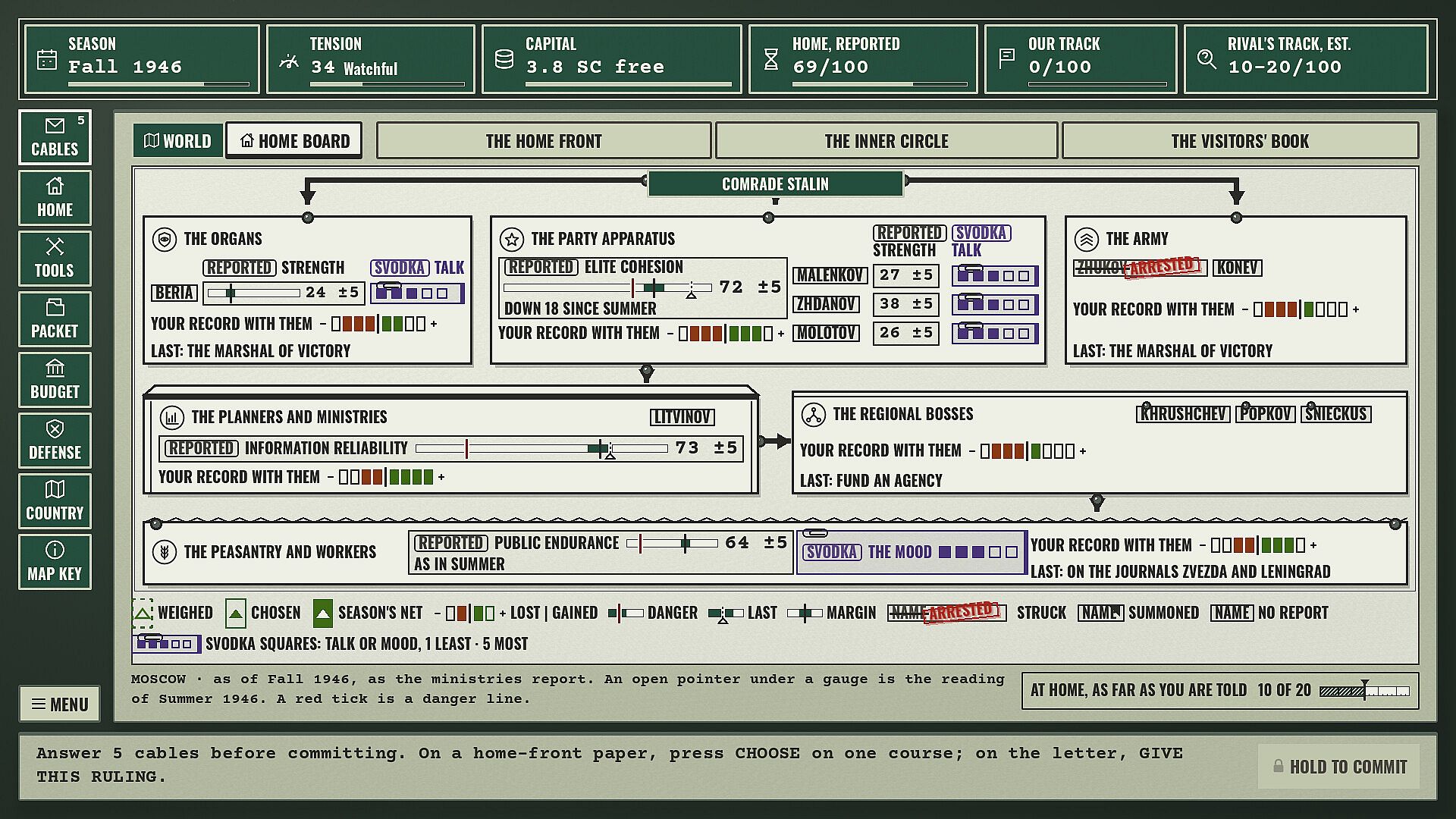
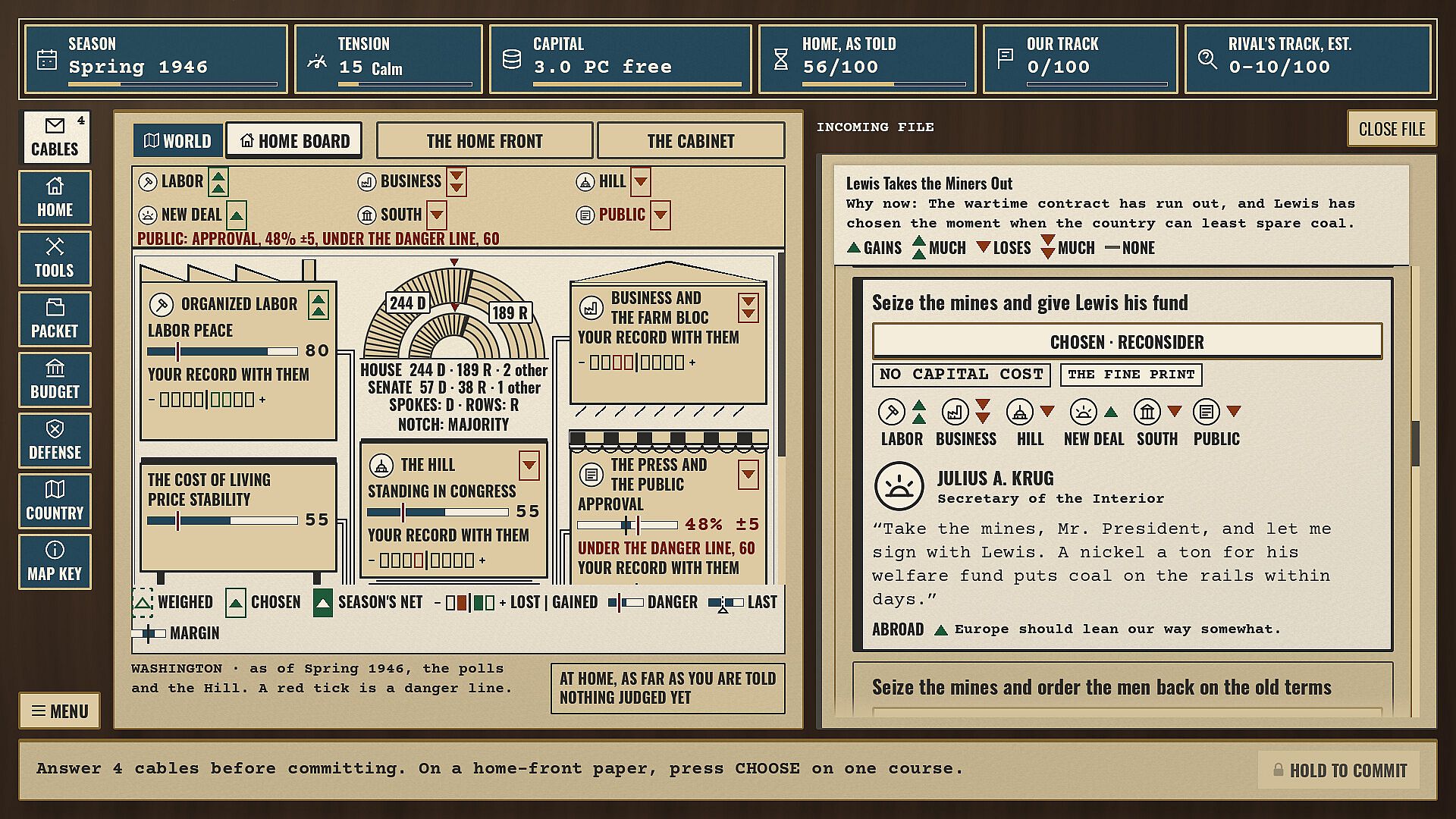
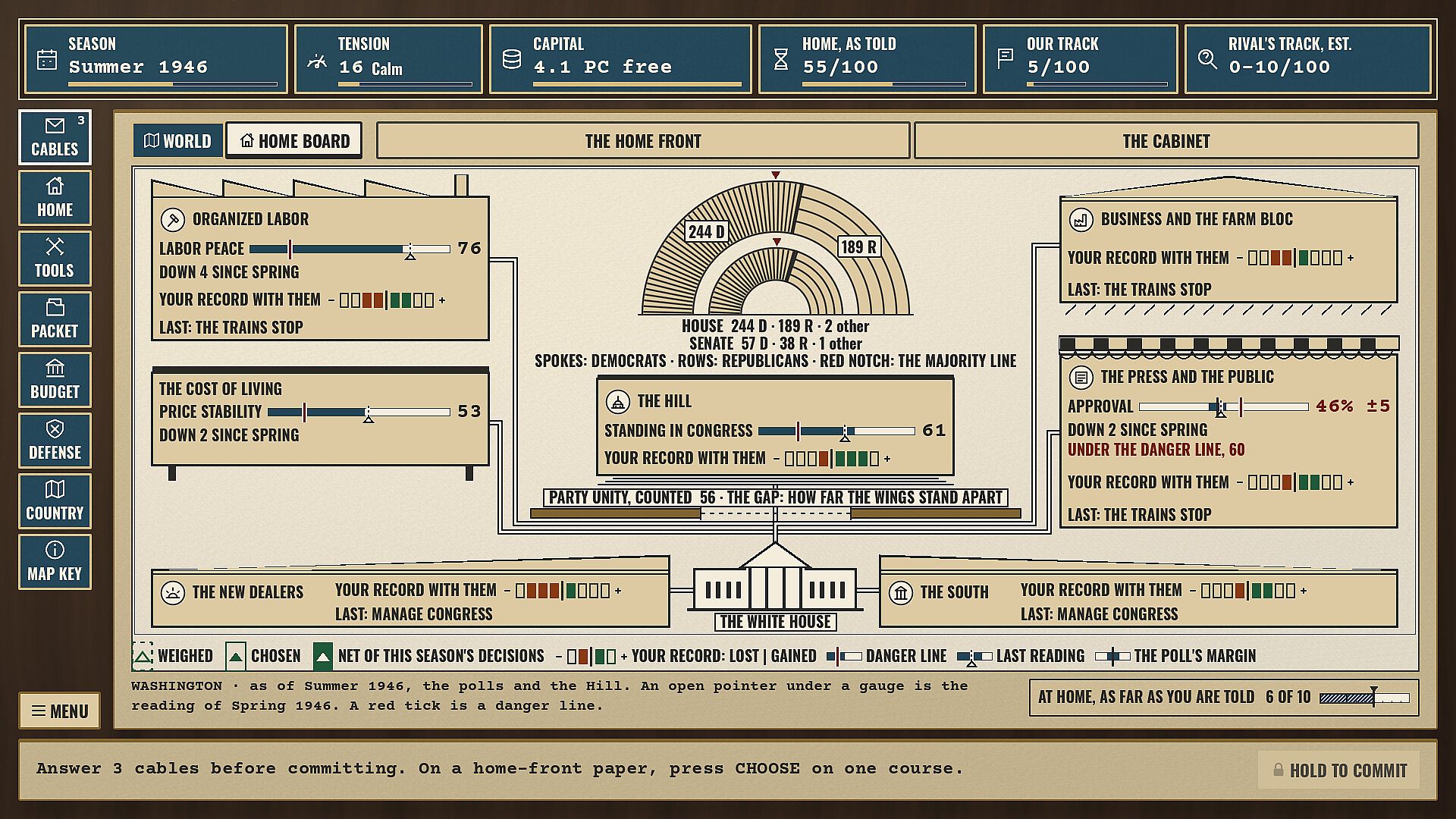
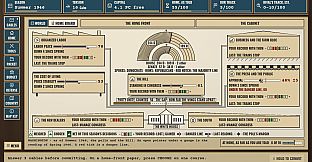
Home-front management forms a core layer of play. In Washington, pressures come from Congress, organized labor, business interests, and public opinion. In Moscow, the focus shifts to party structures, the army, rival power centers, and ministries that may provide incomplete or misleading information. Maintaining authority at home directly limits or enables actions overseas.
Eight historical advisers appear across the broader campaign, each offering distinct doctrines and priorities. Players weigh their recommendations against uncertain data, then observe how choices reshape the political map and generate follow-up dispatches. The four seasons of 1946 provide the current scope, with foreign crises and domestic dilemmas arriving in sequence.
Game Modes
The primary experience is a single-player campaign structured around the 1946 timeline. Players select one of the two leaders at the outset and progress through seasonal turns, confronting a mix of international situations and internal challenges. The two sides operate under different institutional constraints, creating asymmetric decision-making.
Adviser selection adds replay variety, as each brings unique priorities that influence available options and long-term outcomes. Resource management remains central, with commitments abroad always balanced against the need to retain enough domestic leverage for continued action.
Core Mechanics and Systems
Turn-based progression drives the loop, with each season presenting fresh situations that demand resource allocation and judgment calls. Political consequences unfold through updated maps and explanatory dispatches, showing the ripple effects of prior orders. Cabinet and home-front elements receive expanded treatment in the current build, including appointments and policy considerations that shape what reaches the leader's desk.
Intelligence evaluation sits at the heart of many choices, forcing players to assess incomplete reports before committing. The system emphasizes trade-offs: actions that build influence in one area may erode support elsewhere, and every promise or intervention carries a cost that must be weighed against remaining capacity.
Current Development State
The game remains in active development, with the expanded leader, cabinet, and home-front systems focused on the 1946 period. Work continues on clearer presentation of decisions and results, along with testing and balancing. Extension of these systems into later campaign years forms part of ongoing efforts, and final release details await announcement.
Is It Worth Playing?
This title targets players drawn to historical strategy experiences that emphasize political trade-offs and asymmetric superpower management during the early Cold War. The deliberate pacing and focus on judgment under uncertainty suit those who enjoy weighing competing advice and tracking long-term consequences rather than fast-paced action.
With no user reviews available yet and the project still in development, prospective players should follow official updates for confirmation of the final feature set and release window. Those interested in single-player turn-based strategy centered on 1946 decision-making will find the core loop aligned with the described systems.