



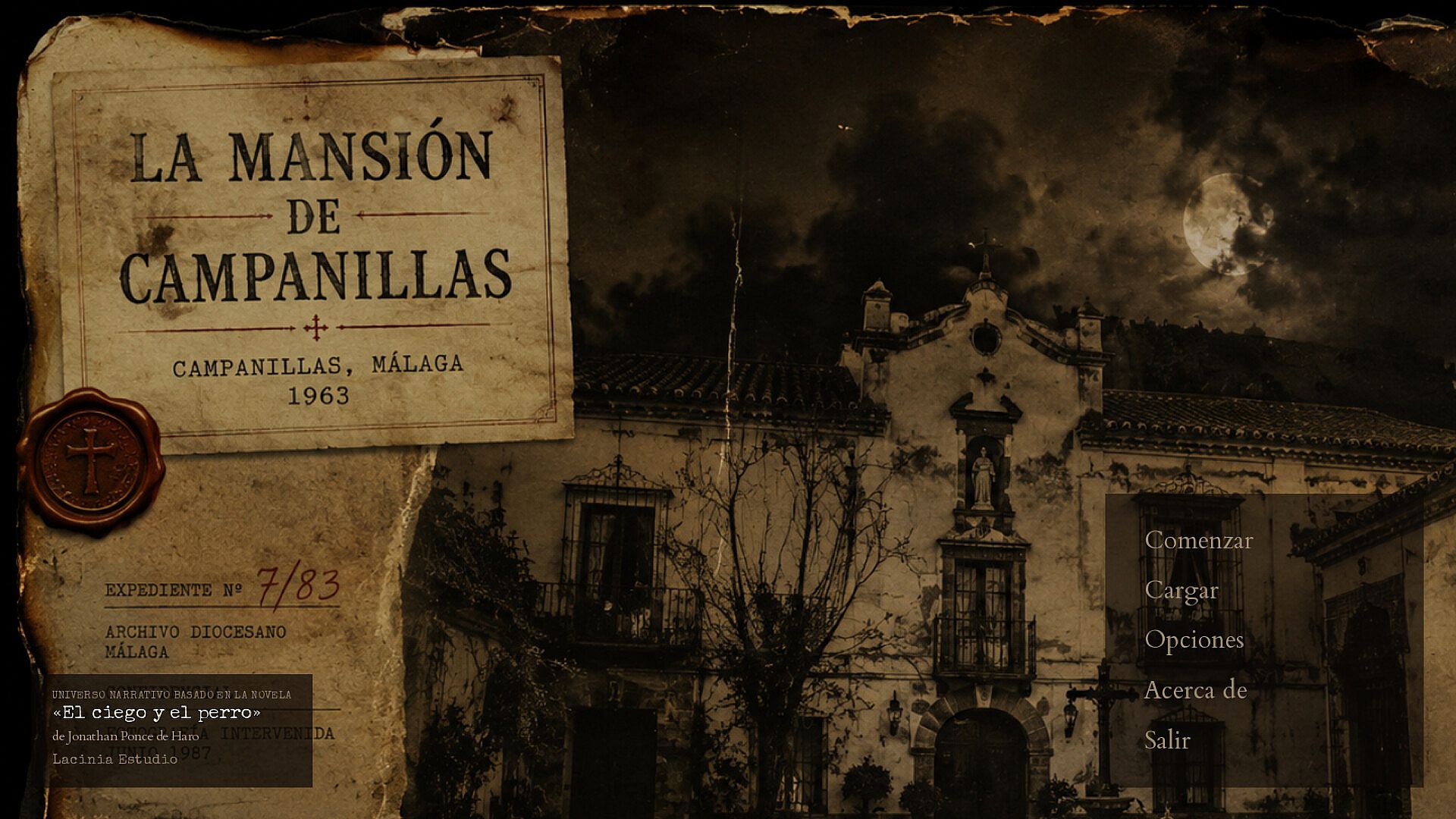



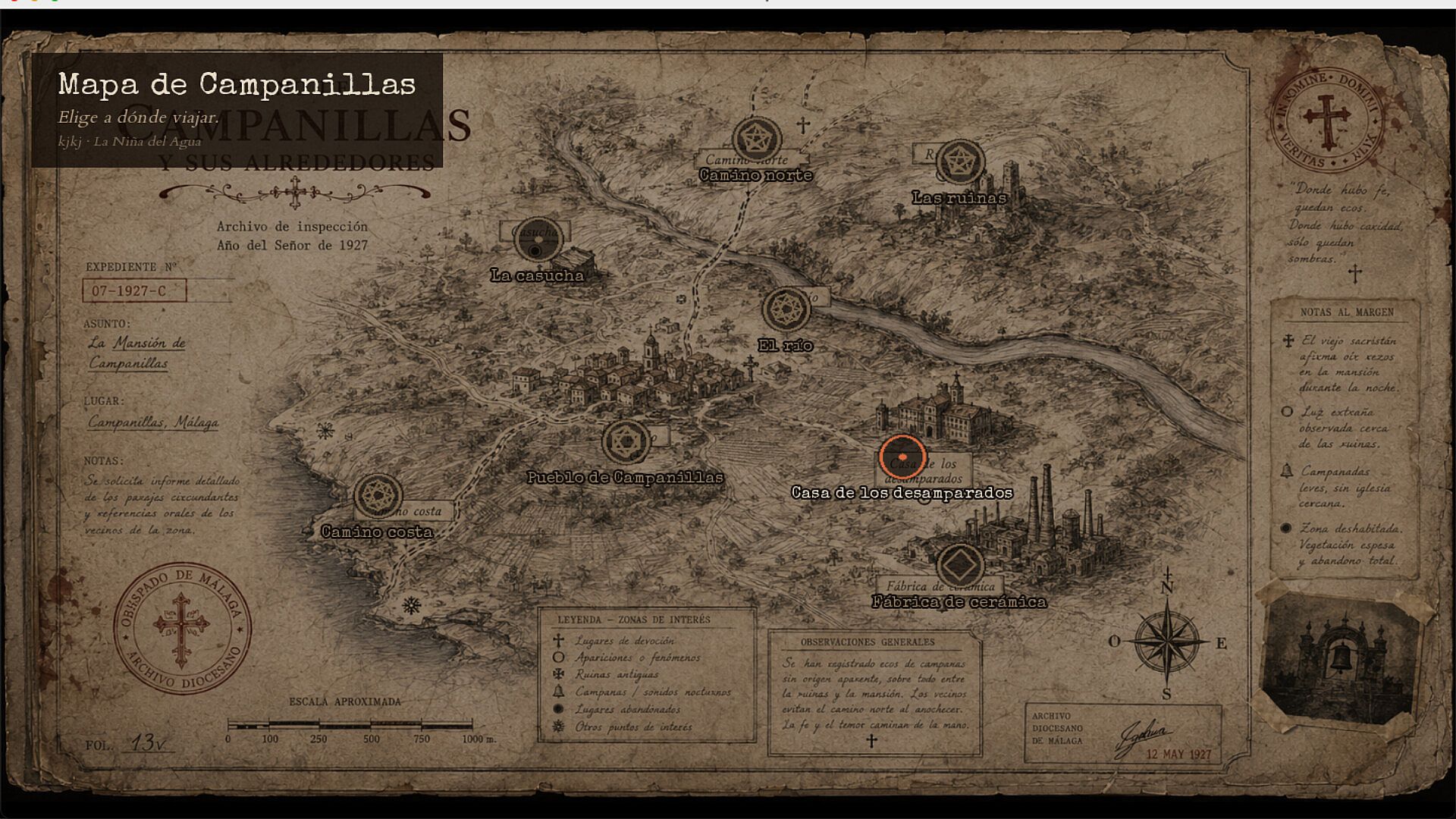





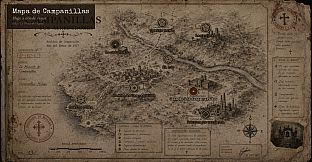

The Mansion of Campanillas is an indie visual novel adventure game set in rural Andalusia. Players step into the role of someone who has inherited a dilapidated property in the fictional district of Campanillas during 1963, where local disappearances form the backdrop for a story about interpreting an environment rather than pursuing conventional answers.
Gameplay
The core loop centers on careful observation and decision making within a narrative framework. A diary serves as the main tool for processing information gathered from the surroundings. Each clue receives one of three labels: Trust, Doubt, or Dismiss. This system encourages players to weigh evidence based on context instead of accepting any single detail at face value, even when a source carries an official stamp.
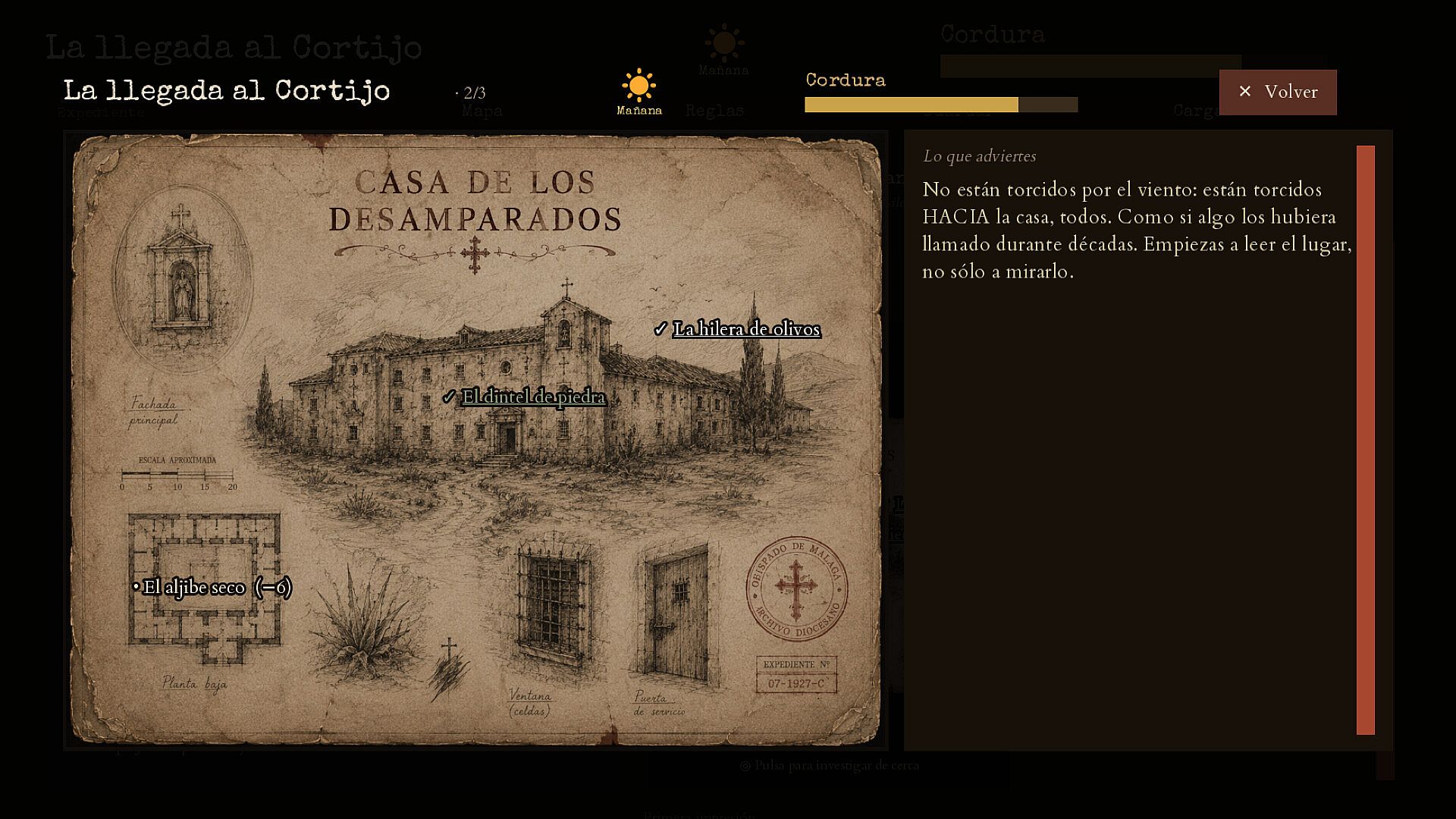
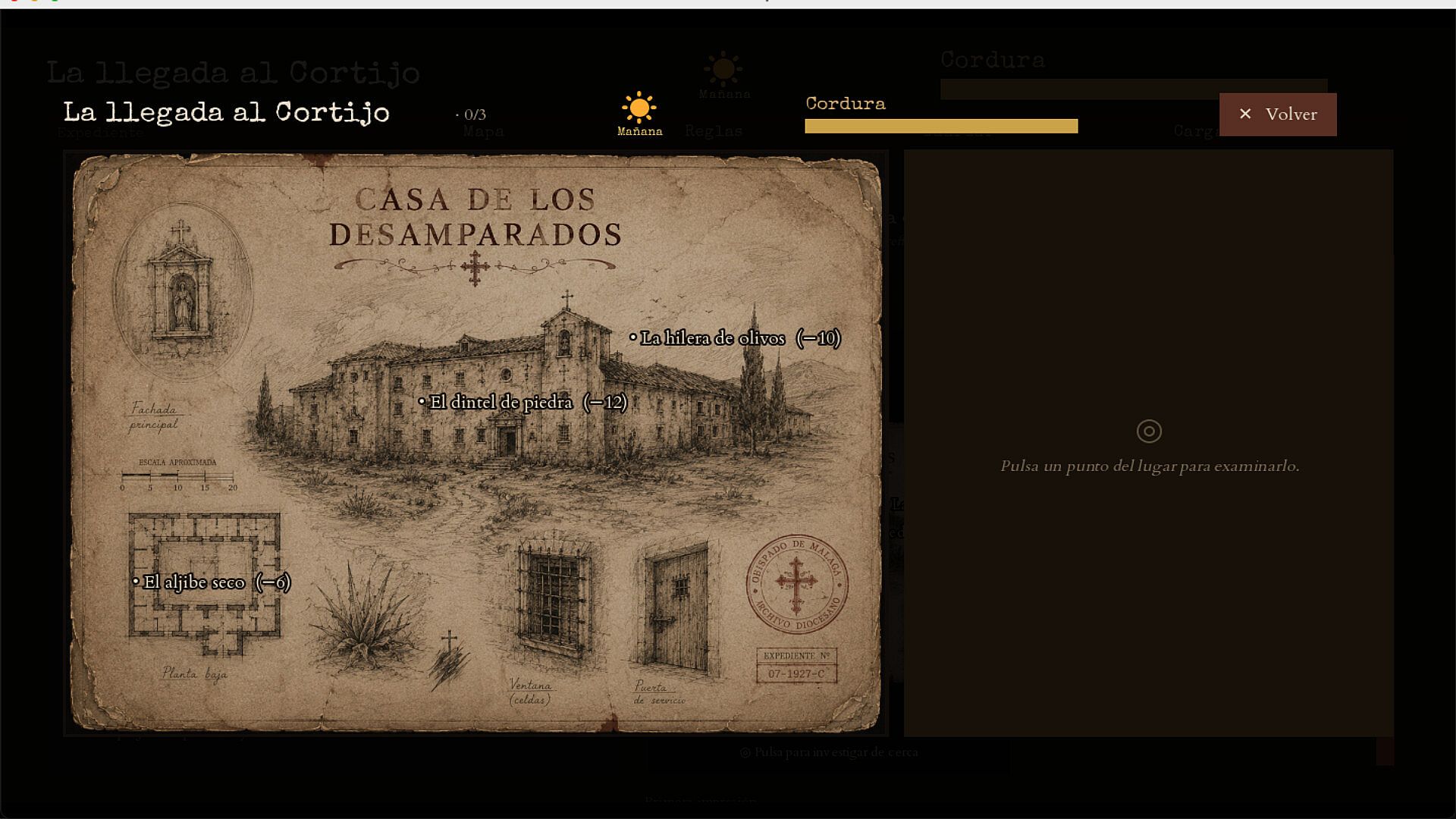
Exploration carries a cost. Every investigation draws from a sanity meter, which means choices about what to examine and how deeply to pursue it become meaningful. Overextending attention on certain elements can limit options later, pushing players toward selective focus. The setting emphasizes rural Andalusian details, from the inherited shack to the wider district, creating an atmosphere of quiet unease built through environmental storytelling.
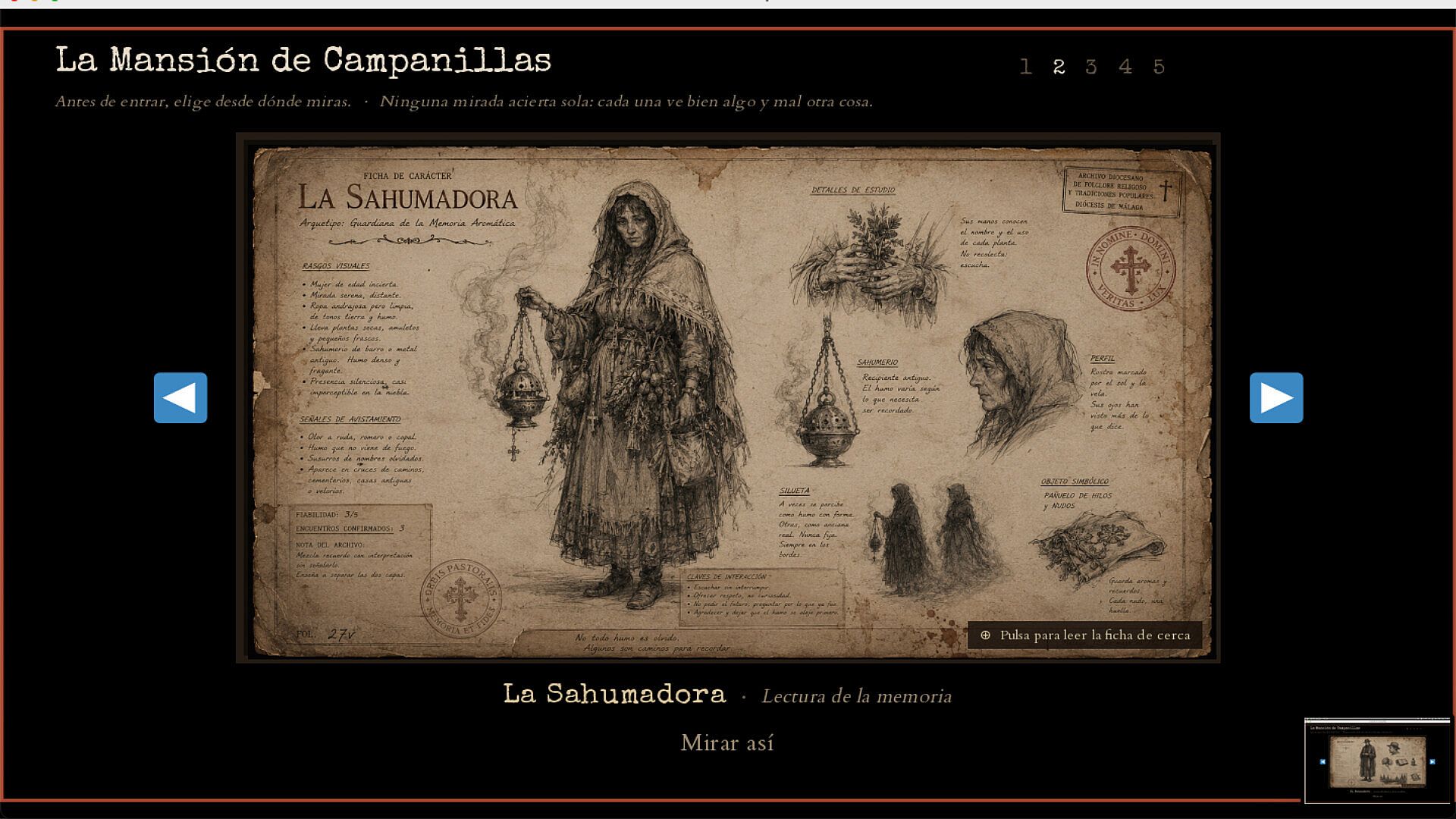
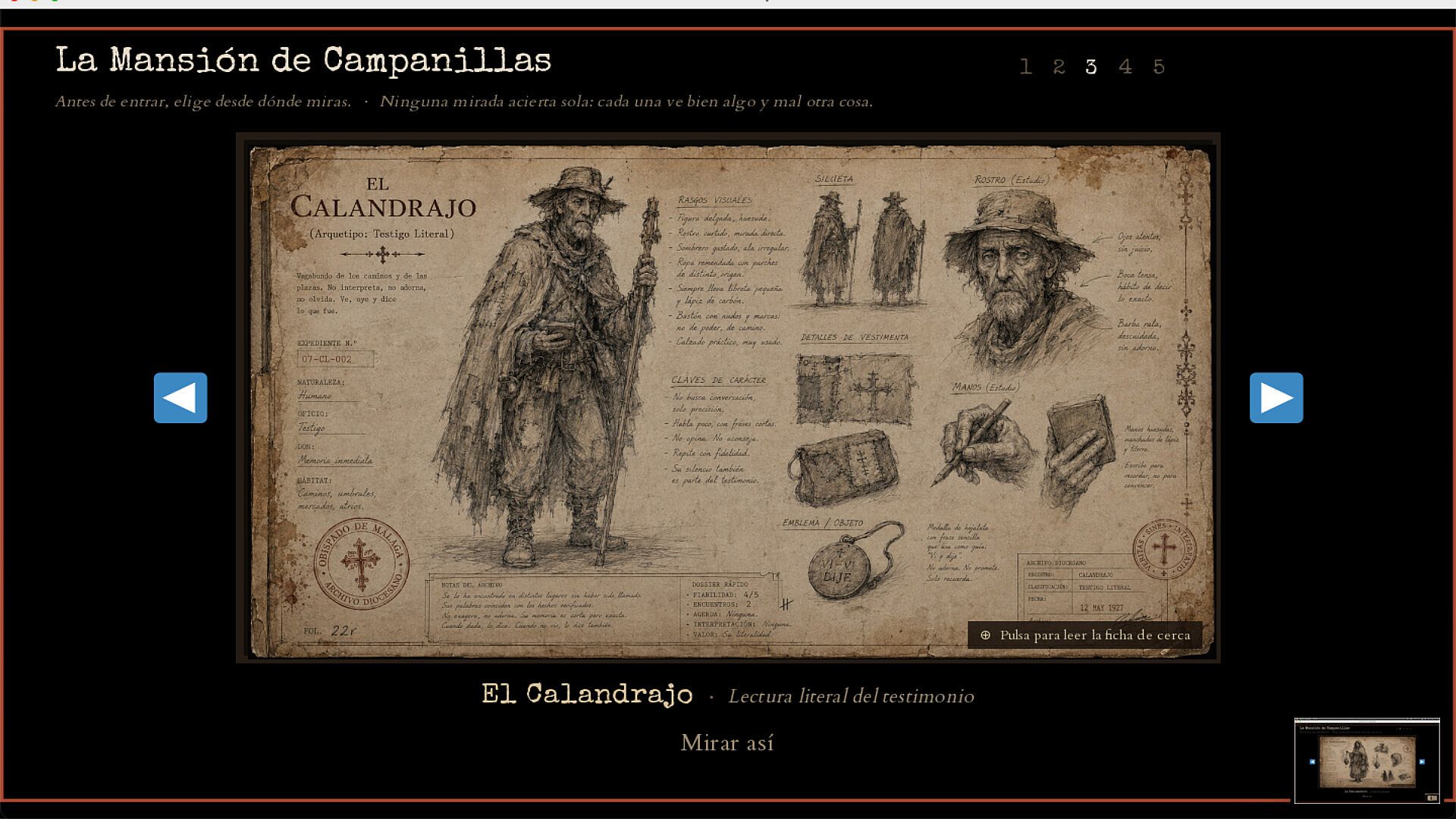
Five archetypes shape interactions and possible paths through the narrative. These provide distinct lenses for interpreting events without altering the fundamental structure of reading the location itself. Seven persistent seals appear as recurring elements that tie different threads together across play sessions. The game concludes with an ending designed to confront the player directly, reflecting the cumulative weight of prior choices.
Game Modes
The experience unfolds as a single-player visual novel. There are no separate competitive or cooperative modes. Progression relies on sequential investigation and diary management rather than branching mission structures or replayable scenarios with different rulesets. Players advance by deciding which leads to follow and how to categorize information, with sanity acting as the primary constraint on activity.
Early Access status means the current build focuses on the core narrative loop described above. Additional content may expand on existing systems, but the foundation remains a deliberate, choice-driven reading of place and evidence.
Setting and Atmosphere
Campanillas in 1963 provides a grounded rural Spanish backdrop. The inherited shack functions as both starting point and recurring anchor, while the surrounding district reveals layers through disappearances that resist straightforward explanation. The visual novel format prioritizes text and static or lightly animated scenes to convey tension, avoiding action sequences in favor of accumulating unease from details that do not always align.
Andalusian rural horror emerges from the ordinary turned unsettling. Everyday objects and locations gain significance once players begin assigning Trust, Doubt, or Dismiss labels. The result is a story that rewards patience and repeated consideration of the same spaces rather than rapid forward momentum.
Is It Worth Playing?
This title suits players who enjoy visual novels that emphasize interpretation over action or combat. The diary mechanics and sanity cost create a focused loop centered on evidence evaluation, which distinguishes it from more linear narrative adventures. Those drawn to stories about hidden histories in isolated communities may find the approach engaging, particularly if they appreciate endings that reflect accumulated decisions rather than offering clear resolutions.
Early Access means the game remains under active development, so expectations should center on the systems already outlined in the source description. Individuals seeking polished, complete experiences with extensive side content may prefer to wait for further updates. The combination of archetype selection, persistent seals, and direct confrontation in the ending offers replay value for those interested in testing different labeling strategies and their long-term effects.