




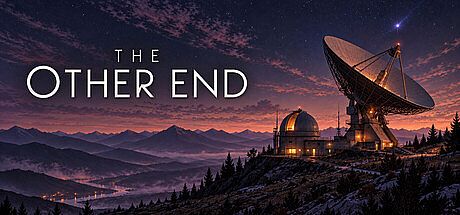


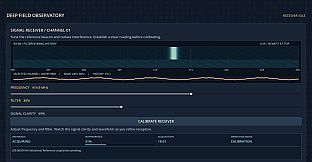
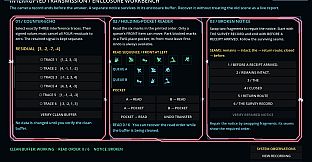
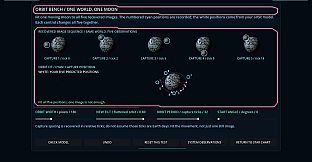
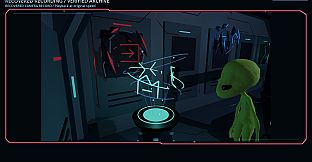
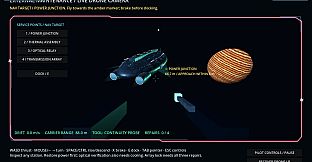
The Other End is a single-player sci-fi puzzle adventure set at Deep Field Observatory. Players take on a night shift that starts with routine equipment checks and quickly shifts into contact with an unknown intelligence through incoming signals. The experience unfolds entirely through a workstation interface, where analysis of transmissions, symbol deciphering, and record reconstruction form the core of progression.
Gameplay
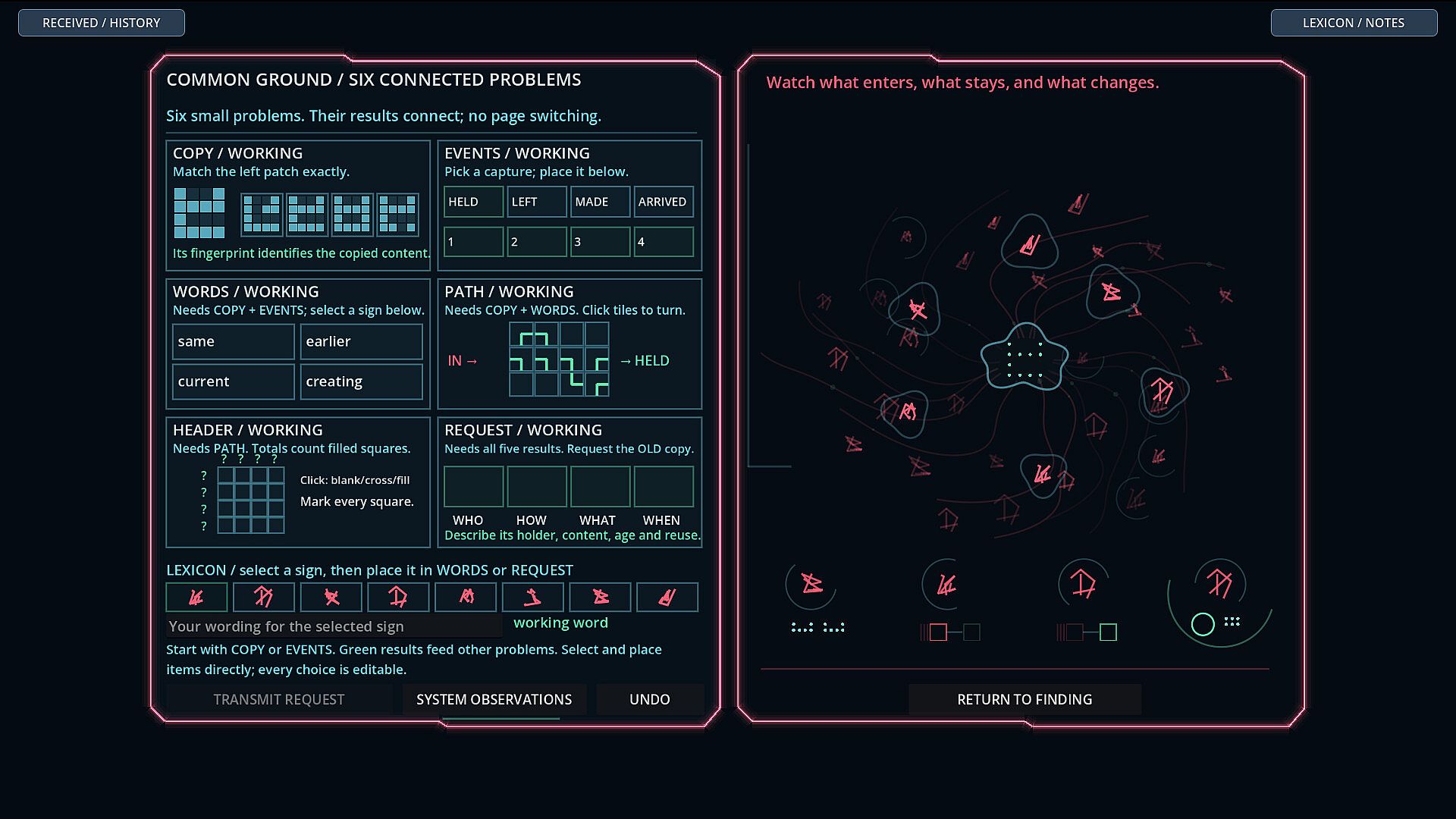
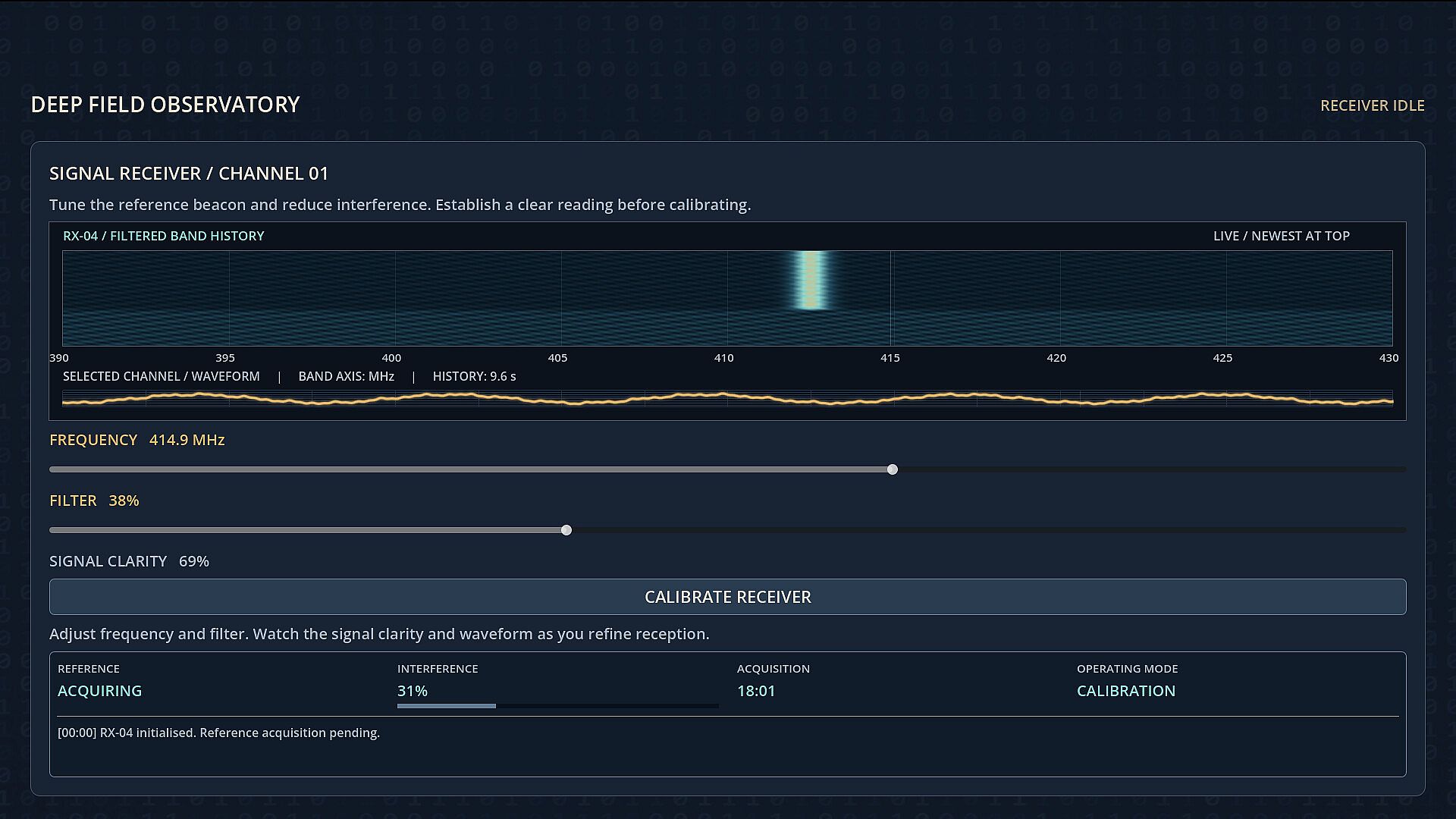
Action centers on a terminal workstation equipped with tools for signal processing and data handling. Players examine incoming transmissions for patterns, test interpretations against responses, and gradually construct a functional vocabulary for exchange. Successful interactions reveal additional context while raising new questions about the entity on the receiving end.
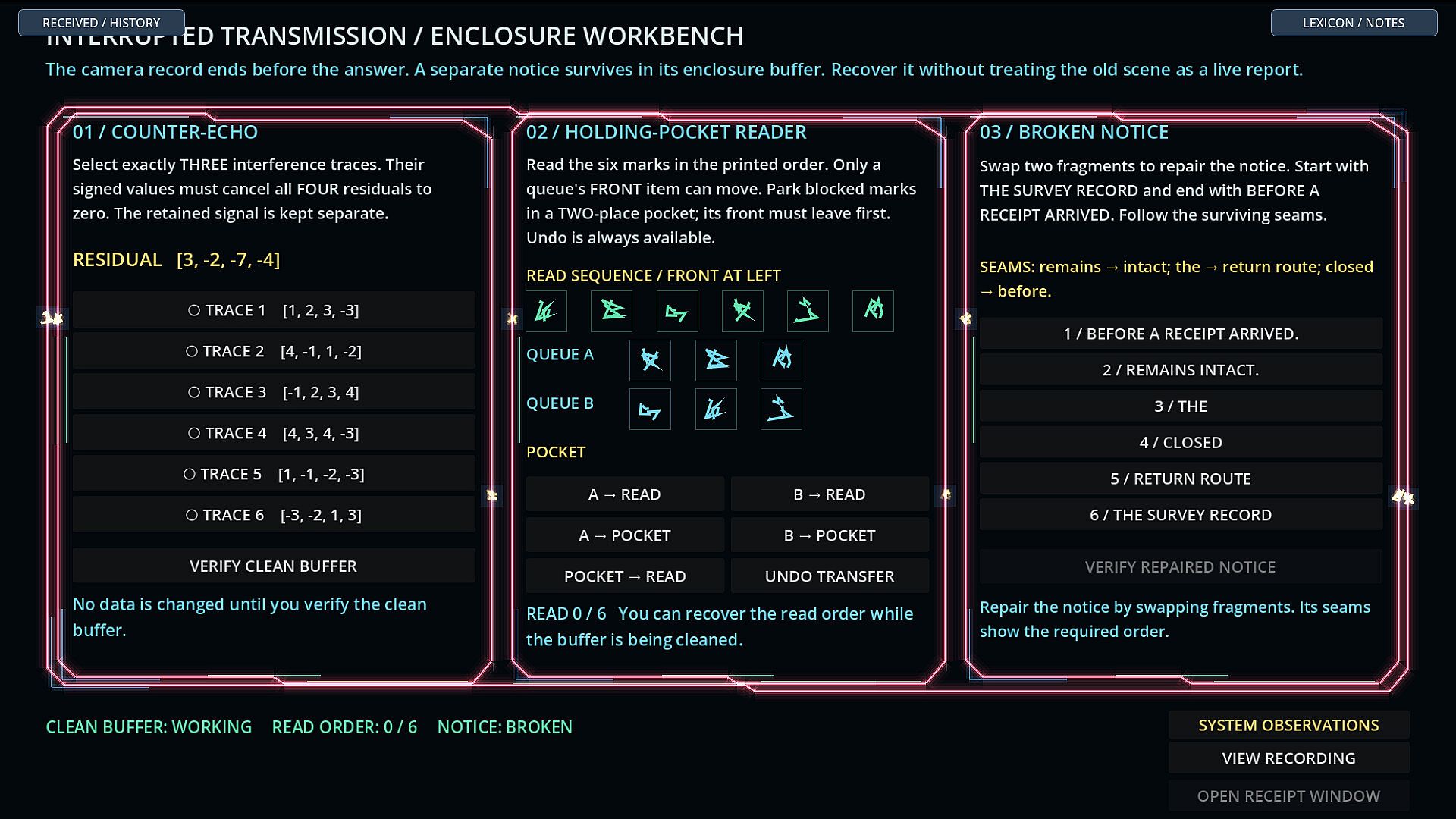
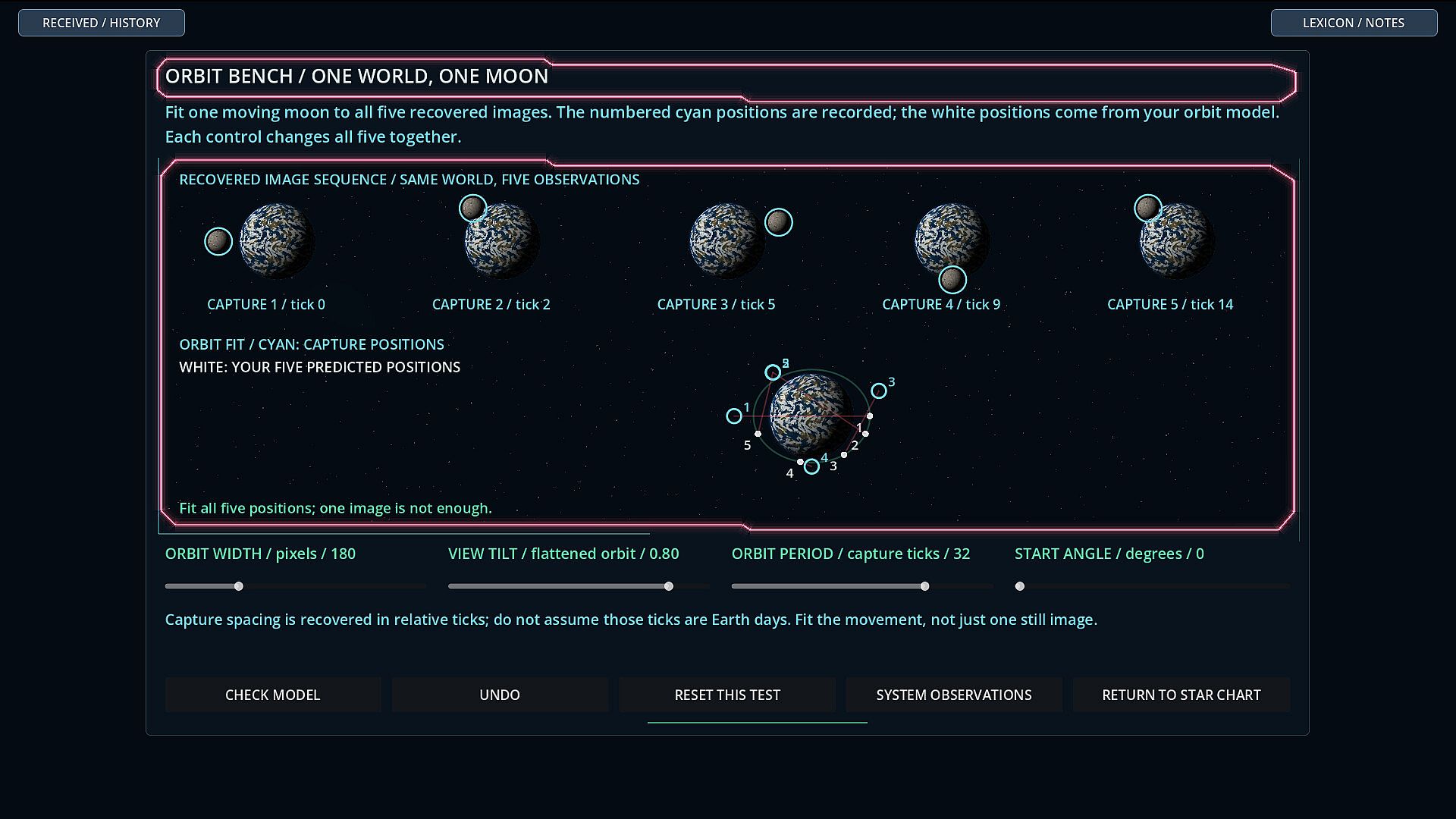
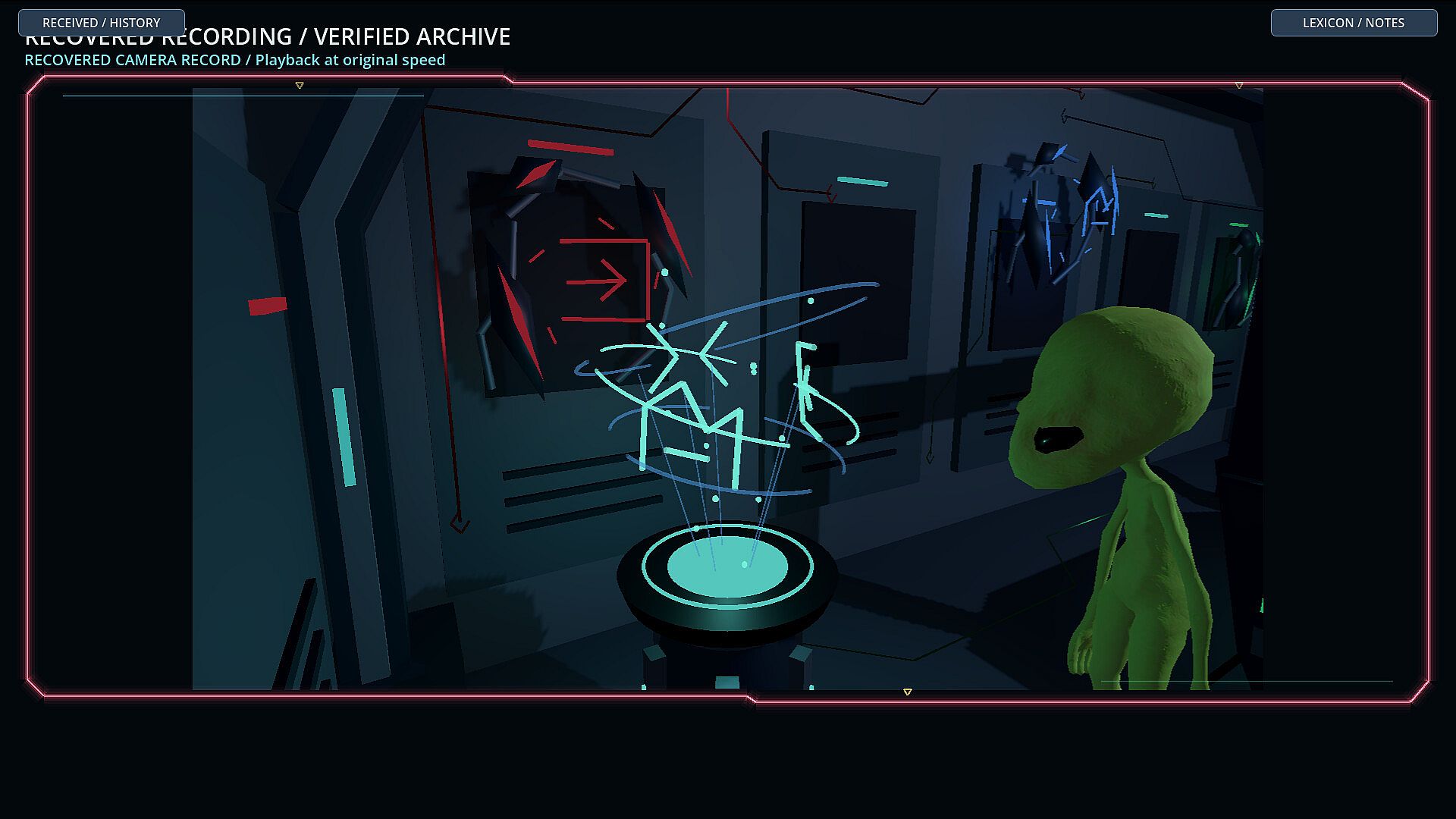
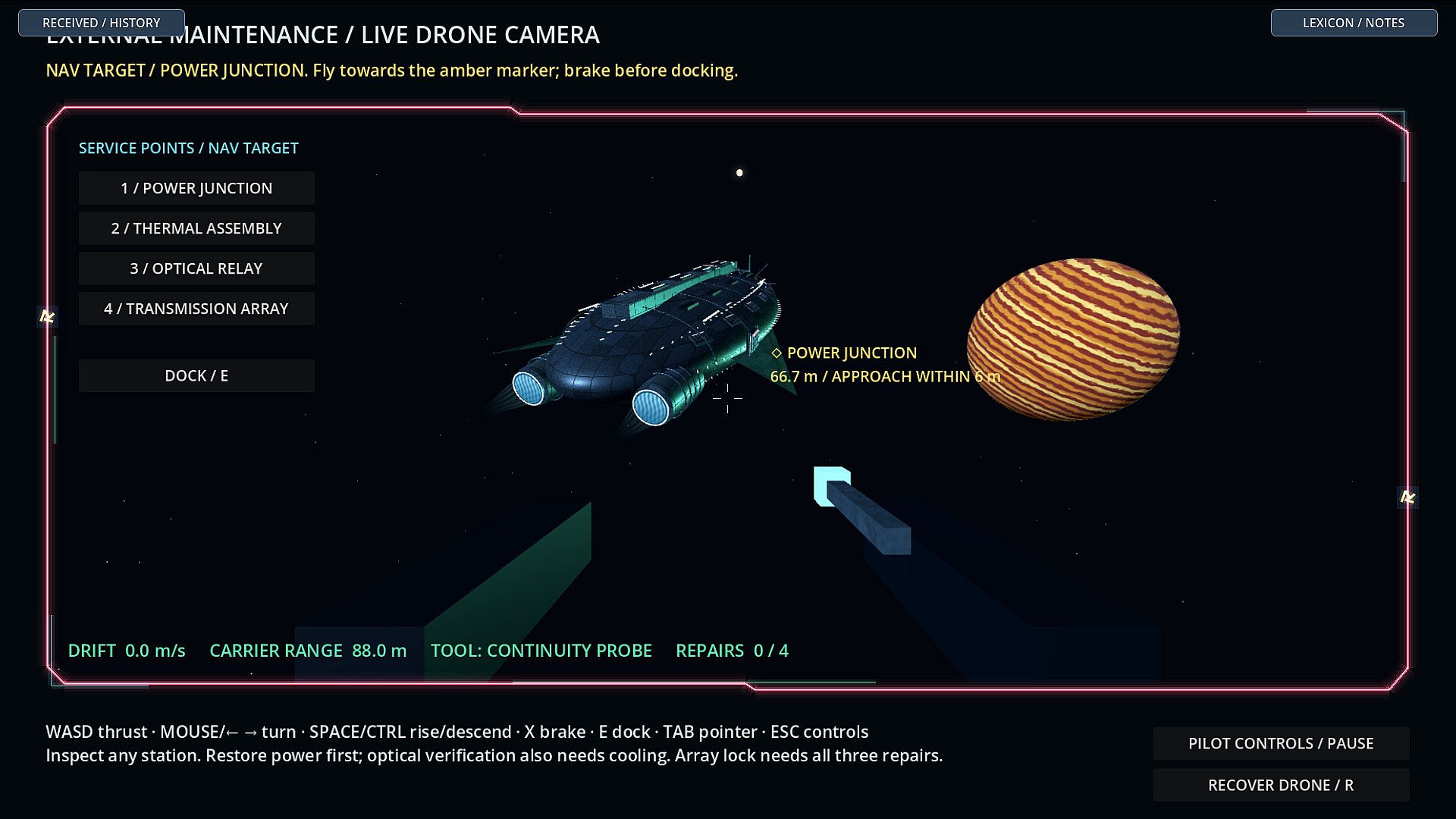
Challenges draw from signal analysis, logical deduction, timing sequences, spatial reconstruction, and operation of unfamiliar machinery. Some tasks function independently, while others link together so that insights from one area inform solutions elsewhere. Remote equipment control and recovery of animated recordings expand the view of distant environments, allowing players to piece together a broader picture of the other side.
Communication builds through observation and experimentation. Recurring patterns appear across exchanges, and comparing sent signals with received replies helps refine understanding. Every confirmed exchange advances both the language and the underlying mystery.
Game Modes
The game operates as a single-player experience with built-in replay elements. Puzzle variations alter layouts and solutions on subsequent runs while keeping the central narrative intact. This structure encourages return visits to apply prior knowledge to fresh configurations.
Eight manual save slots support separate investigations, letting players maintain distinct threads or experiment with different approaches without overwriting progress. The focus remains on solitary exploration of the first-contact scenario rather than competitive or cooperative elements.
Story and Atmosphere
An unfolding mystery emerges through transmissions, recovered recordings, and internal correspondence. The narrative avoids direct exposition, instead revealing details via the growing dialogue with the unknown presence. Players piece together the situation by restoring damaged records and interpreting responses that grow more coherent over time.
The observatory setting reinforces isolation, with the workstation serving as the sole window into events beyond the immediate station. Animated transmissions and remote drone feeds provide glimpses of other environments, heightening the sense of distance and the unknown.
Is It Worth Playing?
The Other End suits players who enjoy methodical puzzle-solving and gradual discovery in a contained sci-fi framework. Its emphasis on pattern recognition, comparison, and iterative learning rewards careful attention without relying on combat or time pressure. The variations across playthroughs add longevity for those who want to revisit the central story with new challenges.
With its focused single-player design and emphasis on communication mechanics, the game appeals to fans of narrative-driven adventures that prioritize intellectual engagement over action. The structure supports multiple sessions through save management and layout changes, making it a solid choice for deliberate, reflective play.











