






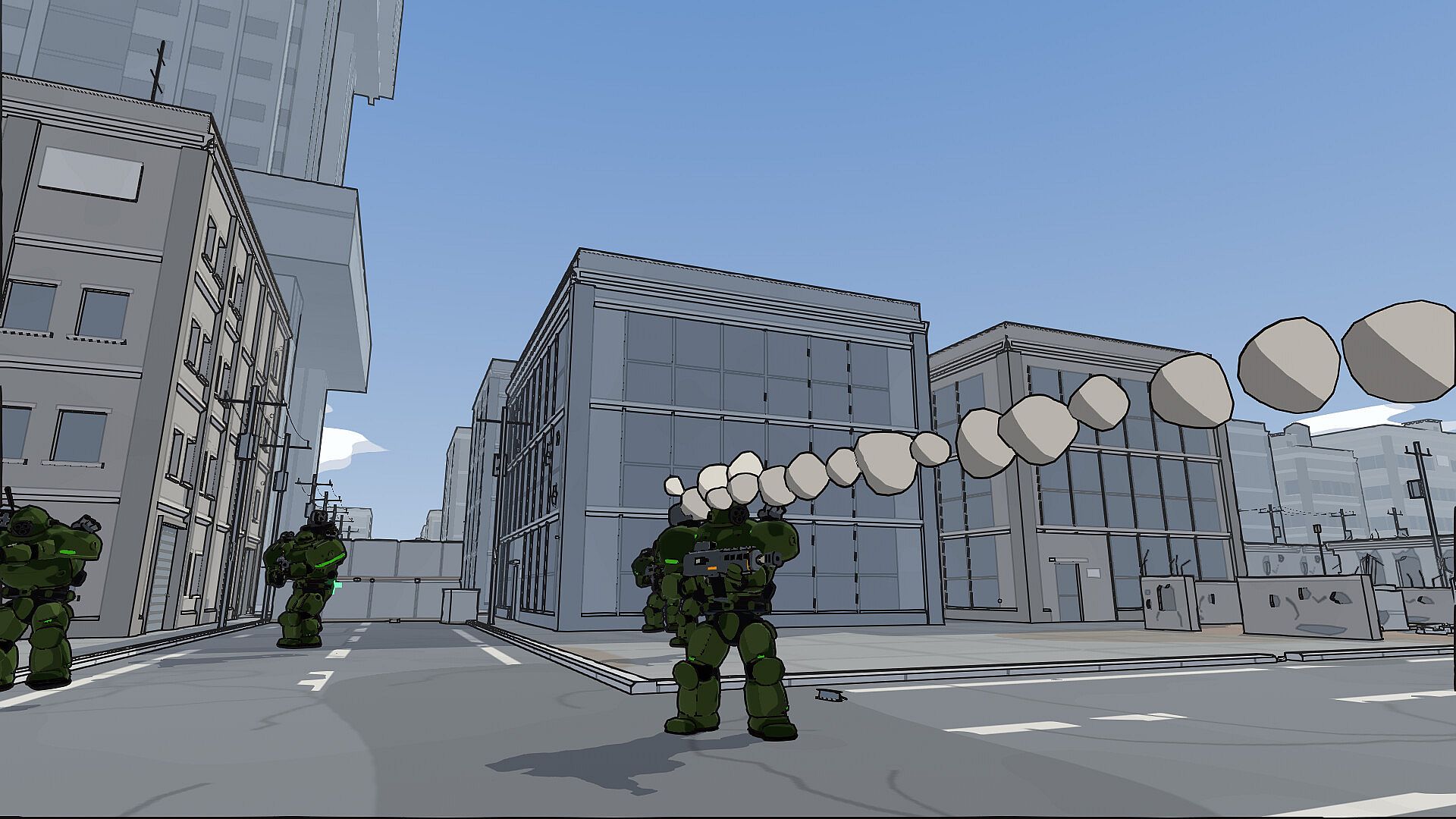
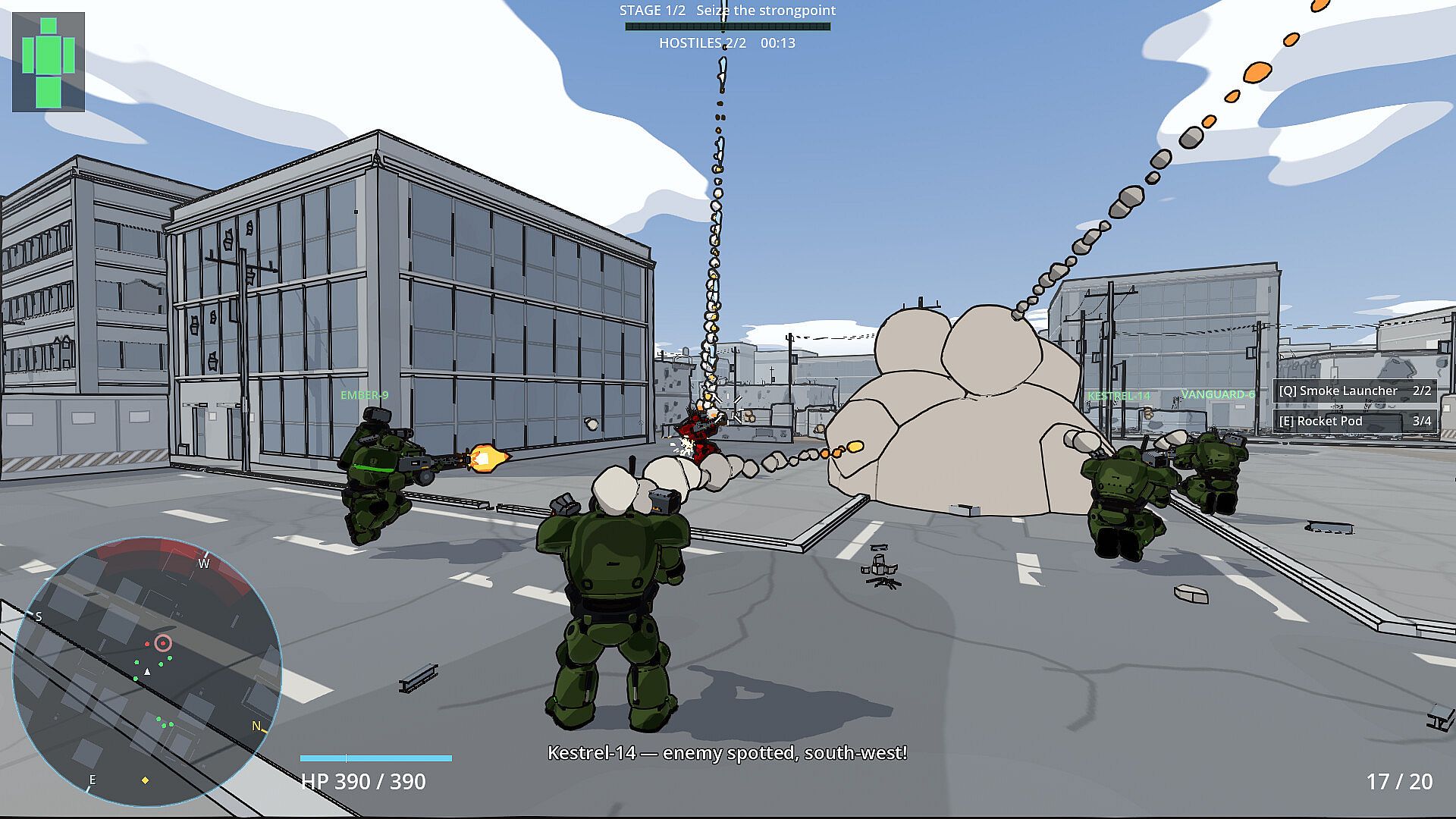
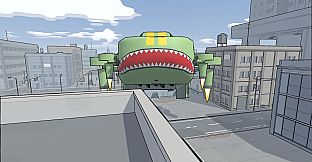
Tin Coffins is a cel-shaded third-person mech roguelite action game set in a gritty near-future war. Players take control of infantry-scale mechs on short, high-stakes missions where survival depends on cover, positioning, and squad coordination rather than raw power.
Gameplay
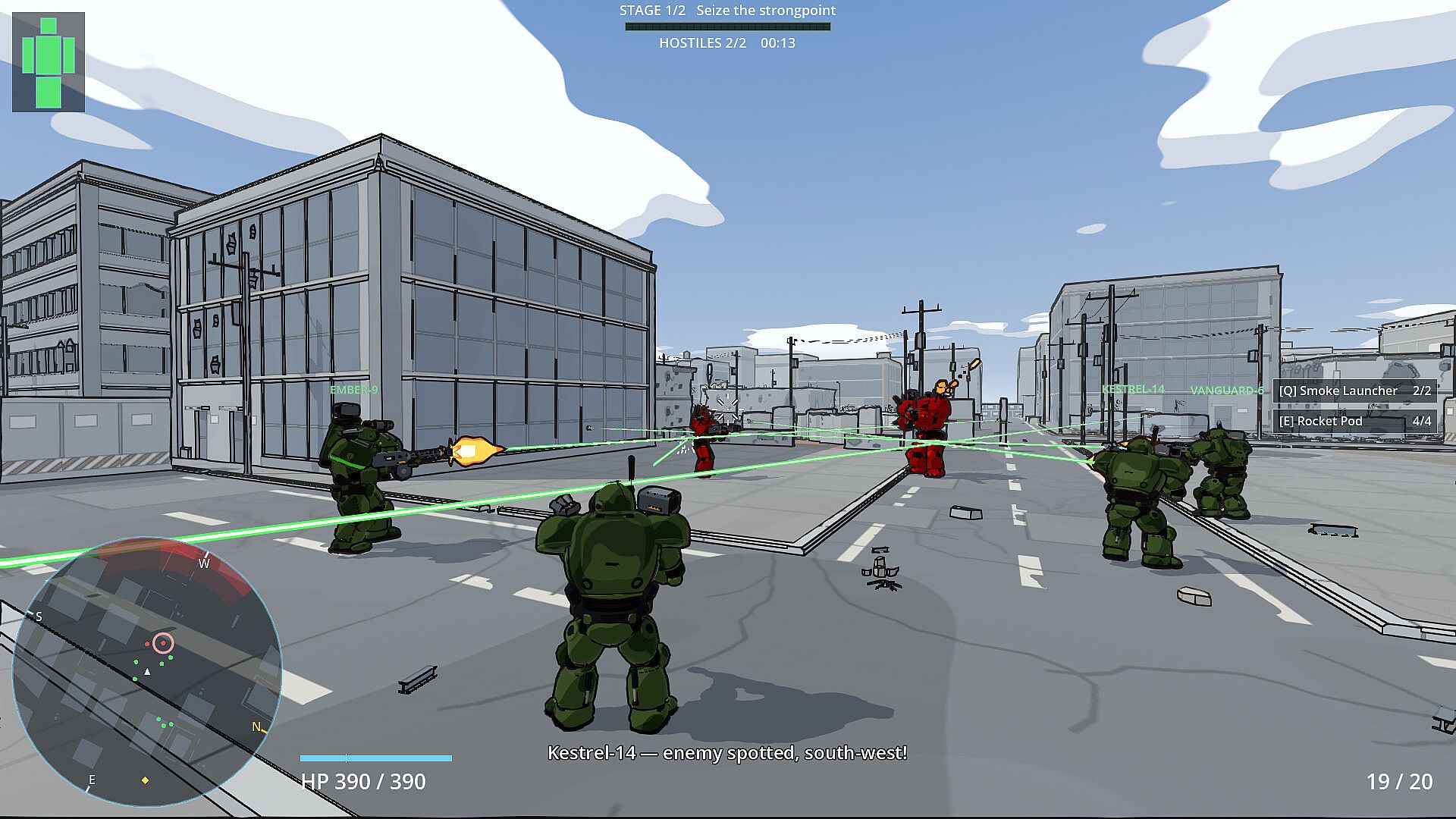
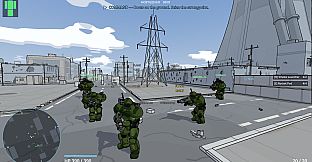
The core loop centers on piloting a four-meter armored mech through procedurally generated urban environments. Movement stays grounded with walking, sprinting, crouching, leaning, and a committed dive-roll that draws from a shared stamina pool. There is no boosting or flight, which keeps fights focused on sightlines and reload timing. Mechs and enemies alike fall quickly under sustained fire, so players must peek, shoot, and displace constantly.
Per-limb damage adds another layer of tension. Losing an arm or head still allows continued fighting, but torso or leg destruction ends the run. Friendly fire is always active, and wingmates check their lines of fire before shooting, requiring the same care from the player. Enemies operate in squads with assigned roles such as anchor, flank, suppress, overwatch, or retreat. They only engage when they have line of sight, search last known positions when it breaks, and react differently based on experience level. Rookies may break under pressure while veterans maintain formation.
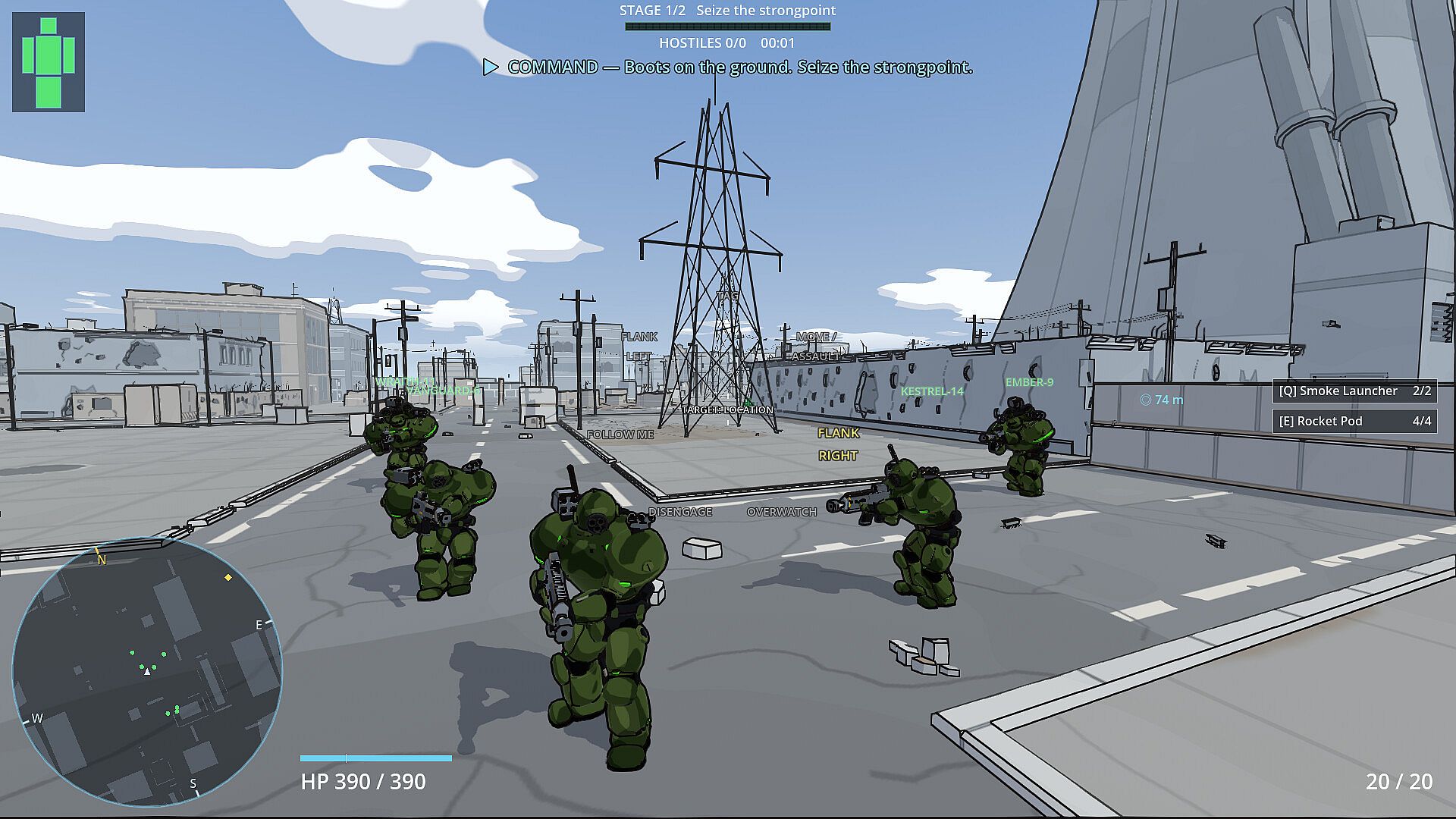
After each mission a tactical replay lets players scrub through events to compare what enemy pilots knew against actual positions and orders issued. Commanding three wingmates happens through pings or a comms radial menu for tasks like flanking, setting overwatch, or extraction. The AI reads cover geometry the same way the player does, creating consistent tactical space across day, dusk, night, and toxic haze conditions.
Game Modes
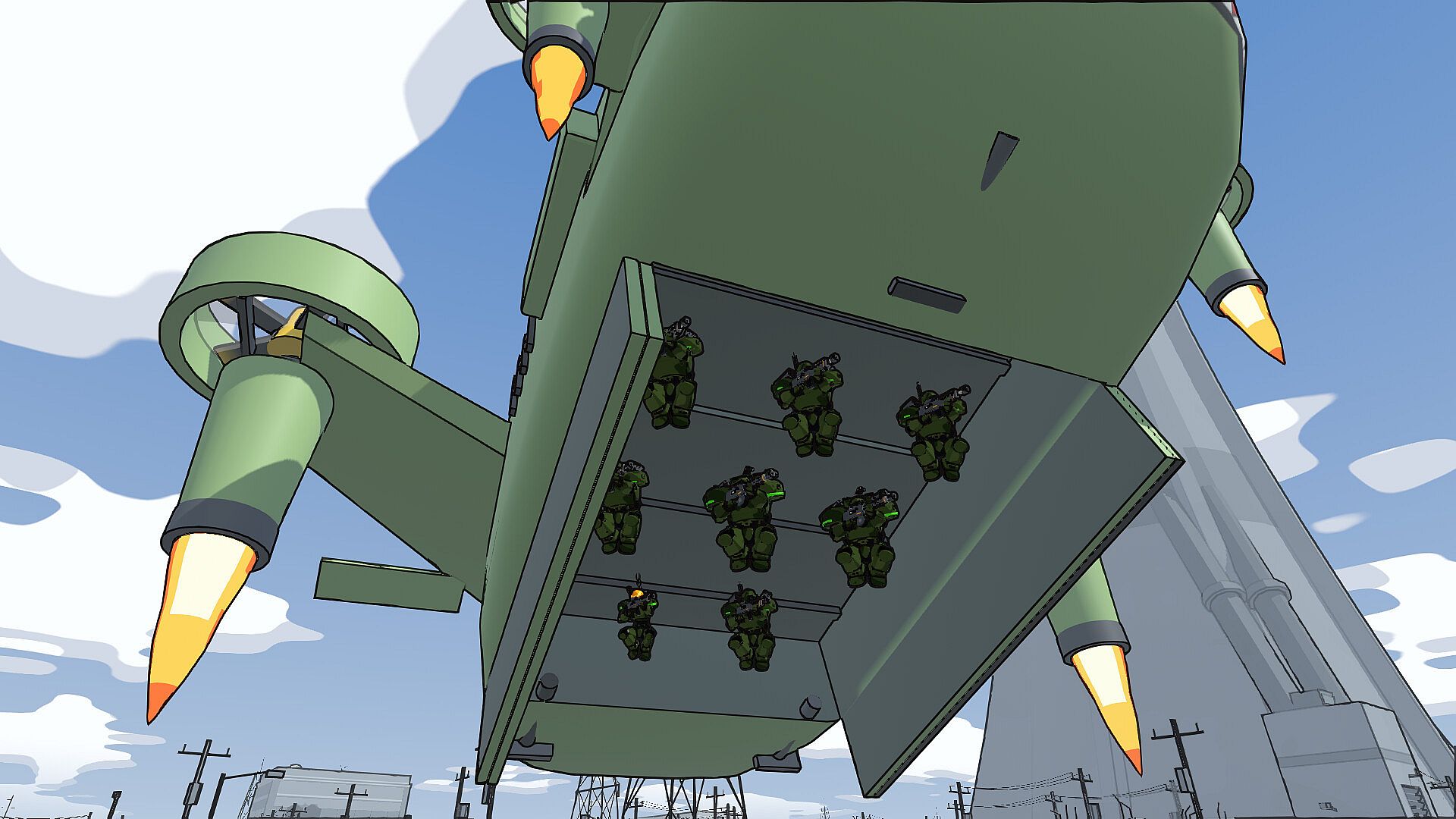
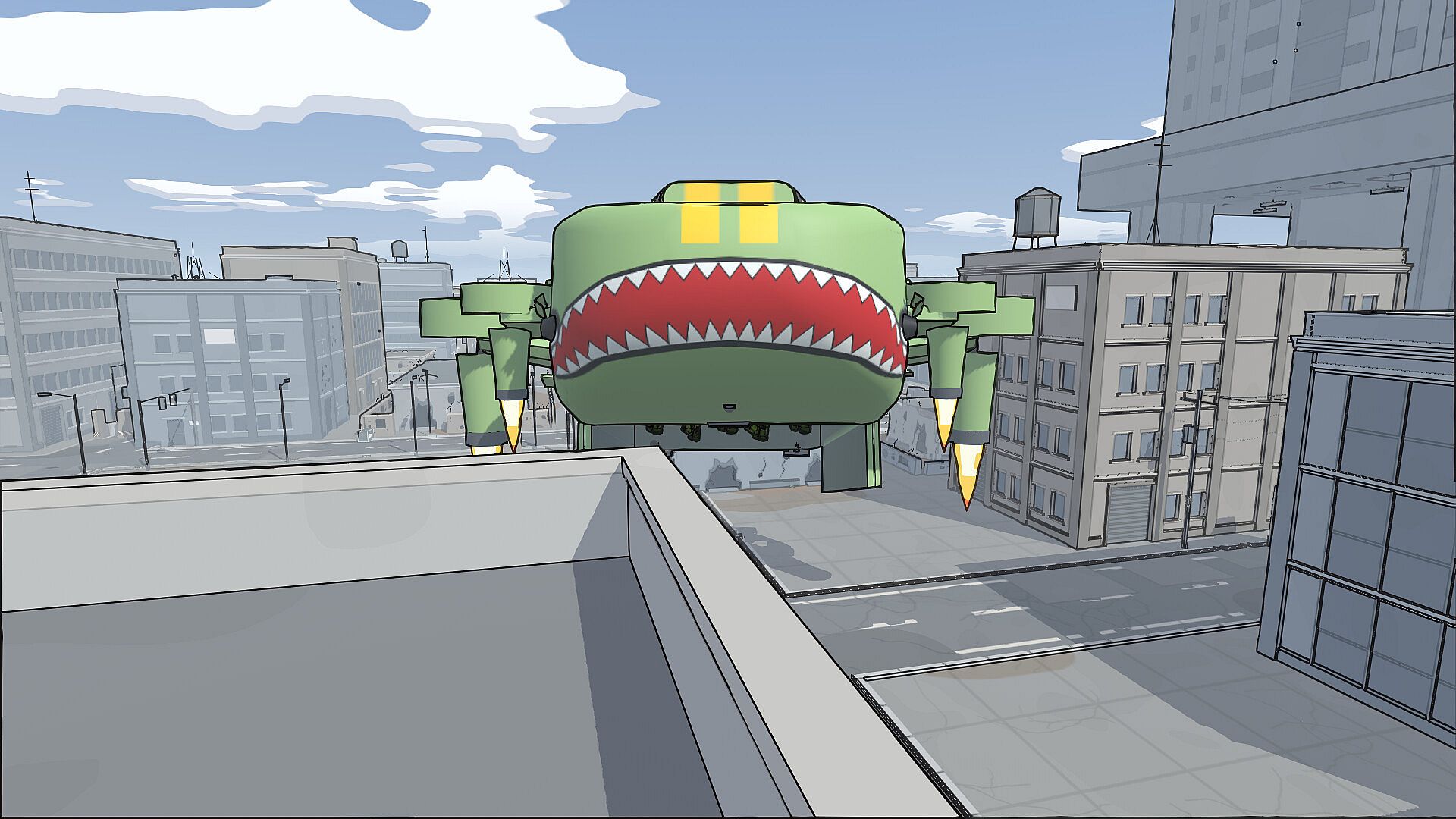
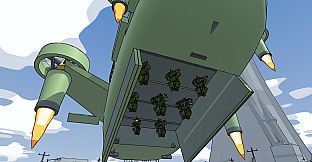
Missions include purge, sabotage, extraction, seize, and defense objectives. These combine into multi-stage operations that feature dropship insertions, reinforcement waves, and objectives such as capturing a tank from the rear. Every operation unfolds in its own procedurally generated city district with dense blocks, boulevards, and ruins.
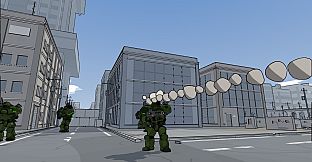
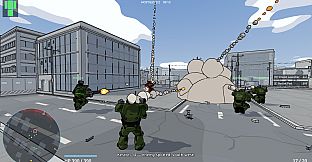
A three-act campaign advances or retreats based on sortie outcomes, culminating in a finale operation per act and a last-stand sequence when the line collapses. Roguelite runs consist of four sorties with one life and no respawns. Salvage collected during these runs purchases persistent weapons across iterations. Nine weapon types fit across one primary and two shoulder hardpoints, ranging from autocannons and marksman rifles to guided missiles, siege rockets, and smoke walls.
Eleven citations reward standout performance that draws command attention. Journal entries from prior iterations appear as optional transmissions and dead drops left off the main route, offering context on the repeating cycle without altering core mechanics.
Visual Style and Accessibility
Hard-outlined cel shading covers weathered military hardware on humanoid mechs at infantry scale. The presentation emphasizes a grounded, near-future conflict rather than heroic scale. Full controller support works alongside keyboard and mouse input. Language options include English and Japanese, with colorblind modes, radio subtitles, and scalable UI elements. The entire experience runs offline with no online requirements.
Is It Worth Playing?
Tin Coffins suits players who enjoy deliberate tactical combat in a mech framework, where positioning and squad management matter more than individual heroics. The roguelite structure of short runs with permanent loss per attempt rewards careful play and adaptation to procedural layouts and enemy behaviors. Those drawn to grounded movement systems, per-limb damage, and the ability to issue orders to AI wingmates will find the systems mesh tightly together. The campaign progression through chained operations and the optional journal threads add layers for players who like piecing together a larger picture across multiple attempts. Availability on PC with offline play and accessibility options broadens its reach for fans of indie action titles focused on squad-level mech engagements.











