

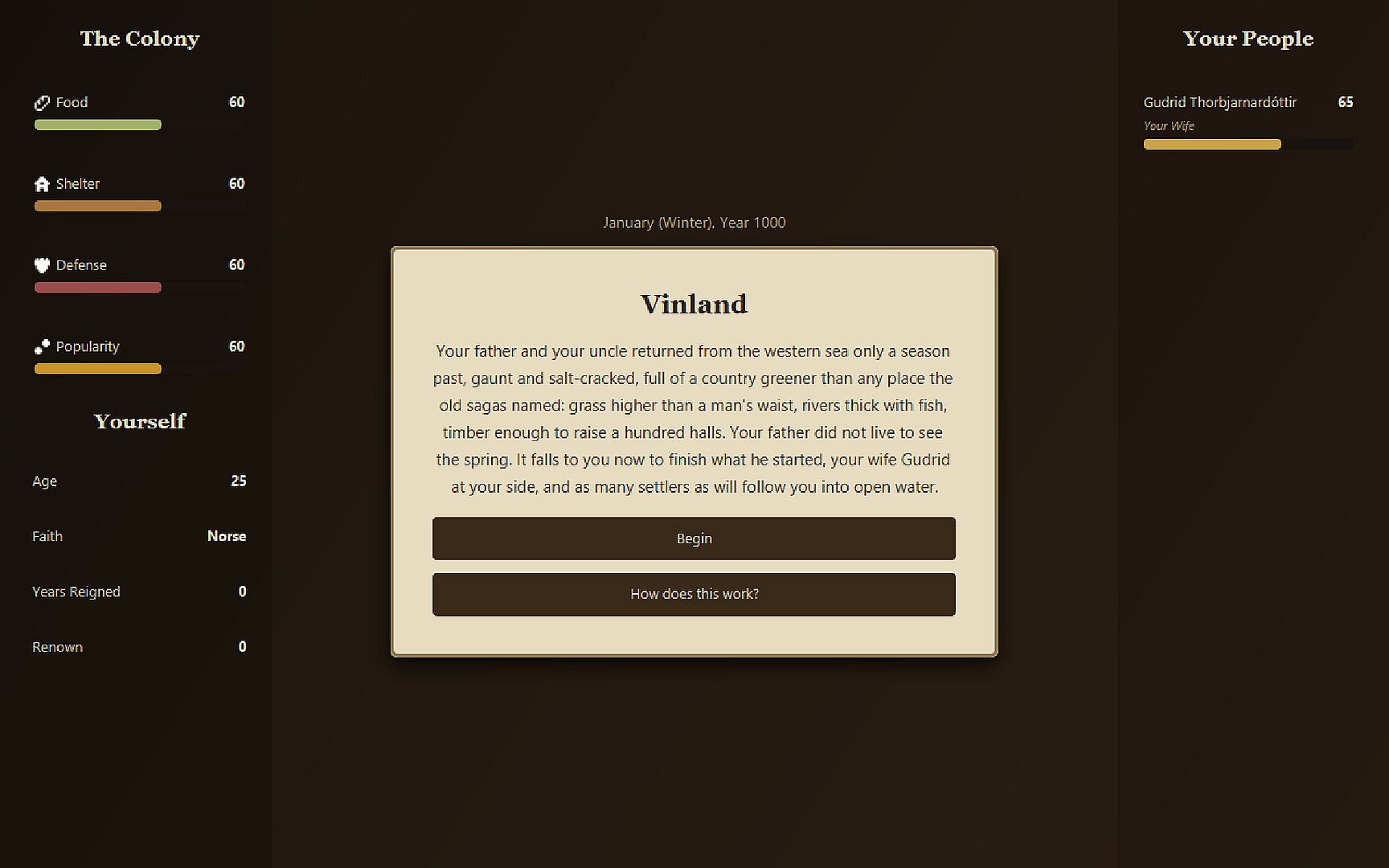
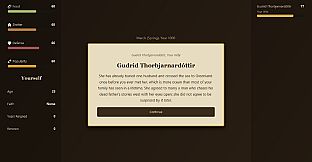
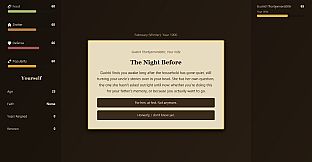
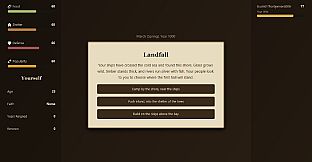
Vinland: 1000 is a strategy, indie, casual, and simulation game for PC in which players lead a Norse colony in Vinland through a series of decisions that determine its survival and character.
Gameplay
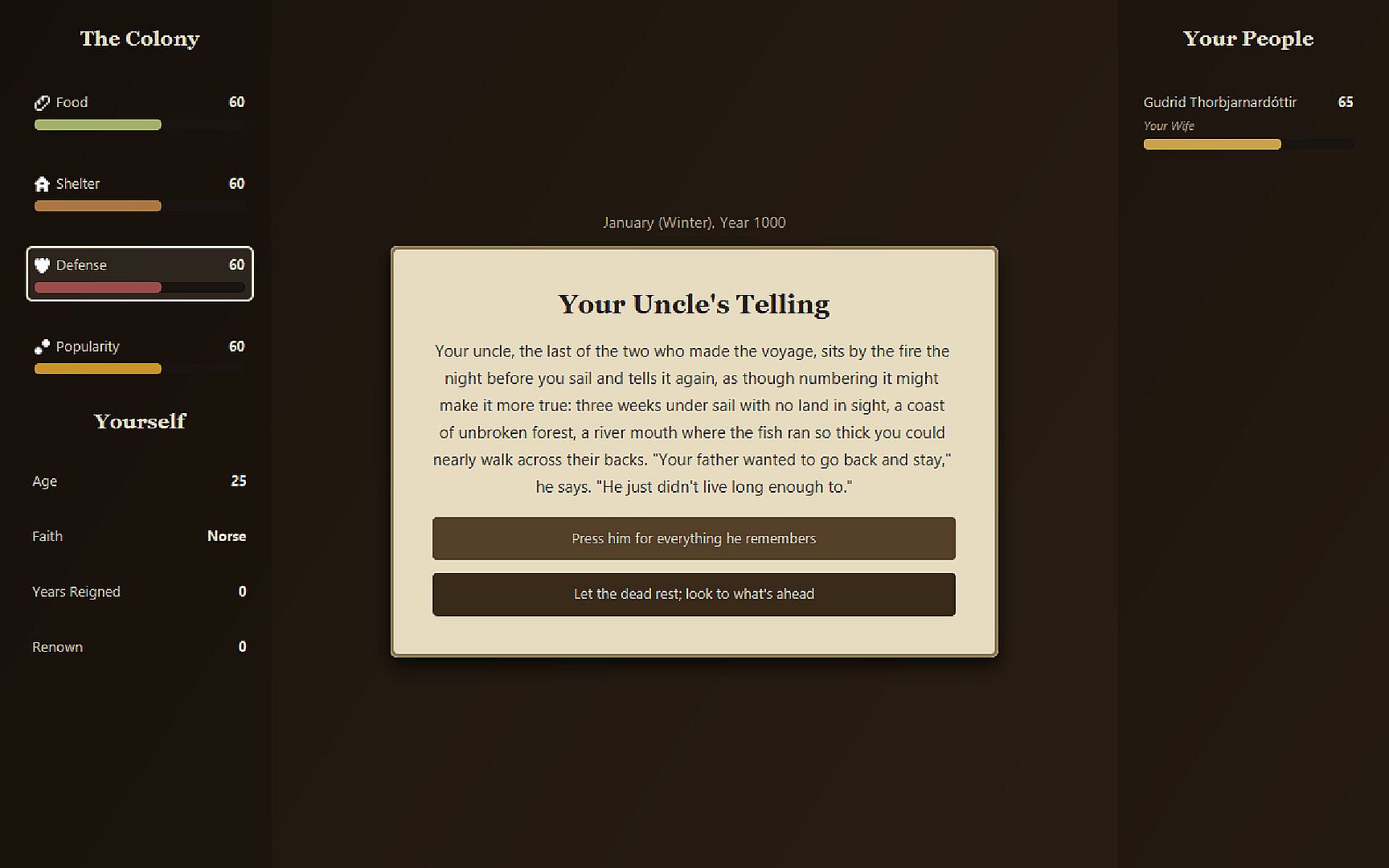
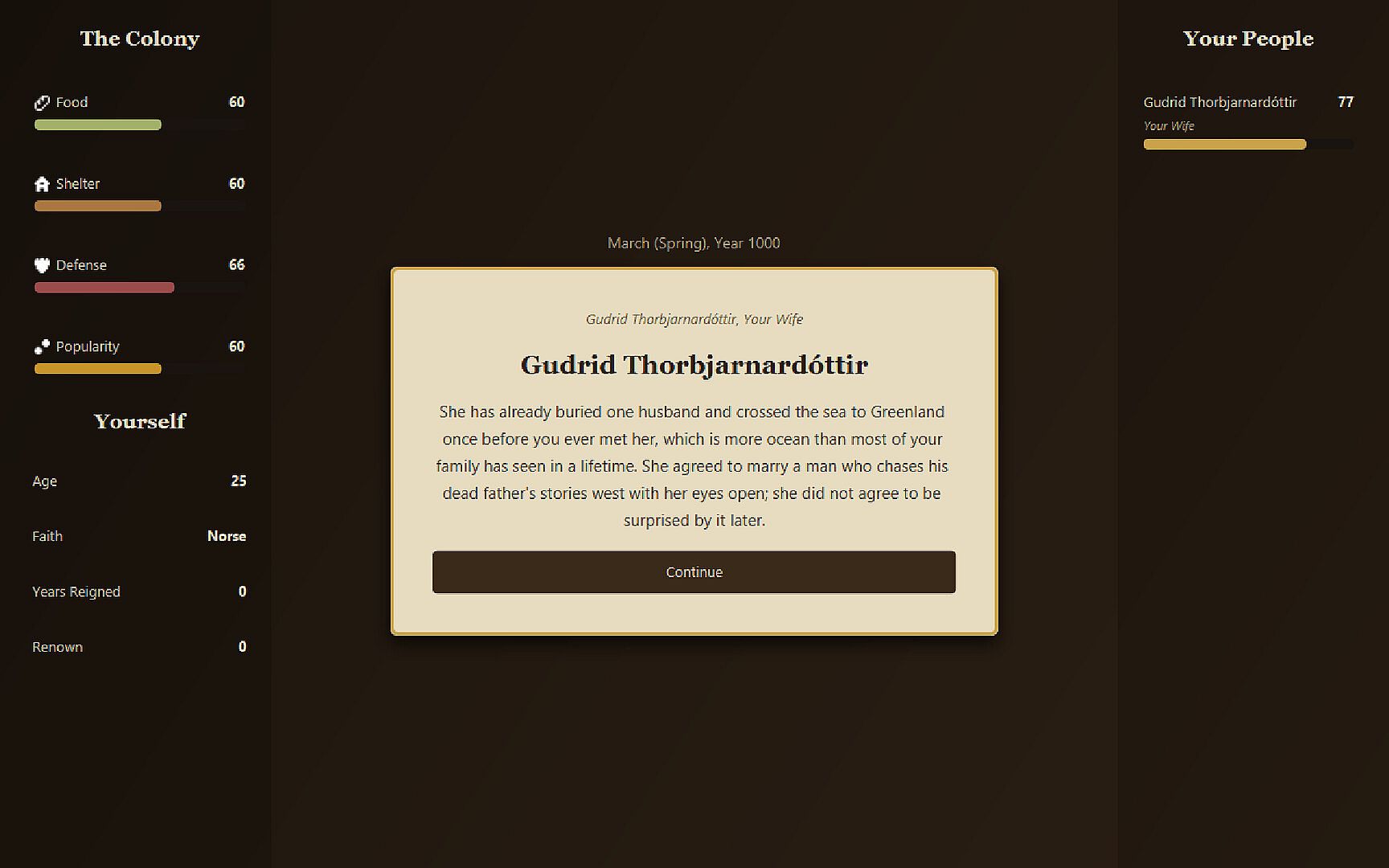
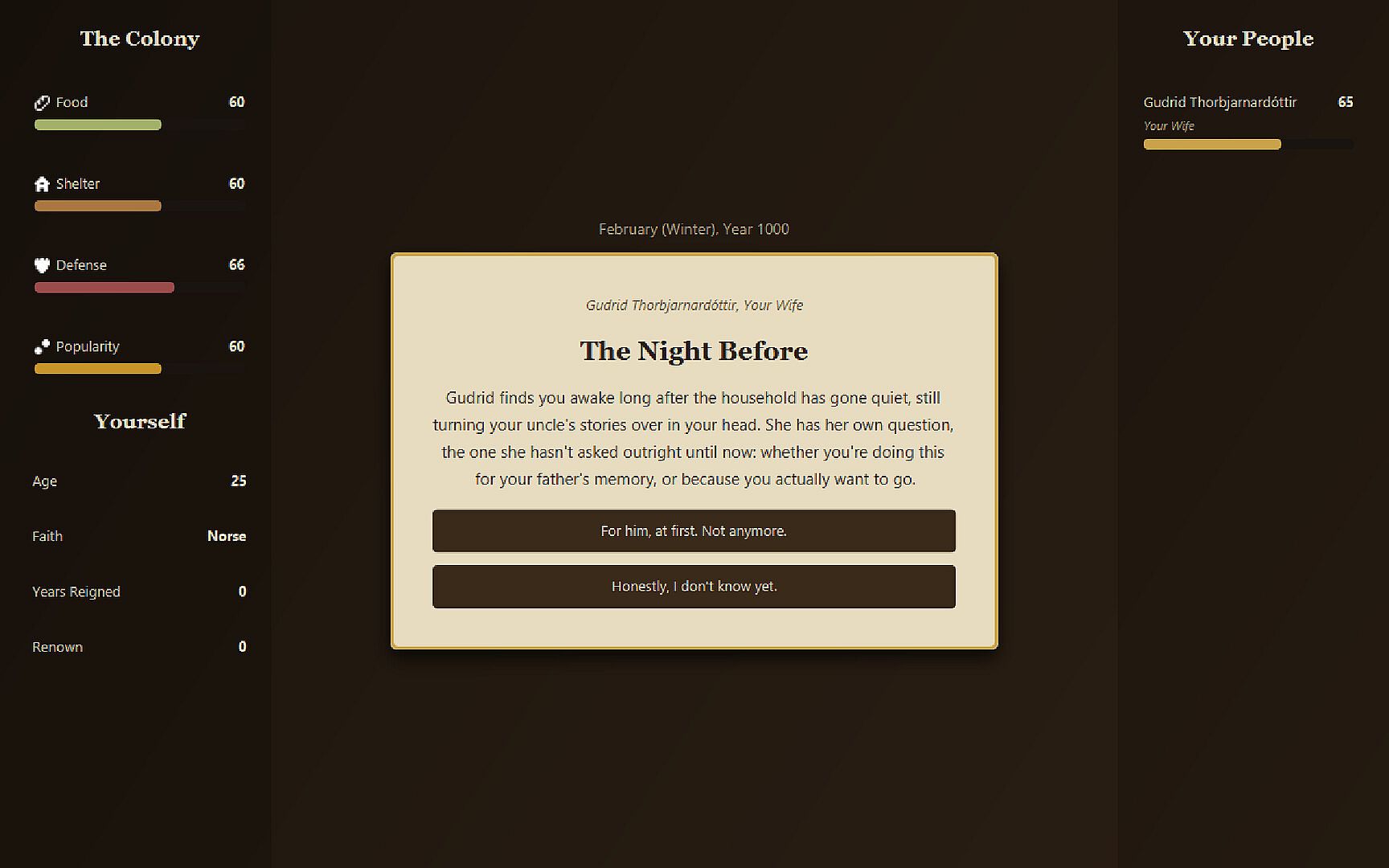
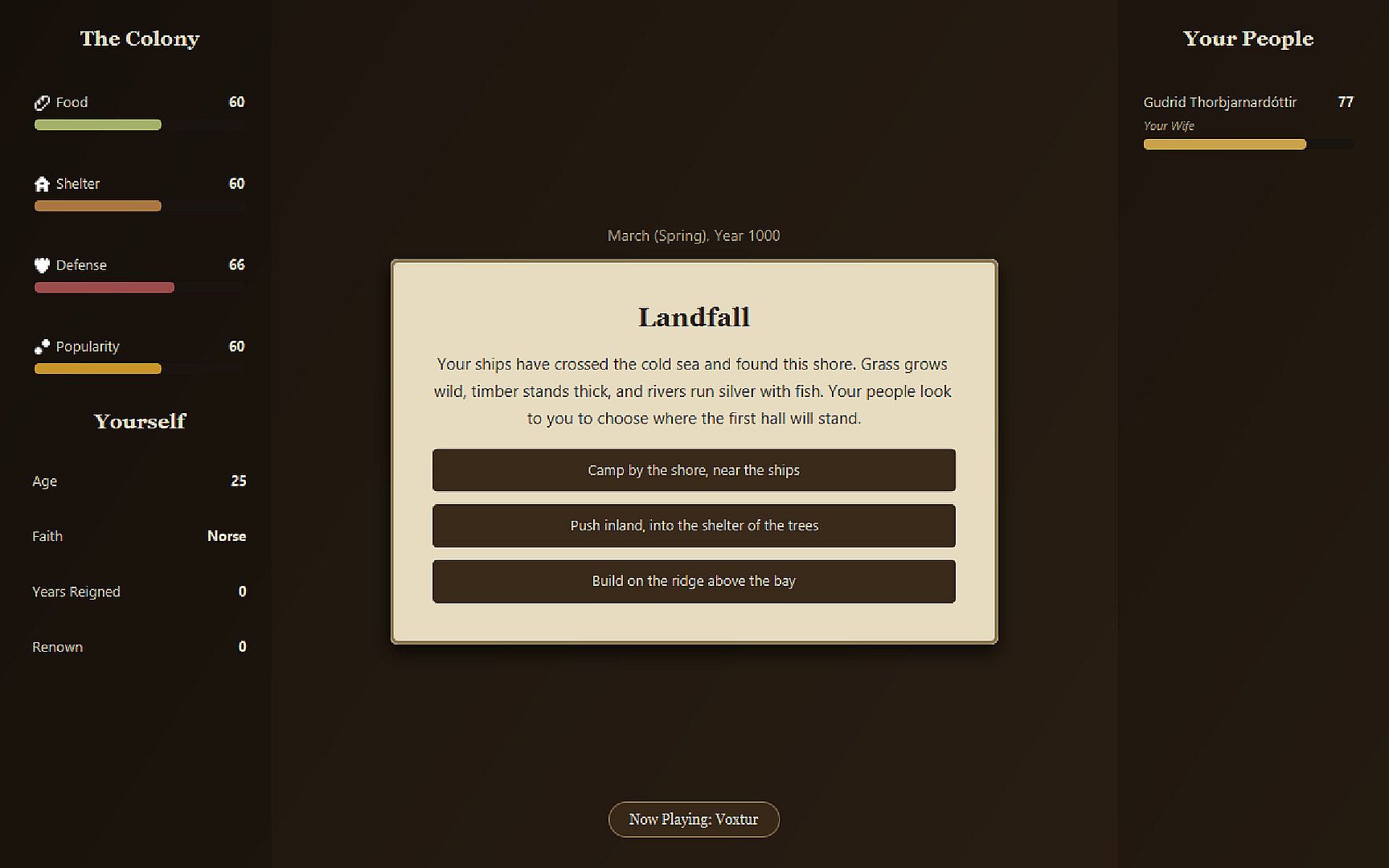
The core loop centers on receiving one event at a time and selecting from a small set of options. Each choice directly influences the colony's resources and social fabric. Players track food, shelter, defense, and popularity while maintaining relationships among settlers. Decisions also extend to family members, with the heir's developing ambitions shaping long-term outcomes. Political interactions with native peoples of Vinland require careful navigation, as do shifts in faith where traditional Norse beliefs compete with incoming Christian influences from Rome or Constantinople. Over fifty in-game years, these layered choices determine not only whether the settlement endures but also the specific form of society that emerges from the initial colony.
Game Modes
The experience unfolds as a single continuous narrative campaign. Events arrive sequentially, and progress depends on the cumulative effects of prior selections rather than separate modes or branching campaigns. This structure keeps focus on management of daily needs alongside broader narrative consequences across the full span of years.
Narrative and Colony Management
Resource oversight forms the practical backbone of play. Shortages in food or shelter can erode popularity and strain internal bonds, while defensive preparations affect security against external pressures. Family guidance adds a personal dimension, as the player's influence on the heir carries forward into later years. Faith mechanics introduce another variable, with gradual changes reflecting the tension between established traditions and new religious currents. The result is a settlement whose identity evolves through these interconnected systems rather than through preset paths.
Is It Worth Playing?
Players who enjoy deliberate, choice-based strategy and simulation will find a focused experience built around sequential decisions and their long-term ripple effects. The emphasis on resource balance, interpersonal dynamics, and cultural shifts suits those interested in colony management without additional layers such as combat or multiplayer elements. The fifty-year timeframe provides a clear arc for seeing the consequences of sustained play. Availability on PC makes it accessible for sessions that reward careful consideration of each presented option.