


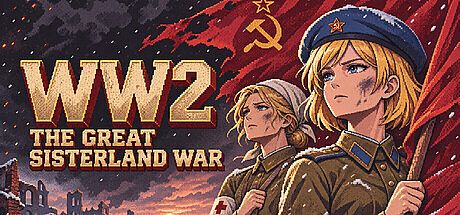


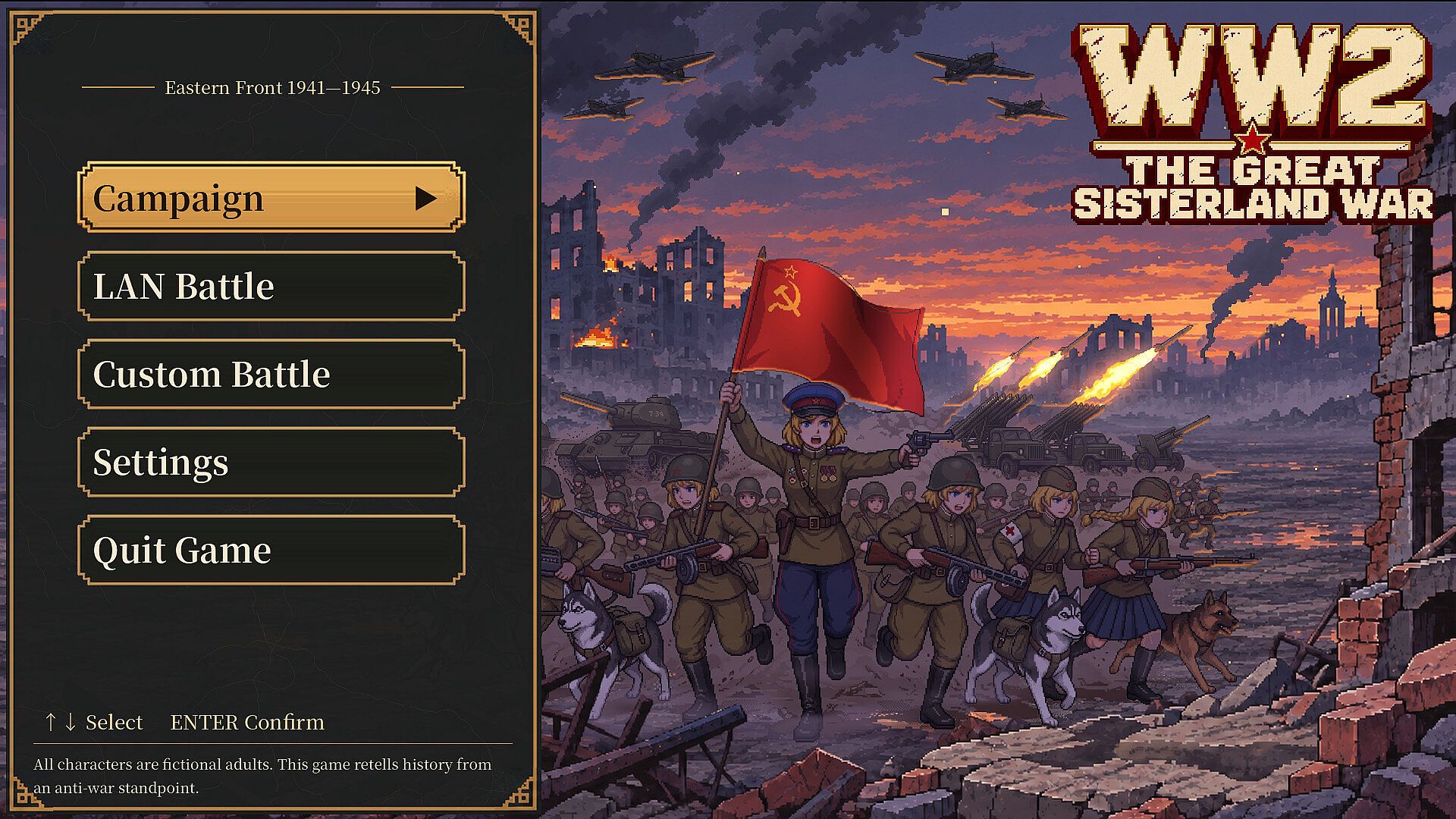
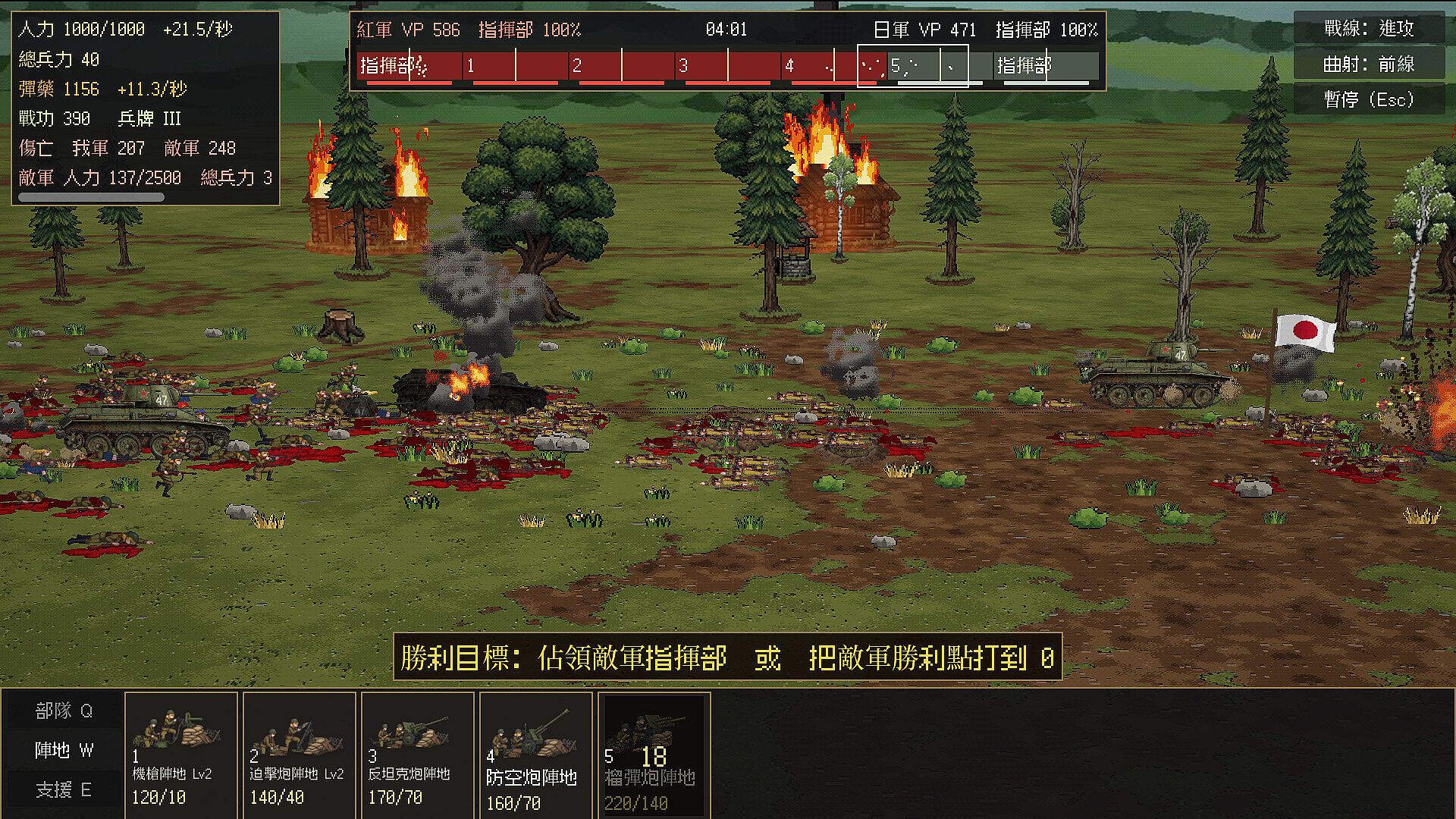
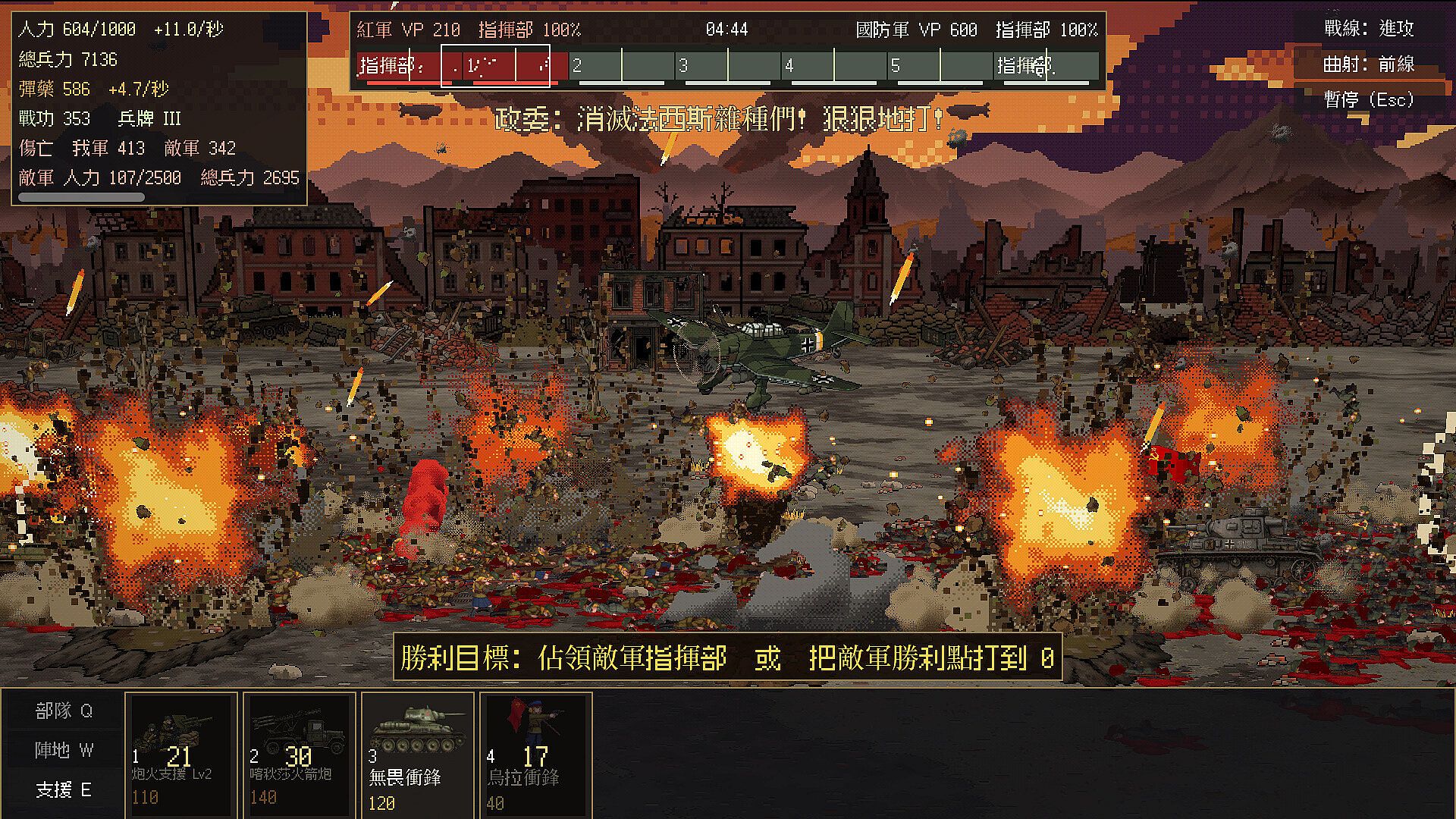
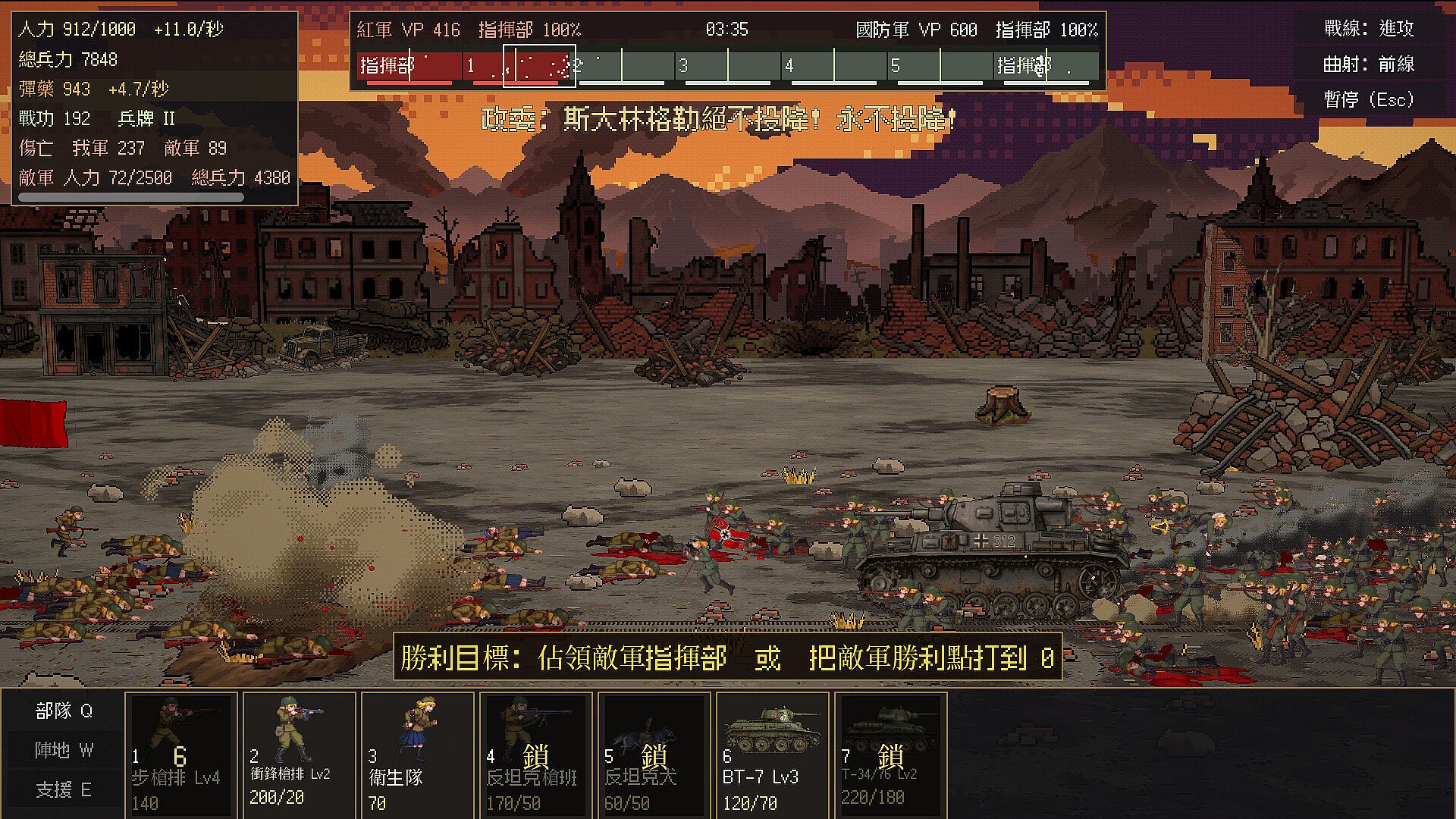
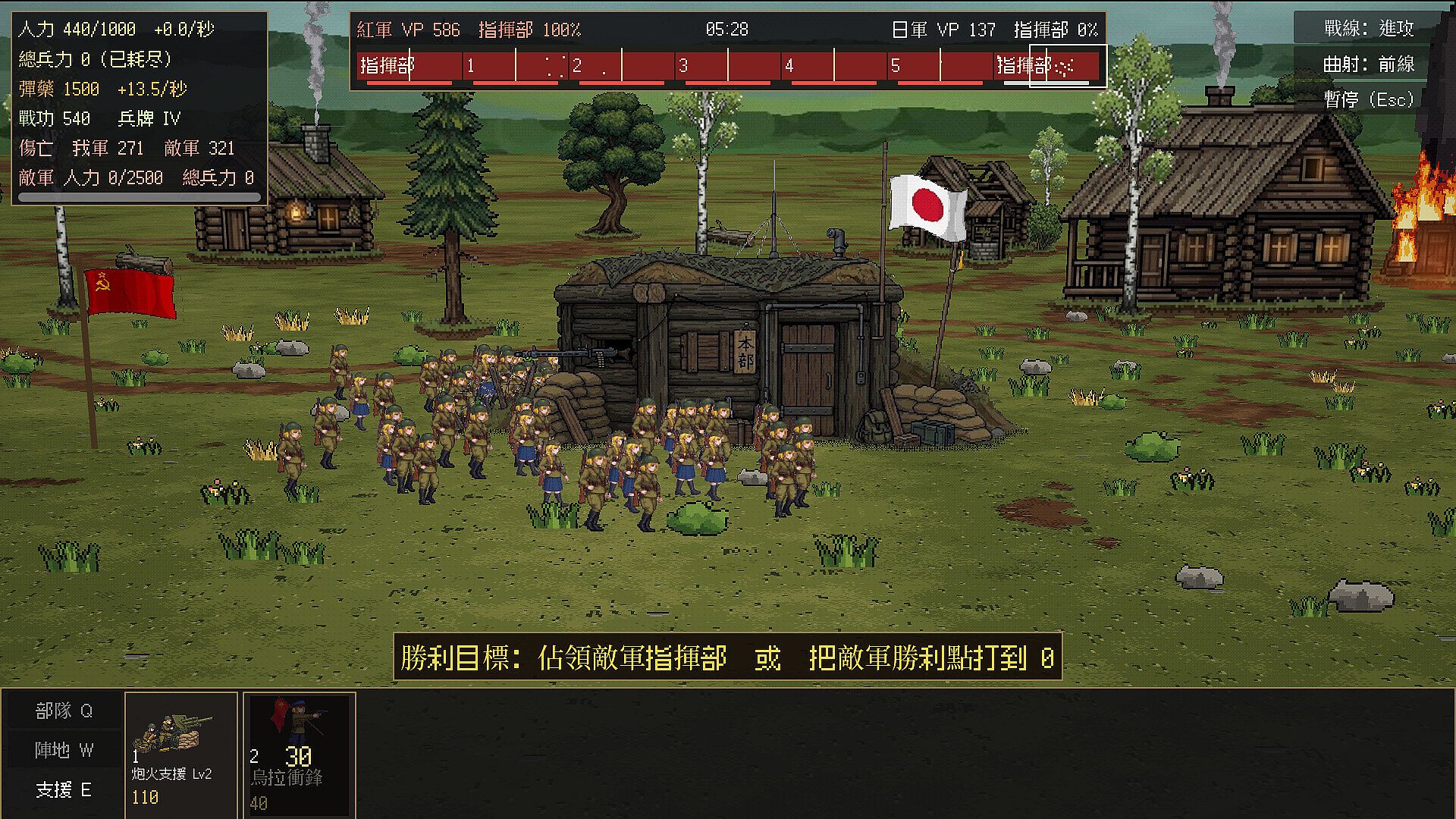
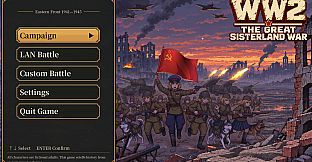
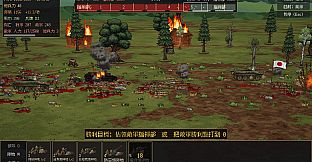
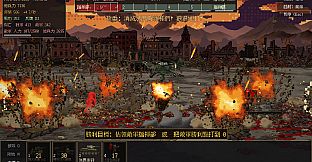
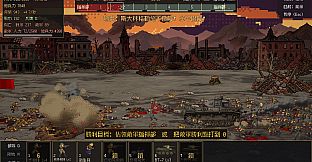
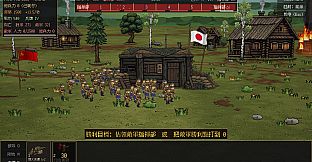
WW2:THE GREAT SISTERLAND WAR is a side-scrolling large-scale war strategy game set during the Soviet Great Patriotic War. Players assume the role of a Red Army commander who oversees massive engagements without directly controlling every soldier. The focus lies on timing troop commitments and calling in fire support, after which hundreds of units advance, engage, and react independently on the battlefield.
Gameplay
The core loop centers on high-level command decisions in a side-scrolling format. Orders determine when and where to deploy infantry waves or request artillery and other support. Once issued, the troops handle their own movement, firing, and survival on the field. This approach creates large battles where individual soldier actions unfold automatically, leaving the player to manage the broader flow of combat across extended fronts.
Mechanics emphasize resource timing and positioning rather than unit micromanagement. The side-scrolling perspective allows visibility of entire battle lines as forces clash. Outcomes hinge on when support arrives and how reserves are committed, reflecting the grueling nature of sustained warfare. The game presents these elements from an anti-war viewpoint, highlighting the human cost without glorifying conflict.
Game Modes
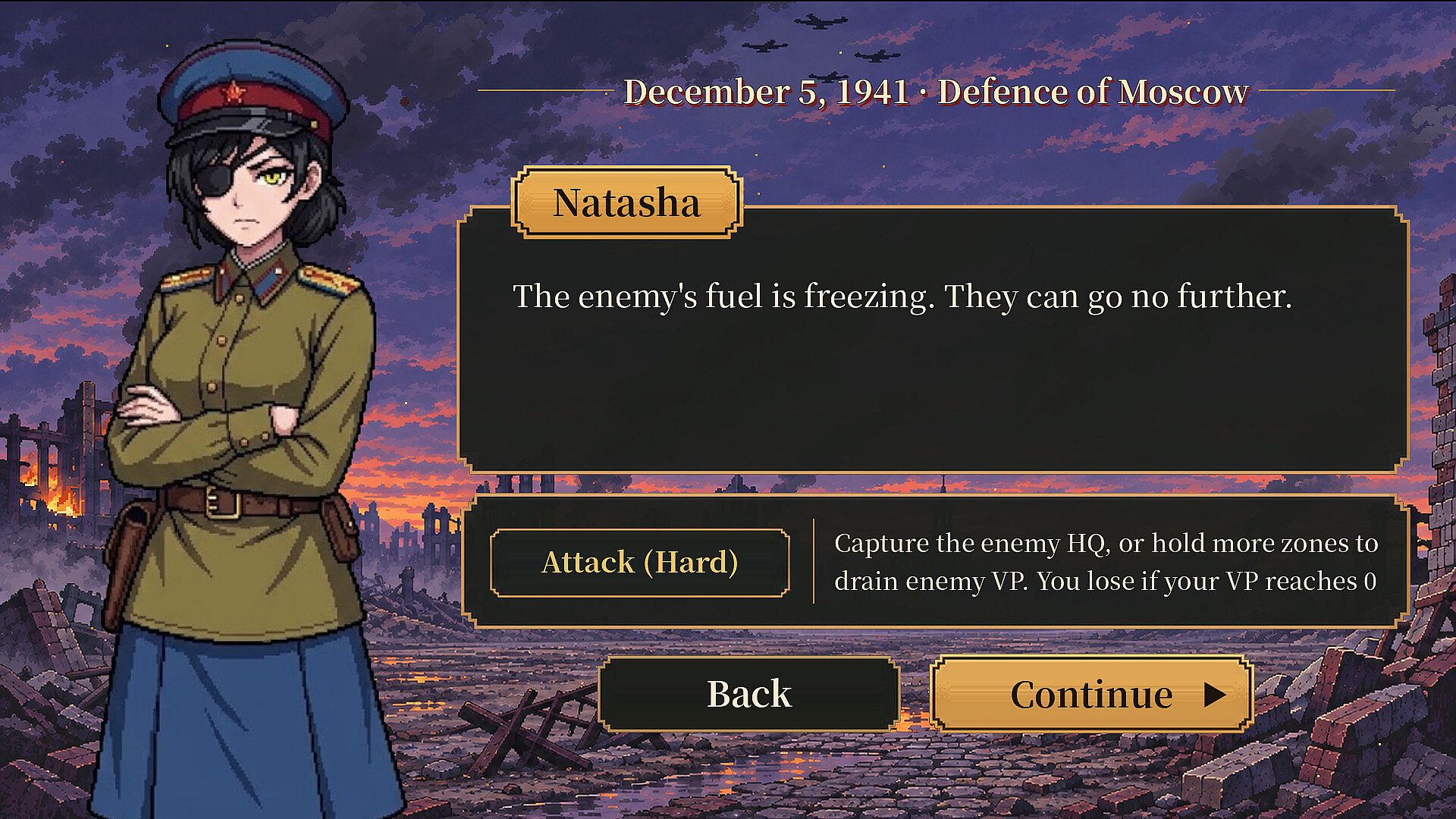
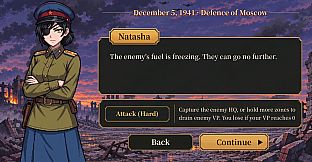
The Soviet Campaign forms the main single-player experience. It covers seven major historical battles across three difficulty levels, guiding players through a sequence of engagements that span the war years. Each battle requires careful orchestration of available forces to achieve objectives while managing limited resources.
Custom Battle mode allows flexible matchups between Soviet, German, and Japanese factions. Players can set up scenarios with any combination of these sides to test different force compositions and strategies in standalone encounters. LAN Multiplayer supports local network play for head-to-head matches using the same core systems.
The Battles
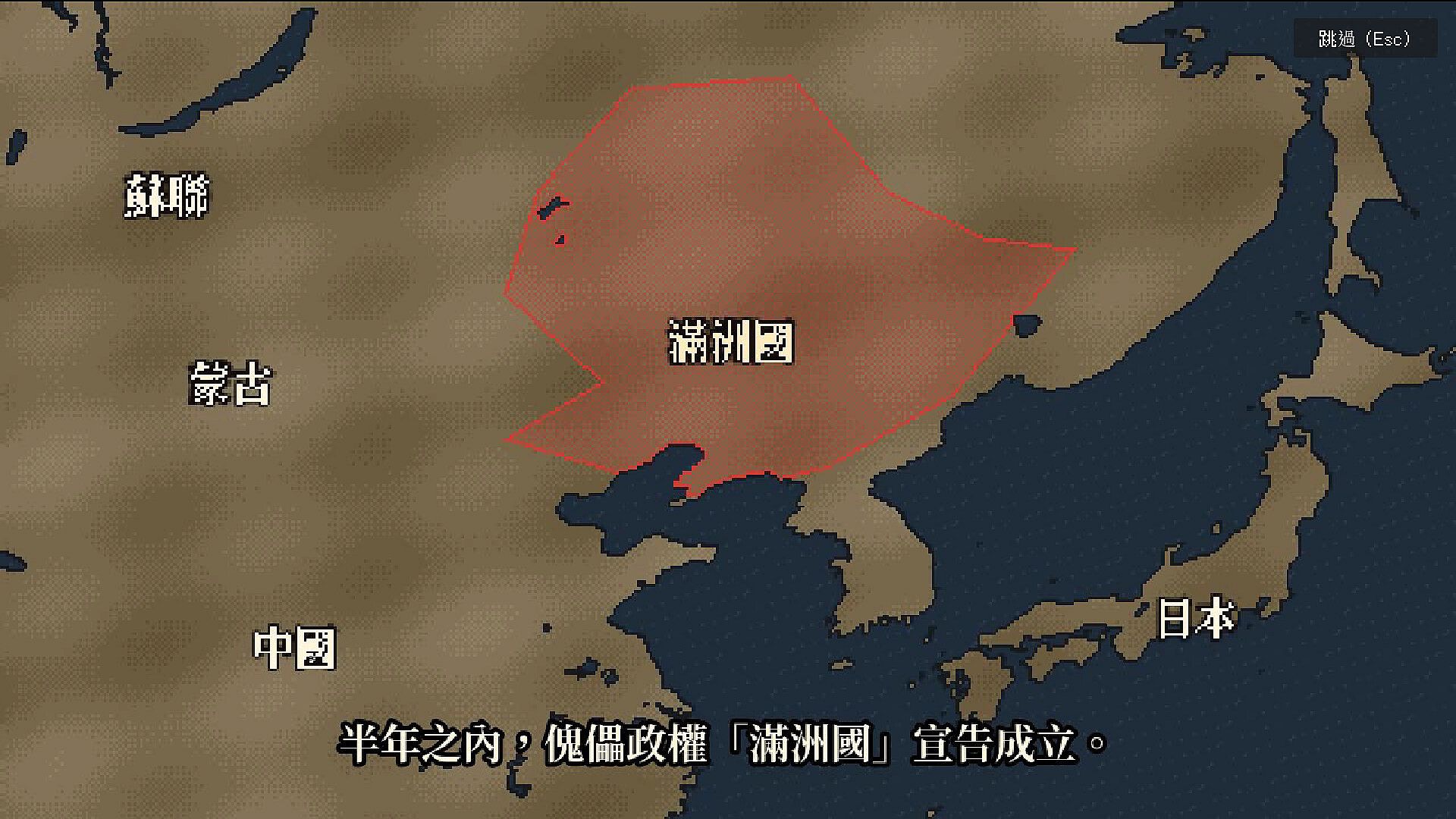
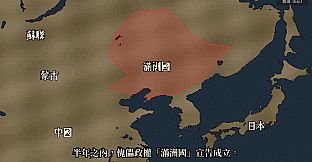
Seven key confrontations define the campaign path. These include the steppes of Khalkhin Gol, the defense of Brest Fortress, the winter fighting at Moscow, the urban ruins of Stalingrad, the armored clashes at Prokhorovka, the sweeping advances of Operation Bagration, and the final push into Berlin. Each location presents distinct terrain and tactical challenges that influence how orders are executed.
Progress through these battles occurs sequentially in the campaign, with difficulty scaling across three tiers. Success depends on adapting command choices to the evolving situation rather than relying on fixed unit control.
Is It Worth Playing?
This title suits players interested in strategy and simulation genres who prefer overseeing large formations over direct unit control. The single-player campaign offers a structured path through seven battles on PC, while custom battles and LAN multiplayer provide additional variety for those seeking flexible or local competitive options. As the game remains in a coming-soon state with no released version yet, potential buyers should monitor for launch details and any post-release updates before committing.
The emphasis on autonomous troop behavior and the anti-war framing may appeal to those looking for a thoughtful take on WWII command rather than fast-paced action. Availability is limited to PC at present, with single-player and LAN features confirmed as core components.











