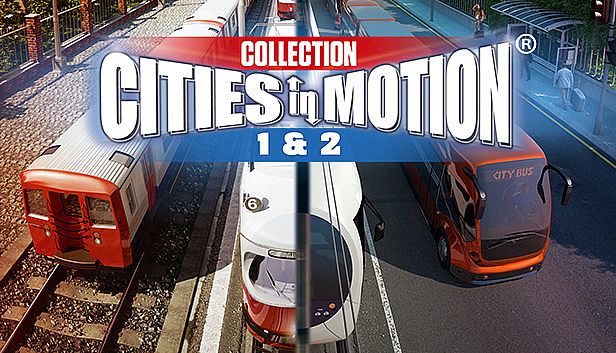















Cities in Motion 1 and 2 Collection combines two strategy simulation titles centered on managing public transportation networks in detailed urban environments. Players take on the role of a transport company operator tasked with designing efficient routes, selecting vehicles, and balancing finances across multiple cities and historical periods. The experience emphasizes realistic passenger flows, traffic patterns, and economic decisions rather than broad city building.
Gameplay
The core loop involves constructing transit infrastructure such as stops and depots while purchasing vehicles from a selection of real-world inspired models. Routes form closed loops where buses, trams, metro trains, water buses, and helicopters ferry passengers between residential areas, workplaces, shops, and leisure sites. Economic management requires attention to fares, advertising budgets, employee costs, and overall profitability as the system expands.
Time progression plays a key role, with scenarios spanning decades and reflecting changes in vehicle technology and urban development. The simulation runs in real time, showing how commuter demand shifts and how network adjustments affect coverage and revenue. Map editing tools allow creation of custom layouts to test different approaches to route planning and stop placement.
Visual feedback includes animated traffic and passenger movements, with options to view underground sections for metro lines. Financial charts and progress maps help track performance without overwhelming the interface.
Game Modes
Campaign play consists of structured scenarios set in specific cities, each with primary goals of building profitable networks alongside optional bonus objectives. These scenarios cover distinct time eras and historical contexts that influence available vehicles and city layouts.
Sandbox mode provides open-ended access to the included cities for unrestricted experimentation with route designs and expansions. Players can load any available map and adjust parameters freely without campaign constraints.
The second game introduces additional layers including day and night cycles that alter passenger patterns, along with timetable scheduling for more precise service management. Multiplayer options support both cooperative network building and competitive elements between operators.
Key Mechanics and Features
Vehicle selection draws from over thirty authentic models across five transport types, each suited to different route lengths and capacities. Route creation allows manual ordering of stops or automatic logical sequencing, with the ability to modify existing lines dynamically.
Passenger simulation accounts for commuting needs tied to home, work, and leisure locations, rewarding networks that reduce travel times and increase usage. Economic tools extend to contractor negotiations and responses to fluctuating trends within the simulated economy.
Both titles include robust editors for terrain and city customization, enabling players to generate new environments or modify existing ones for tailored challenges.
Is It Worth Playing?
This collection suits players who enjoy methodical management of transportation systems and detailed economic balancing in a simulation framework. The focus on route optimization and real-time adjustments appeals to those interested in transit planning without broader city-building elements.
Campaign scenarios provide guided progression through varied settings and eras, while sandbox and multiplayer features extend replayability for experimentation and shared sessions. The games maintain a consistent emphasis on core transport operations across both entries.
Availability on PC makes the collection accessible for extended play sessions, particularly for those seeking depth in public transit strategy over fast-paced action or expansive building. Individuals who appreciate precise control over networks and historical vehicle variety will find substantial content in the combined scenarios and tools.